National Wildlife Health Policy: Safeguarding India's Biodiversity

E&E

UPSC Prelims

Current affairs

Latest Update

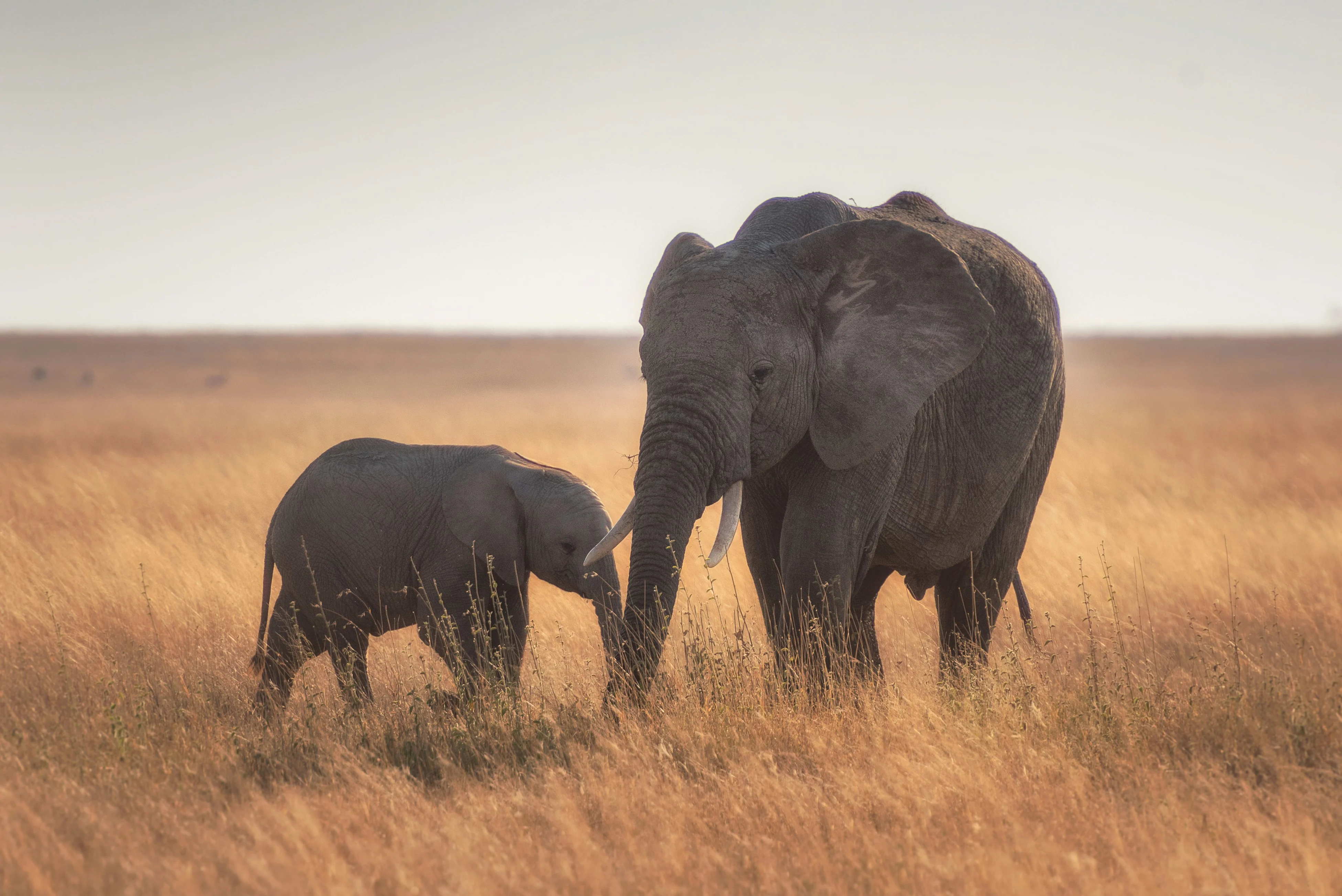
Adult elephant and baby elephant walking through a golden grassland, with the baby gently touching the adult's trunk, captured in a serene natural setting.

Introduction

Introduction

The National Wildlife Health Policy (NWHP) is an initiative by the Government of India, spearheaded by the Central Zoo Authority (CZA) under the Ministry of Environment, Forest, and Climate Change (MoEF&CC). This policy aims to establish a structured framework for safeguarding wildlife populations, emphasizing both captive and free-ranging animals. It integrates wildlife health monitoring with public health and domestic animal health management to prevent zoonotic diseases and strengthen conservation efforts. The One Health approach underpins this policy, recognizing the interdependence of human, animal, and environmental health.

Objectives of the National Wildlife Health Policy

The NWHP is designed with specific objectives to bolster India's wildlife health framework:

  •  Enhanced Disease Surveillance: Implement comprehensive monitoring systems across terrestrial, marine, and avian ecosystems to detect and manage wildlife diseases promptly.

  • Research and Development: Promote research initiatives focused on wildlife diseases and health management strategies to improve conservation efforts.

  •  Diagnostic Infrastructure: Establish new diagnostic laboratories and a centralized National Wildlife Health Database to streamline disease reporting and data analysis.

Join our WhatsApp Community

Key Components and Institutions

The NWHP encompasses several critical components and institutions to achieve its objectives:

  • National Referral Centre for Wildlife (NRC-W): Established in Junagadh, Gujarat, NRC-W serves as a central hub for investigating wildlife mortalities, disease diagnostics, and treatments.

  • Wildlife Health Information System: A proposed system to streamline disease surveillance, facility-level reporting, and spatial-temporal data, enhancing coordination among various sectors.

  • Satellite Diagnostic Labs: Plans to set up diagnostic laboratories near key forest habitats to improve wildlife disease detection and response.

UPSC Current Affairs Magazines

UPSC Current Affairs Magazines

Read Latest UPSC Current Affairs

Read Latest UPSC Current Affairs

Alignment with National Conservation Frameworks

The NWHP aligns with existing national conservation strategies to ensure a cohesive approach:

  • National Wildlife Action Plan (2017-31): The National Wildlife Action Plan (NWAP) is India's third wildlife conservation roadmap, emphasizing ecosystem preservation, climate resilience, and species conservation. It outlines 103 conservation actions and 250 projects, focusing on habitat restoration, species recovery, and sustainable human-wildlife coexistence. The NWHP supports the NWAP by integrating wildlife disease surveillance and response mechanisms to mitigate health-related threats to biodiversity.

  • Wildlife Protection Act, 1972:This act serves as India's primary legal framework for wildlife conservation, regulating the protection of endangered species, poaching prevention, and the establishment of protected areas such as National Parks, Wildlife Sanctuaries, and Conservation Reserves. The NWHP operates within this legal framework, ensuring that wildlife disease management aligns with the conservation policies outlined in the Act. A key example of such alignment is the Crocodile Conservation Project, which completes 50 years in 2025. While the first 50 years focused on "rear and release" programs and habitat protection, the NWHP marks the next phase of this legacy.

Add as a preferred Source on Google

Importance of the One Health Approach

The One Health approach is central to the NWHP, recognizing the interdependence of human, animal, and environmental health:

  • Zoonotic Disease Prevention: By monitoring wildlife health, the policy aims to prevent diseases that can transmit from animals to humans.

  •  Integrated Health Efforts: Promotes collaboration across sectors to address health threats comprehensively.

📌 Quick Note: Use PadhAI’s AI TutorChat to get personalized assistance, solve PYQs interactively, explore topic-wise revision with instant feedback, and access the latest news summaries and mock tests to stay updated for your UPSC prep.

Frequently asked question (FAQs)

Frequently asked question (FAQs)

Frequently asked question (FAQs)

What is the National Wildlife Health Policy (NWHP)?
Why was the NWHP introduced?
What are the key components of the NWHP?
How does the NWHP benefit biodiversity?
Why is the NWHP important for UPSC preparation?

Conclusion

Conclusion

The National Wildlife Health Policy represents a significant step towards integrating wildlife health into India's broader health and conservation strategies. By adopting a One Health approach, the policy aims to safeguard biodiversity, prevent zoonotic diseases, and promote sustainable coexistence between humans and wildlife.


Suggested blogs

How Many Attempts for UPSC CSE: General, OBC, SC/ST, EWS

UPSC allows 6 attempts for General/EWS, 9 for OBC, and unlimited for SC/ST within age limits. Check category-wise attempts, age criteria, and rules.

How Many Attempts for UPSC

UPSC allows 6 attempts for General/EWS, 9 for OBC, and unlimited for SC/ST within age limits. Check category-wise attempts, age criteria, and rules.

How Many Attempts for UPSC CSE: General, OBC, SC/ST, EWS

UPSC allows 6 attempts for General/EWS, 9 for OBC, and unlimited for SC/ST within age limits. Check category-wise attempts, age criteria, and rules.

How Many Attempts for UPSC

UPSC allows 6 attempts for General/EWS, 9 for OBC, and unlimited for SC/ST within age limits. Check category-wise attempts, age criteria, and rules.

UPSC Mains Result 2025 Out: Roll-Number & Name-Wise PDFs

Check UPSC Mains Result 2025: Download Roll Number & Name Wise Pdf, Get Official UPSC Update.

UPSC Mains Result 2025

Check UPSC Mains Result 2025: Download Roll Number & Name Wise Pdf, Get Official UPSC Update.

UPSC Mains Result 2025 Out: Roll-Number & Name-Wise PDFs

Check UPSC Mains Result 2025: Download Roll Number & Name Wise Pdf, Get Official UPSC Update.

UPSC Mains Result 2025

Check UPSC Mains Result 2025: Download Roll Number & Name Wise Pdf, Get Official UPSC Update.

Types of Forests in India: Tropical, Montane, Alpine and Features

India's 5 forest types: Tropical Evergreen, Deciduous, Montane, Alpine & Mangroves. Includes Distribution map, Key species, Conservation efforts and Climate zones.

Types of Forests in India

India's 5 forest types: Tropical Evergreen, Deciduous, Montane, Alpine & Mangroves. Includes Distribution map, Key species, Conservation efforts and Climate zones.

Types of Forests in India: Tropical, Montane, Alpine and Features

India's 5 forest types: Tropical Evergreen, Deciduous, Montane, Alpine & Mangroves. Includes Distribution map, Key species, Conservation efforts and Climate zones.

Types of Forests in India

India's 5 forest types: Tropical Evergreen, Deciduous, Montane, Alpine & Mangroves. Includes Distribution map, Key species, Conservation efforts and Climate zones.

PadhAI UPSC App

We're PadhAI - a free UPSC prep app built by IITians, AI PhDs & top UPSC experts.

Why choose PadhAI?

Read daily top news (TH & IE) & Solve Current Affairs MCQs
Topic-wise search of 30+ yrs PYQs
24×7 AI tutor for doubt resolution
Practice 30k+ MCQs & full GS + CSAT mocks
Play Duel UPSC quizzes with fellow aspirants

Research methodology

PadhAI's research methodology ensures every article is accurate, UPSC-ready, and beginner-friendly. We curate current affairs analysis based on UPSC exam relevance by cross-referencing The Hindu, Indian Express, and PIB. General Studies (GS) topics are drafted from NCERTs and standard books such as M. Laxmikanth, Spectrum, and GC Leong, then reviewed by subject matter experts to eliminate factual errors. Additionally, we update aspirants with verified government exam notifications alongside expert blogs suggesting the best resources, syllabus, and comprehensive Prelims and Mains strategies.

a close up of a cell phone with a blurry background

About Author

Gajendra Singh Godara

Growth | FTE| Resident at SigIQ

Gajendra Singh Godara is an IIT Bombay graduate and a UPSC aspirant with 4 attempts, including multiple Prelims and Mains appearances. He specializes in Polity, Modern History, International Relations, and Economy. At PadhAI, Gajendra leverages his firsthand exam experience to simplify complex concepts, creating high-efficiency study materials that help aspirants save time and stay focused.

Latest UPSC Exam 2026 Updates

The final list of selected candidates for UPSC CSE 2025 is now available.
Check the category-wise cut-off marks for the UPSC Civil Services Examination 2025.
The official schedule for UPSC examinations in 2026 has been released on 15 May 2025.
The results of the UPSC Civil Services Mains Examination 2025 have been officially released.
Check the updated and latest syllabus for the UPSC Civil Services Examination 2026.
The official notification for the UPSC Civil Services Examination 2025 was released on 22 January 2025.
Access the UPSC Prelims 2025 question paper along with the unofficial answer key.

UPSC Exam Dates 2026

UPSC Prelims 2026 will be held on 24 May 2026, and UPSC Mains 2026 will begin on 21 August 2026.

UPSC Selection Process

The UPSC Civil Services selection process consists of three stages: Prelims, Mains, and the Interview.

UPSC Result 2024 & Marksheet

The UPSC Civil Services Result 2024 has been released along with the official marksheet.

Latest UPSC Exam 2026 Updates

The final list of selected candidates for UPSC CSE 2025 is now available.
Check the category-wise cut-off marks for the UPSC Civil Services Examination 2025.
The official schedule for UPSC examinations in 2026 has been released on 15 May 2025.
The results of the UPSC Civil Services Mains Examination 2025 have been officially released.
Check the updated and latest syllabus for the UPSC Civil Services Examination 2026.
The official notification for the UPSC Civil Services Examination 2025 was released on 22 January 2025.
Access the UPSC Prelims 2025 question paper along with the unofficial answer key.

UPSC Exam Dates 2026

UPSC Prelims 2026 will be held on 24 May 2026, and UPSC Mains 2026 will begin on 21 August 2026.

UPSC Selection Process

The UPSC Civil Services selection process consists of three stages: Prelims, Mains, and the Interview.

UPSC Result 2024 & Marksheet

The UPSC Civil Services Result 2024 has been released along with the official marksheet.

Join the discussion

No comments yet. Be the first to join the discussion!
Why choose PadhAI?

Read daily top news (TH & IE) & Solve Current Affairs MCQs

Topic-wise search of 30+ yrs PYQs

24×7 AI tutor for doubt resolution

Practice 30k+ MCQs & full GS + CSAT mocks

Play Duel UPSC quizzes with fellow aspirants

PadhAI UPSC App

We're PadhAI - a free UPSC prep app built by IITians, AI PhDs & top UPSC experts.

Why choose PadhAI?

Read daily top news (TH & IE) & Solve Current Affairs MCQs

Topic-wise search of 30+ yrs PYQs

24×7 AI tutor for doubt resolution

Practice 30k+ MCQs & full GS + CSAT mocks

Play Duel UPSC quizzes with fellow aspirants

PadhAI UPSC App

We're PadhAI - a free UPSC prep app built by IITians, AI PhDs & top UPSC experts.

Suggested blogs

How Many Attempts for UPSC

How Many Attempts for UPSC CSE: General, OBC, SC/ST, EWS

UPSC allows 6 attempts for General/EWS, 9 for OBC, and unlimited for SC/ST within age limits. Check category-wise attempts, age criteria, and rules.

UPSC Mains Result 2025

UPSC Mains Result 2025 Out: Roll-Number & Name-Wise PDFs

Check UPSC Mains Result 2025: Download Roll Number & Name Wise Pdf, Get Official UPSC Update.

Types of Forests in India

Types of Forests in India: Tropical, Montane, Alpine and Features

India's 5 forest types: Tropical Evergreen, Deciduous, Montane, Alpine & Mangroves. Includes Distribution map, Key species, Conservation efforts and Climate zones.

How Many Attempts for UPSC

How Many Attempts for UPSC CSE: General, OBC, SC/ST, EWS

UPSC allows 6 attempts for General/EWS, 9 for OBC, and unlimited for SC/ST within age limits. Check category-wise attempts, age criteria, and rules.

UPSC Mains Result 2025

UPSC Mains Result 2025 Out: Roll-Number & Name-Wise PDFs

Check UPSC Mains Result 2025: Download Roll Number & Name Wise Pdf, Get Official UPSC Update.

Types of Forests in India

Types of Forests in India: Tropical, Montane, Alpine and Features

India's 5 forest types: Tropical Evergreen, Deciduous, Montane, Alpine & Mangroves. Includes Distribution map, Key species, Conservation efforts and Climate zones.

Schools of Indian Philosophy

Schools of Indian Philosophy: Orthodox & Heterodox Schools

Schools of Indian Philosophy: Six Orthodox Schools of Thought & Heterodox Schools Based on Acceptance or Rejection of the Authority of the Vedas.

An abstract blue background with wavy lines

Don't get left behind in your preparation

Download PadhAI App

An abstract blue background with wavy lines

Don't get left behind in your preparation

Download PadhAI App

An abstract blue background with wavy lines

Don't get left behind in your preparation

Download PadhAI App

Current Affairs

UPSC Resources

UPSC updates

General studies

UPSC Preparation

Get FREE 1-Year PadhAI Premium Access (Worth ₹3,500)

Get FREE 1-Year PadhAI Premium Access (Worth ₹3,500)