

The 2026 UPSC App landscape is defined by a shift toward personalized tools. We compared apps like PadhAI, Unacademy & VisionIAS, evaluating how their features are helping UPSC aspirants in self-study.
UPSC preparation has changed. Not drastically, but enough that ignoring apps would be a mistake now. Five years ago, most serious aspirants relied on coaching classes and printed material. Some still do. But the apps have gotten genuinely good — and a few of them are doing things that coaching centres simply can't match at scale.
We spent 8 weeks evaluating this space — and the rankings surprised us too.
Our Methodology: How We Picked These 10 UPSC Apps
We started with a pool of 200+ apps available on Google Play and Apple App Store tagged under UPSC, IAS, civil services, or competitive exam preparation.
Most didn't survive the first filter.
Here's how we narrowed it down:
Content accuracy check — We cross-verified study material against NCERT textbooks and previous year UPSC papers. Apps with outdated or factually wrong content got eliminated early. You'd be surprised how many failed here.
Feature depth vs. feature gimmick — Having AI slapped onto an app doesn't count. We tested whether AI features (doubt resolution, answer evaluation, adaptive quizzes) actually produced useful output or just gave generic responses.
Pricing transparency — If we couldn't figure out what an app costs within 3 minutes of downloading it, that's a red flag. Several apps hide pricing behind sales calls. We noted it.
Real user feedback — Play Store and App Store reviews, Reddit threads (r/UPSC, r/IndianAcademia), Telegram groups, and Quora answers from verified aspirants. Not influencer promotions.
Update frequency — Apps that hadn't pushed a meaningful update in 6+ months got deprioritized. UPSC syllabus doesn't change much, but current affairs coverage demands constant updates.
Track record — Selection results claimed by platforms were verified where possible. "1000+ selections" means nothing without names or roll numbers.
Free tier quality — A lot of aspirants can't afford Rs 80,000 subscriptions. We weighted apps that offer genuinely useful free content higher.
The 10 apps below scored highest across these parameters. The ranking reflects overall value — not just features, not just price, but the combination that actually helps someone clear this exam.
Quick Comparison: All 10 UPSC Mobile Apps at a Glance
Parameter
UPSC-Only Focus
AI Doubt Resolution
AI Answer Evaluation
Live Classes
Mock Test Series
Current Affairs Daily
Hindi Medium Support
Free Tier Quality
Mains Answer Practice
PYQ Integration
Offline Access
Starting Price

PadhAI
Strong
Partial
Rs 20/day
Unacademy
Iconic only
Moderate
Paid
Rs 1,200/mo
Vision IAS
Weak
Premium
Testbook
Moderate
Rs 3,499
ClearIAS
Strong
Affordable
Drishti IAS
Moderate
Partial
Varies
StudyIQ
Moderate
Partial
Varies
InsightsIAS
Strong
Paid
Civilsdaily
Moderate
Affordable
SuperKalam
Moderate
Freemium
What Changed in UPSC App Landscape in 2026
The numbers tell the story. Over 2.3 million Indian students used AI tools for exam prep in 2024. By 2025, that crossed 5 million. In 2026, asking "should I use AI for UPSC?" sounds as outdated as asking "should I use the internet?"
AI went from gimmick to genuine. PadhAI scored 170/200 on UPSC Prelims 2024 — in 7 minutes. The general cutoff hovers around 90-100. That wasn't marketing. That was a signal that AI engines had gotten good enough to understand this exam at a deep level.
The multi-app strategy became default. Toppers in 2026 aren't loyal to one platform. They pick 3-4 apps — one for structured learning, one for mock tests, one for current affairs, one for AI-assisted practice. The days of any single app owning your entire preparation are over.
Detailed Comparison of 10 Best UPSC Preparation Apps
1. PadhAI
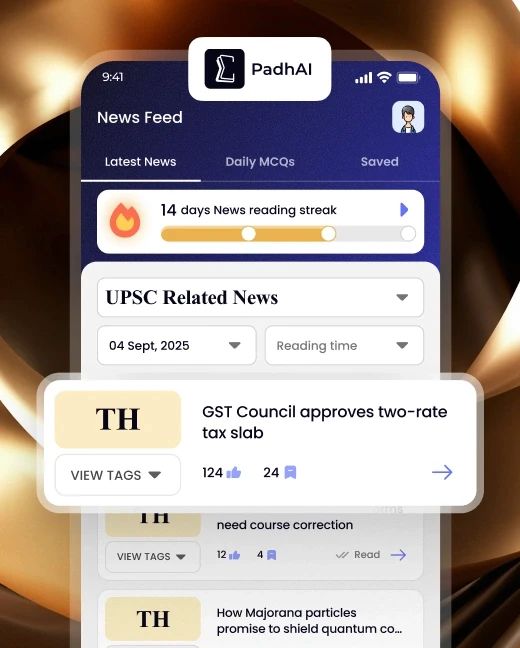
The best app for UPSC preparation if you want AI that actually understands the exam — not AI that's been duct-taped onto a video library.
PadhAI was built AI-first. Not retrofitted. Not "powered by AI" as a marketing line. The entire architecture is designed around how an aspirant actually studies: read something, get confused, need a specific reference, want to practice, check if the answer is good enough.
The moment that put PadhAI on the map — scoring 170/200 in UPSC Prelims 2024 within 7 minutes. The general cutoff is usually under 100. That's not a parlour trick. It shows the AI engine genuinely understands UPSC-pattern questions at a level most human test-takers don't reach.
Best suited for: Aspirants who want AI-driven doubt resolution, precise source referencing, and adaptive practice — especially self-learners who don't have access to a coaching mentor.
Pros
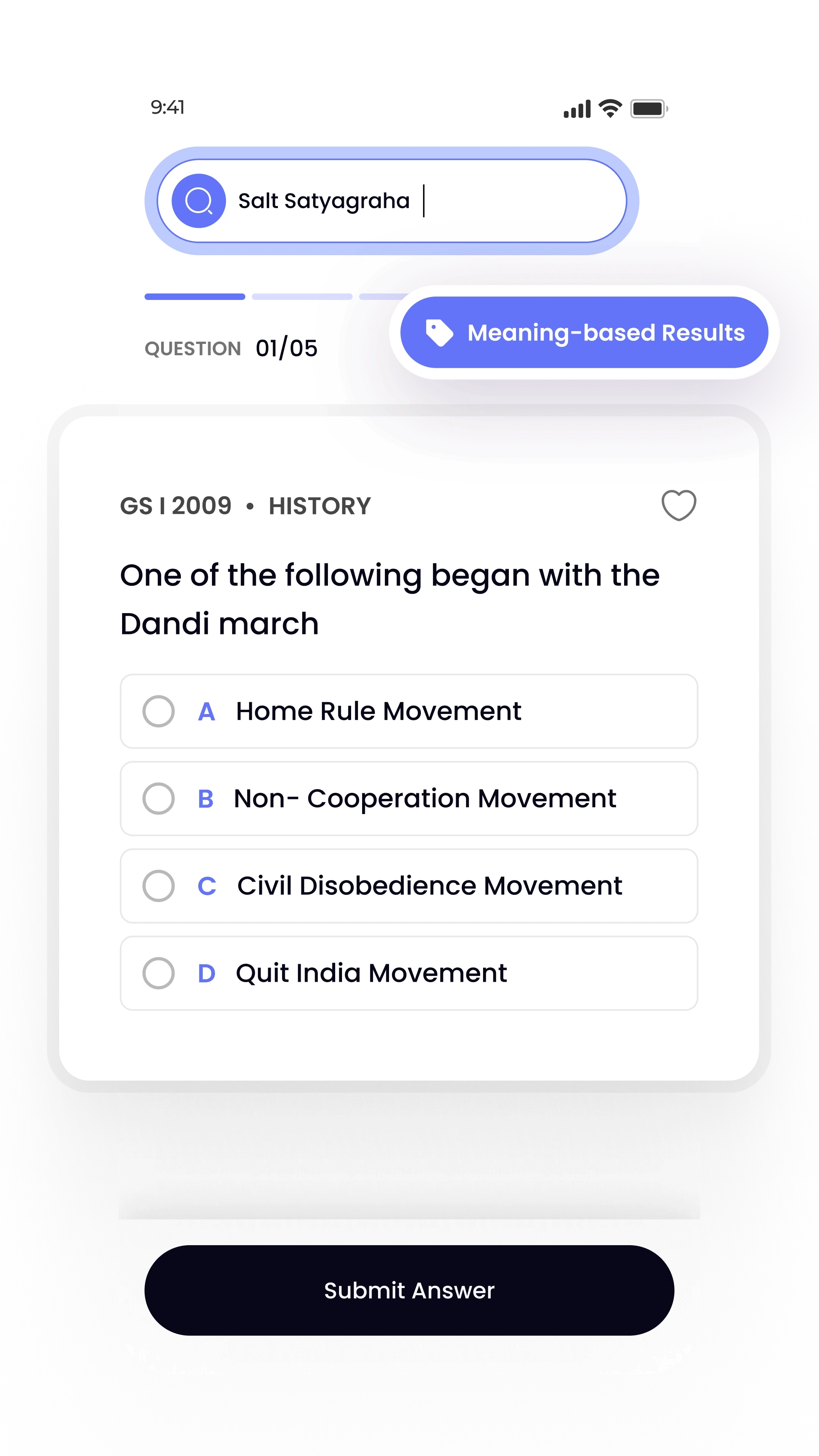
PYQ-linked current affairs. Daily news from Indian Express and The Hindu, automatically connected to related previous year questions. You see the pattern between what's happening now and what UPSC has asked before.
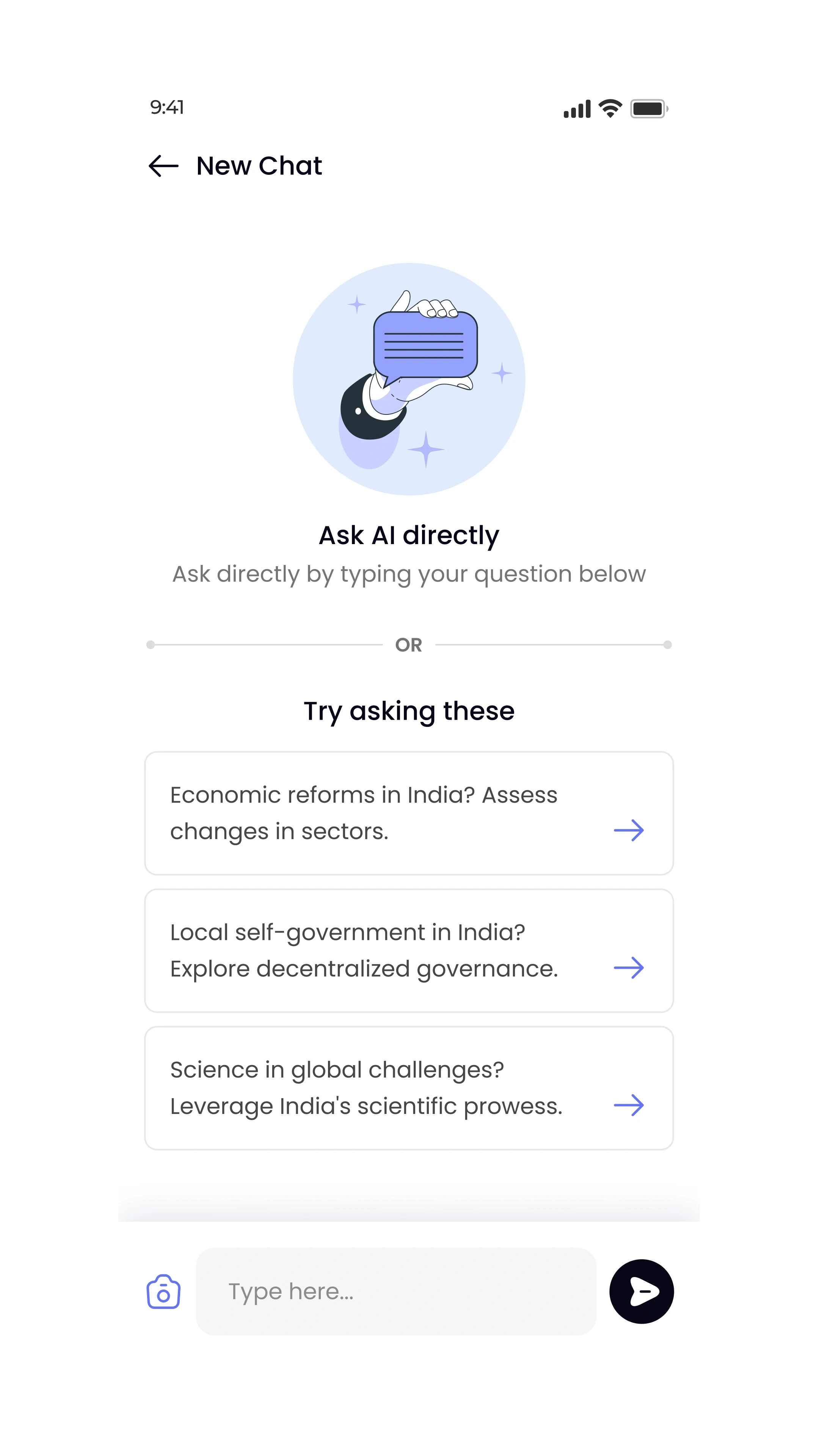
5 specialized AI agents. Topic explorer, MCQ practice, PYQ analysis, NCERT mastery, current affairs review — each handling a different prep dimension. Not one generic chatbot pretending to do everything.
Book Chat is a game-changer. Ask a question, get an answer with the exact chapter, section, and subsection reference. Not "refer to Laxmikanth" — actual pinpointed citations. This alone saves hours of flipping through books.
Generous free tier. Most AI-powered apps lock useful features behind paywalls immediately. PadhAI lets you experience what it's actually made of — before you spend a rupee.
Competitive quizzes against real aspirants. One-on-one Prelims quiz battles. Adds an element of pressure that solo practice can't replicate.
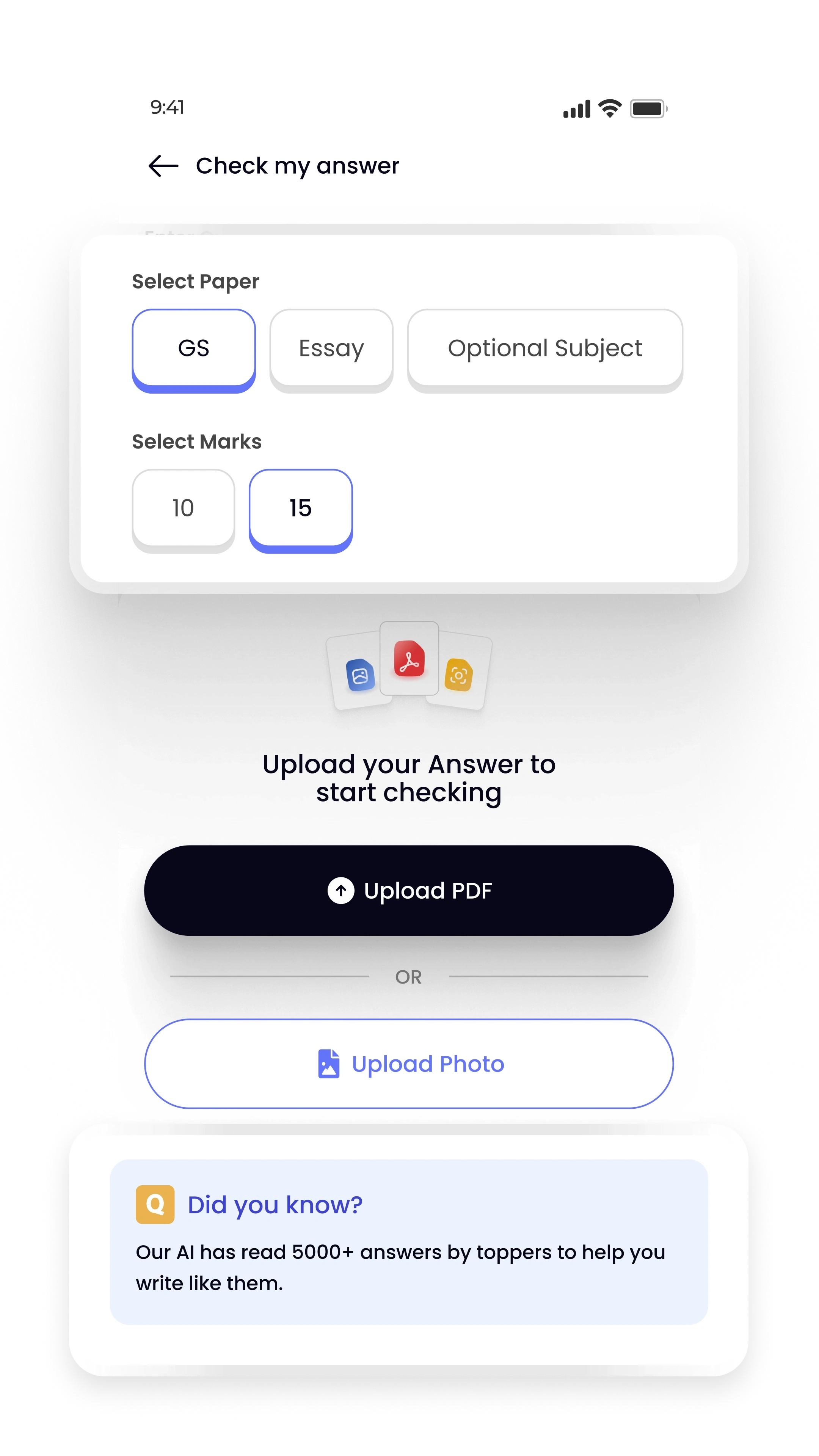
Mains Answer Evaluation Tool designed to provide instant, detailed feedback on UPSC Mains practice answers whether you are an aspirant or an educator.
Cons
No long track record. It's newer than Unacademy or Vision IAS. The AI is impressive, but the platform hasn't been through 5+ UPSC cycles yet.
No live classes. If you need a teacher explaining things on video in real-time, PadhAI doesn't offer that. It's built around self-paced AI interaction.
Hindi medium support is limited. Hindi-medium aspirants will find better options in Drishti or Unacademy.
Pro pricing (Rs 14/day) adds up. Over a year, that's roughly Rs 5,800. Not the cheapest, not the most expensive — but worth knowing upfront.
2. Unacademy
The biggest platform in the space by sheer scale. 600+ UPSC educators, 59 million learners overall, 2,600+ free live classes daily across all categories. The numbers are hard to argue with.
What Unacademy gets right is the live class model. Real-time interaction with educators, doubt-clearing sessions, structured courses with PDFs and quizzes. If you learn better in a classroom-style environment, this is the closest digital equivalent.
Best suited for: Aspirants who prefer live, interactive learning with structured schedules and don't mind paying premium prices for mentorship.
Pros
Massive educator network. 600+ teachers for UPSC alone. You can find someone whose teaching style clicks with you.
Free content is substantial. Between the app and YouTube, there's enough free material to cover most of Prelims GS.
Iconic tier includes answer evaluation. Human mentors review your Mains answers, provide physical study material, and assign a personal coach.
Structured course format. Daily schedules, PDFs, live tests — mimics the discipline of an offline coaching class.
Cons
Optional subject coverage is weak. This part often gets ignored in reviews. If your optional isn't a popular one, Unacademy probably won't have deep content for it.
Play Store rating: 3.21/5. From 1.2 million ratings. Users consistently report app crashes and glitches after updates. That's not a minor inconvenience during exam season.
Pricing is steep. Plus starts at Rs 1,200/month. Iconic at Rs 4,272/month. Over 12-18 months of preparation, the total cost rivals physical coaching.
No AI doubts resolution. In 2026, not having instant AI-powered doubt clearing feels like a gap. You're dependent on scheduled doubt sessions.
3. Vision IAS
If someone says they cleared UPSC without using PT365 or Mains365, most aspirants won't believe them. That's the kind of trust Vision IAS has built.
Their test series is widely considered the gold standard. Not because the questions are easy or hard — because the model answers teach you how to think and write for this exam. Knowing content and presenting it in 200 words with the right structure are two completely different skills. This is where things usually break for people.
Best suited for: Serious aspirants focused on Mains answer writing and test series. Works best as a core test-prep platform alongside other apps for content and current affairs.
Pros
Gold standard test series. Prelims and Mains both. The model answers are practically a course in answer writing by themselves.
PT365/Mains365 are near-universal. Almost every topper references them. The current affairs compilation format is battle-tested.
Model answers teach structure. Not just "what to write" but "how to write it." That's the part most apps miss entirely.
Cons
Premium pricing. Higher end of the market. Not ideal for budget-conscious aspirants.
Content overload. The volume can overwhelm beginners. Better suited for aspirants who already have a base and need test practice.
App is supplementary. Vision IAS is fundamentally a coaching institute. The app adds to their offline/online classes — it's not a standalone product.
No AI features. No AI doubt resolution, no adaptive learning, no instant answer evaluation.
4. Testbook (+ Nirnay IAS)
Testbook wasn't originally a UPSC platform. They built their name on SSC and Banking. But their mock test infrastructure — that's where the real strength is.
2 lakh+ mock tests. An AI-powered analytics dashboard that tells you exactly which topics are dragging your score down and by how much. Previous year papers going back years. The data-driven approach to test preparation is probably the best available.
The UPSC-specific play is Nirnay IAS — their sub-brand with former civil servants as mentors. Claims 50+ UPSC CSE 2024 selections.
Best suited for: Data-driven aspirants who want detailed performance analytics and mock test volume. Strong complement to a content-focused primary platform.
Pros
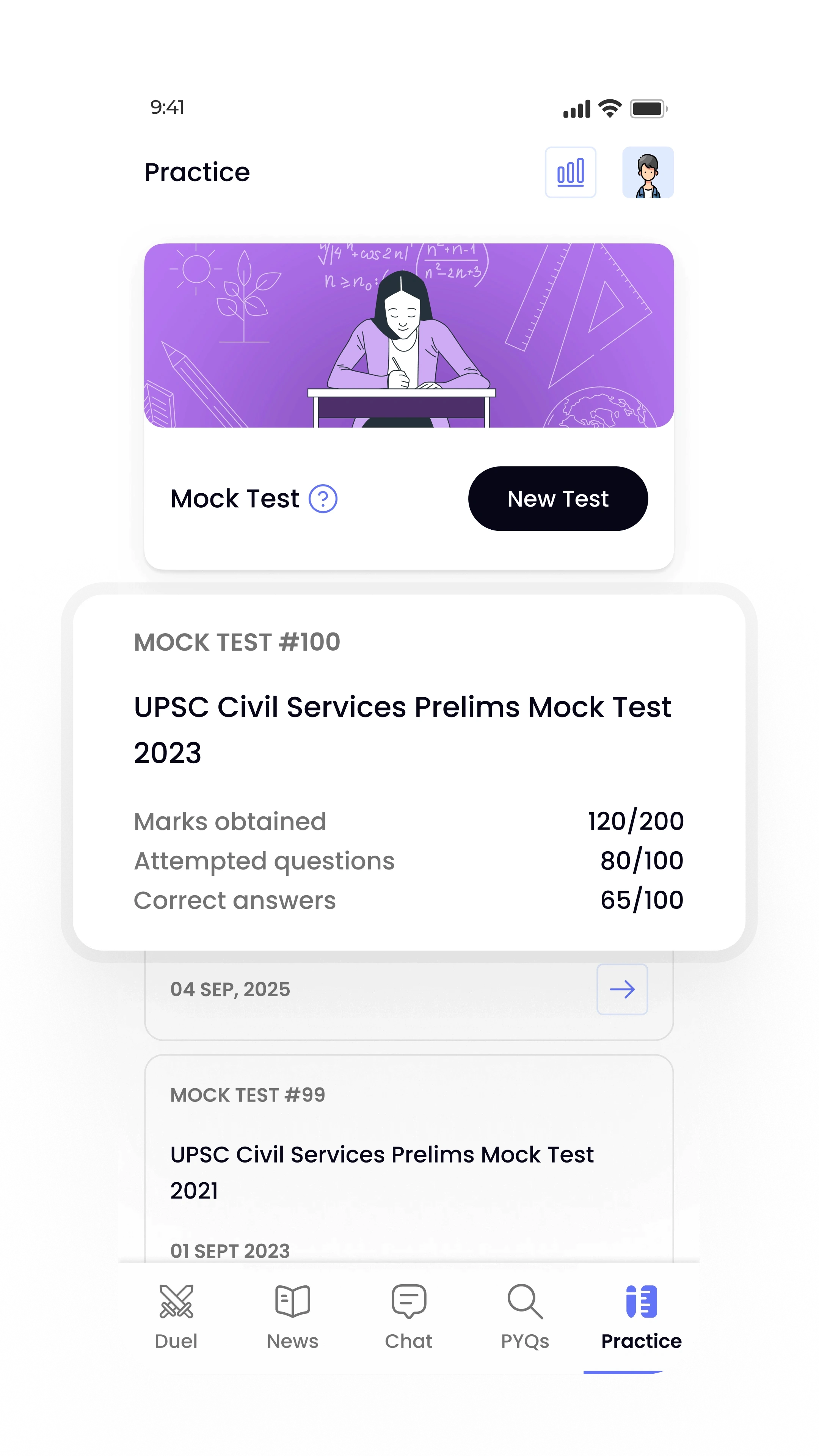
Best mock test analytics. The AI performance dashboard breaks down accuracy by topic, time spent per question, comparison with other test-takers. Genuinely useful data.
Nirnay IAS adds credibility. Former civil servant mentors, 1:1 mentorship, daily current affairs. Rs 79,999 for 24 months.
50 million+ downloads. Large peer group for comparison and competitive benchmarking.
Multilingual support. 12+ languages. Wider accessibility than most competitors.
Cons
UPSC content depth is shallower. You can feel the difference compared to platforms built exclusively for civil services. The core DNA is still SSC/Banking.
Nirnay IAS is expensive. Rs 79,999 for 24 months is a significant commitment. The Prelims crash course at Rs 3,499 is more accessible.
App interface is cluttered. Too many exam categories competing for screen space. UPSC content can feel buried.
5. Drishti IAS
Drishti has been a trusted name in UPSC coaching for years, especially in the Hindi-medium space. Their recent app upgrade was aggressive — full AI integration that actually adds value.
AI summaries condense hour-long lectures into focused key points. AI Quiz generates assessments tailored to the video you just watched. Real-time Q&A for instant doubt clearing. It's one of the first established coaching brands to integrate AI meaningfully rather than superficially.
Best suited for: Hindi-medium aspirants and those who prefer a hybrid model of established coaching expertise combined with modern AI tools.
Pros
Best option for Hindi medium. Among established brands, Drishti's Hindi content quality is unmatched.
AI features that work. AI summaries, AI quizzes, real-time AI Q&A — these aren't decorative. They actually reduce study time.
Strong offline presence. Physical + digital hybrid model means the content has been refined through years of classroom teaching.
Comprehensive current affairs. Daily updates with UPSC-relevant analysis in both Hindi and English.
Cons
Pricing isn't transparent. You have to dig to find costs. Some features are behind paywalls with no clear pricing visible upfront. This part often gets ignored in reviews but it matters.
The app feels heavy. Content overload is real. New users might feel lost navigating the interface.
English content is secondary. If you're an English-medium aspirant, other platforms offer a more polished experience.
6. ClearIAS
Built exclusively for UPSC. No SSC, no banking, no GATE, no MBA. Just civil services preparation. That singular focus makes the content sharper than platforms trying to serve 25 exam categories at once.
The study material breaks down complex topics without dumbing them down. 40+ mock exams, 4,000+ questions, monthly current affairs capsules mapped directly to the UPSC syllabus. And most of it is free.
Best suited for: Self-learners on a budget who want clean, focused UPSC content without the noise of multi-exam platforms.
Pros
Most content is free. Study materials, guidance articles, strategy pieces — all accessible without payment. Mock tests are the primary paid feature and they're affordable.
UPSC-only focus shows. Content is tighter, more relevant, less diluted than multi-exam apps.
Simplified without being shallow. Complex GS topics explained in a way that's accessible but still exam-ready.
Cons
Two separate apps. Test-Prep and Learning are different downloads. Confusing and unnecessary.
Small educator base. Can't match Unacademy's 600+ teachers. Limited perspectives on some topics.
No live classes. Purely self-paced. If you need real-time interaction, look elsewhere.
No AI features. In 2026, this is starting to feel like a gap.
7. StudyIQ IAS
Gaurav Kaushal built one of the biggest UPSC YouTube channels before the app existed. That YouTube-first DNA shows — the content is practical, daily, and consistent.
Daily Hindu analysis, daily PIB analysis, monthly current affairs magazine, burning issues. For current affairs coverage specifically, StudyIQ is hard to beat. The depth is there without the bloat.
Best suited for: Aspirants who need strong, consistent daily current affairs coverage in Hindi or English alongside their primary study platform.
Pros
Best daily current affairs routine. Hindu analysis, PIB analysis, Yojana coverage — all formatted for UPSC relevance. Consistent quality, day after day.
Bilingual strength. Hindi and English content at comparable quality. Genuine bilingual support, not just translated material.
YouTube + App ecosystem. Massive free video library on YouTube supplements the paid app content.
Cons
App is cluttered. Too many exam categories share the interface. UPSC-specific navigation could be better.
Optional subject coverage is uneven. Some optionals have solid content, others feel like afterthoughts.
Not a complete solution. Works best as a current affairs supplement, not a standalone prep platform.
8. SuperKalam
60-second Mains answer evaluation. That's the feature that matters.
Write an answer. Submit. Get AI feedback in under a minute. No waiting 3-5 days for a mentor. No paying per evaluation. For aspirants who need volume in answer writing practice — and volume is exactly what Mains demands — this changes the math completely.
Best suited for: Aspirants focused on Mains answer writing who need rapid, frequent feedback on their responses without mentorship costs.
Pros
Fastest answer evaluation available. 60 seconds vs. days. For building answer writing as a daily habit, the speed difference is transformative.
Strong analytics dashboard. Study hours, per-subject accuracy, performance trends, peer comparison. The data is actionable.
Prelims PYQs + NCERT learning. Covers basics alongside the Mains focus.
Cons
AI personalization is basic. Compared to PadhAI's specialized agents, SuperKalam's AI feels more generic.
Better as a supplement. Doesn't have the content depth to be your primary platform. Works best paired with a content-heavy app.
Newer platform. Track record is still developing.
9. InsightsIAS
InsightsIAS did something years ago that changed Mains preparation permanently — the SECURE initiative. Daily answer writing prompts framed around current affairs, with peer-shared responses.
That single feature has probably improved more aspirants' answer writing than any paid course. The community around daily writing practice is genuine and active.
Best suited for: Aspirants who want structured daily answer writing practice with a peer community. Ideal for Mains preparation discipline.
Pros
SECURE initiative is legendary. Daily answer writing prompts with peer responses. Builds the writing habit that Mains demands.
Strong daily initiatives. Current affairs compilation, static quizzes, monthly compilations — all designed to maintain daily study rhythm.
Free daily content. Most initiatives are accessible without payment.
Cons
Interface feels dated. Compared to newer apps, the design and UX lag behind significantly.
No AI features. No doubt resolution, no adaptive learning, no instant feedback beyond peer responses.
Can overwhelm beginners. The volume of daily initiatives can feel like too much if you're just starting.
ILP (paid programme) pricing isn't competitive for what you get compared to newer alternatives.
10. Civilsdaily
Civilsdaily's underrated strength: the Habit Tracker.
UPSC is a 12-18 month marathon for most people. The number one reason aspirants fail isn't knowledge gaps. It's inconsistency. Missing days turn into missing weeks. The Habit Tracker monitors whether you're actually showing up daily. Simple idea. Surprisingly effective.
The content is strong too — articles that go beyond surface-level reporting and connect current events to the UPSC syllabus.
Best suited for: Aspirants who struggle with daily consistency and want structured habit-building alongside quality current affairs content.
Pros
Habit Tracker is unique. No other UPSC app does this. For long-duration prep, consistency tracking matters more than most features.
"Explained Series" goes deep. Current affairs articles that actually analyze, not just summarize.
Affordable premium plans. Good quality-to-price ratio compared to larger platforms.
Cons
Smaller user base. Fewer peers for comparison and community engagement.
Limited video library. Can't compete with Unacademy or StudyIQ on video content volume.
Not a standalone solution. Best used alongside a primary learning and test platform.
How to Build Your UPSC App Stack
Don't download all 10. That's the fastest way to prepare for nothing.
Here's what actually works — pick 3, maybe 4:
One for AI + doubt resolution: PadhAI or SuperKalam. Use it whenever you're stuck instead of spending 30 minutes searching forums for answers.
One for mock tests: Vision IAS (gold standard) or Testbook (best analytics). Weekly test practice once you've covered enough syllabus.
One for current affairs: StudyIQ or Civilsdaily. Daily. Non-negotiable.
Optional — one for structured learning: Unacademy or Drishti if you need the classroom-style structure.
And one thing most guides won't tell you — no app replaces writing with pen and paper. Mains is a handwritten exam. Your hand needs training for 3-hour writing sessions. Apps teach you what to write. They can't condition your hand to keep going on page 16.
Free vs. Paid Apps — Where to Spend
Prelims: You can cover most of it for free. ClearIAS study material, PadhAI's free tier, Unacademy's YouTube channel, StudyIQ daily current affairs. Genuinely enough for Prelims foundation.
Mains: This is where paid starts mattering. Answer evaluation (SuperKalam, Unacademy Iconic), structured test series (Vision IAS), optional subject mentorship. The free-to-paid gap becomes real at this stage.
Interview: Apps can't meaningfully help here. That's still human-to-human. Mock interviews with peers or mentors. No shortcut.
If the budget is tight, invest in one good test series first. Everything else has free alternatives that are good enough.
Final Verdict
The best app for UPSC preparation depends on where you are in your journey and what you actually need.
If forced to pick one, PadhAI offers the most complete AI-powered experience for the price. The Book Chat feature alone justifies trying it. But no single app is enough for UPSC.
The smart play in 2026: combine an AI-first platform for daily study and doubt resolution, a gold-standard test series for practice, and a reliable current affairs source for daily reading.
Pick your stack. Stay consistent with it. And remember — the app is a tool. The work is still yours to do.
Frequently Asked Questions (FAQs)
Q1. What is the best app for UPSC 2026 Mains and Prelims?
A. PadhAI comes out as the most complete AI-powered experience for the price, though we recommend a multi-app stack including Vision IAS for tests and StudyIQ for current affairs.
Q2. Should I use free apps or paid apps for UPSC preparation?
A. Use free apps for foundational content and current affairs, but consider paid apps for high-ROI features like AI answer evaluation, personal mentorship, and advanced test analytics.
Q3. Which AI tool is best for UPSC?
A. PadhAI is considered the best AI tool by aspirants due to its specialized AI agents, page-level citations in "BookChat," and its 170/200 score on the 2024 Prelims.
Q4. Can I prepare for UPSC on my own using apps?
A. Yes, new apps allow self-learners to access expert-level UPSC doubt resolution and evaluation that previously required expensive coaching.
Q5. How can I evaluate my UPSC Mains answers for free using AI?
You can use PadhAI App’s Mains Answer Evaluation Tool to get instant analysis on your handwritten responses.