UPSC Prelims Answer Key 2026 – GS Paper 1 & CSAT PDF
The UPSC Prelims Answer Key 2026 covers GS Paper 1 and CSAT Paper 2, both held on May 24, 2026. UPSC plans to release the provisional answer key soon after the exam under its new reform policy. Candidates can download the official PDF from upsc.gov.in and raise objections through the QPRep portal.

Last updated
The UPSC Prelims Answer Key 2026 is a set-wise (Set A, B, C, D) PDF document that UPSC publishes after the Preliminary Examination.
Each set corresponds to a different arrangement of the same question paper given to candidates across centres.
UPSC Prelims 2026 GS Paper 1 Answer Key PDF | |
Set A | |
Set B | |
Set C | |
Set D | |
UPSC Prelims 2026 CSAT Answer Key PDF | |
Set A | |
Set B | |
Set C | |
Set D | |
The answer key serves two purposes.
First, it gives candidates an accurate way to self-assess their performance before the official result comes out
Second, it opens a formal window for candidates to challenge any answer they believe is incorrect, using the Question Paper Representation Portal, commonly called QPRep.
There are two types of answer keys in circulation after every Prelims:
Unofficial answer keys — published by coaching institutes such as Vajiram & Ravi, IMS, Vision IAS, and others, often within hours of the exam. These are memory-based or expert-prepared, and they give you a quick first read of how you performed.
Official provisional answer key — released by UPSC on upsc.gov.in. This is the document that carries weight. If UPSC accepts an objection you raise, the final answer key and cut-off both change accordingly.
Join our WhatsApp Community
The Civil Services Preliminary Examination 2026 was conducted by UPSC on May 24, 2026 across examination centres throughout India.
The exam follows a fixed two-paper structure that has remained consistent over the years.
Feature | Details |
Exam Name | UPSC Civil Services Preliminary Examination 2026 |
Conducting Body | Union Public Service Commission (UPSC) |
Exam Date | May 24, 2026 (Sunday) |
Papers | GS Paper 1 and CSAT (Paper 2) |
Exam Mode | Offline (OMR-based) |
Official Website | upsc.gov.in |
Answer Key Release | Expected soon after exam (new 2026 reform) |
Objection Portal | QPRep (upsc.gov.in) |
Source: UPSC official notification — upsc.gov.in (2026)
UPSC Prelims Expected CutOff 2026
The exam runs in two shifts on the same day. Missing either shift means disqualification from that year's cycle.
Paper | Shift | Timing |
GS Paper 1 | Morning | 9:30 AM to 11:30 AM |
CSAT (Paper 2) | Afternoon | 2:30 PM to 4:30 PM |
UPSC Preims Question Paper 2026
Add as a preferred Source on Google
The official UPSC Prelims answer key 2026 PDF will be hosted on the UPSC website once released. The steps below apply to the official provisional answer key.
UPSC Prelims 2026 GS Paper 1 Answer Key PDF | |
Set A | |
Set B | |
Set C | |
Set D | |
UPSC Prelims 2026 CSAT Answer Key PDF | |
Set A | |
Set B | |
Set C | |
Set D | |
The steps to download the answer key are listed below:
Visit the official UPSC website at https://www.upsc.gov.in/
Click on the "Examinations" tab in the top navigation
Select "Answer Keys" from the dropdown menu
Find and click on "Civil Services Preliminary Examination 2026"
Choose either GS Paper 1 or CSAT (Paper 2) based on what you need
Select your Question Paper Set (A, B, C, or D) as printed on your admit card
Click "Download" and save the PDF for your reference
For unofficial answer keys from coaching institutes, visit their individual websites. Vajiram & Ravi, for instance, publishes set-wise solutions prepared by expert faculty on the day of the exam itself.
UPSC Prelims Exam Analysis 2026
The GS Paper 1 answer key is the more consequential of the two. GS Paper 1 scores determine whether a candidate clears the Prelims cut-off and qualifies for the Mains Examination.
GS Paper 1 contains 100 questions, each carrying 2 marks. The total is 200 marks. For every wrong answer, one-third of the marks allotted (0.66 marks) are deducted as negative marking. Unattempted questions carry no penalty.
The subjects covered in GS Paper 1 include the following:
History (Ancient, Medieval, and Modern)
Art and Culture
Indian and World Geography
Indian Polity and Governance
Economy and Economic Development
Environment and Ecology
Science and Technology
Current Affairs (national and international)
Economy, Environment and Ecology, and Indian Polity consistently account for the largest share of questions. In 2025, for example, Economy had 18 questions, Environment had 15, and Indian Polity had 14 out of 100.
(Source: UPSC Previous Year Papers)
The CSAT (Civil Services Aptitude Test) is Paper 2 of the Prelims. It contains 80 questions, each worth 2.5 marks, with a total of 200 marks. Negative marking of one-third applies here too.
CSAT is qualifying in nature. Candidates must score at least 33%, which means at least 66 marks out of 200. Scores in CSAT are not counted when calculating the overall Prelims merit list or cut-off. Only GS Paper 1 scores determine Prelims ranking.
The CSAT answer key helps you confirm whether you crossed the qualifying threshold. The topics it covers are listed below:
Reading comprehension
Logical reasoning and analytical ability
Decision-making and problem-solving
General mental ability
Basic numeracy and data interpretation
Most candidates find CSAT clearing manageable with consistent practice. The 33% bar is set to serve as a filter rather than a competitive benchmark.
Understanding the marking scheme before you calculate your score is necessary. An overcount or undercount can give you a false picture of your performance.
Paper | Total Questions | Marks Per Question | Total Marks | Negative Marking | Qualifying Marks |
GS Paper 1 | 100 | 2 | 200 | -0.66 per wrong answer | Rank-based cut-off |
CSAT (Paper 2) | 80 | 2.5 | 200 | -0.83 per wrong answer | 66 marks (33%) |
How to Calculate Your UPSC Prelims Score 2026
The formula for calculating your estimated score is straightforward:
Use UPSC Marks Calculator for Instant Result
Score = (Correct Answers x Marks Per Question) — (Wrong Answers x Negative Marks)
For GS Paper 1:
If you answered 75 questions correctly and got 15 wrong: (75 x 2) — (15 x 0.66) = 150 — 9.9 = 140.1 marks
For CSAT:
If you answered 50 questions correctly and got 10 wrong: (50 x 2.5) — (10 x 0.83) = 125 — 8.3 = 116.7 marks (well above the 66-mark qualifying threshold)
A common mistake candidates make is forgetting that the negative marking deduction is one-third of the marks for that question — not a flat value. For GS Paper 1, that is 2/3 = 0.66. For CSAT, it is 2.5/3 = approximately 0.83.
The most significant change in 2026 is UPSC's decision to release the provisional answer key much sooner after the exam compared to previous years.
This reform directly addresses one of the longest-standing complaints from aspirants — the months-long wait between the Prelims exam and the answer key publication.
Under this new approach, UPSC may release the provisional answer key on or shortly after the exam date.
Candidates who wish to challenge any answer can do so through the Question Paper Representation Portal (QPRep) on the official website.
To raise an objection, candidates are expected to:
Log in to the QPRep portal on upsc.gov.in
Select the specific question they wish to challenge
Provide supporting documents from authentic and credible academic sources
Submit the representation within the window announced by UPSC
The QPRep system has been welcomed across student communities for making the process more structured and transparent.
If UPSC accepts an objection, the marks are adjusted across all candidates who attempted that question.
UPSC Prelims Previous Years' Subject-Wise Question Distribution (2020-2025)
Tracking the subject-wise question count across years tells you where UPSC's focus has shifted and where it has stayed consistent. The table below shows question counts by subject from 2020 to 2025.
Subject | 2025 | 2024 | 2023 | 2022 | 2021 | 2020 |
Economy | 18 | 13 | 16 | 16 | 14 | 21 |
Environment and Ecology | 15 | 13 | 16 | 18 | 18 | 19 |
Indian Polity | 14 | 19 | 15 | 12 | 18 | 15 |
Science and Technology | 13 | 11 | 10 | 15 | 13 | 13 |
International Relations | 8 | 6 | 10 | 11 | 2 | 3 |
Modern History | 8 | 3 | 3 | 3 | 7 | 9 |
Physical Geography | 7 | 8 | 3 | 2 | 2 | 1 |
Ancient History | 6 | 3 | 1 | 1 | 3 | 3 |
Art and Culture | 2 | 4 | 8 | 7 | 10 | 5 |
Indian Geography | 1 | 4 | 8 | 5 | 5 | 6 |
Medieval History | 0 | 1 | 3 | 5 | 4 | 2 |
Economy has been among the top-weighted subjects for six consecutive years. Environment has stayed consistently high, reflecting UPSC's emphasis on ecological knowledge.
Art and Culture saw a sharp rise from 2021 to 2023 but dropped off in 2025, showing that no subject is static in UPSC's question-setting pattern.
Last 5 Years' UPSC Prelims Answer Keys (2021-2025)
Year | GS Paper 1 Answer Key | CSAT Answer Key | Source |
2025 | Available on upsc.gov.in | upsc.gov.in | |
2024 | Available on upsc.gov.in | upsc.gov.in | |
2023 | Available on upsc.gov.in | upsc.gov.in | |
2022 | Available on upsc.gov.in | upsc.gov.in | |
2021 | Available on upsc.gov.in | Available on upsc.gov.in | upsc.gov.in |
Why the UPSC Prelims Answer Key 2026 Matters for Your Mains Preparation
The answer key does more than tell you your score. It changes how you plan the next three months.
If your estimated score from the GS Paper 1 answer key places you comfortably above the expected cut-off (typically between 85-110 marks, varying by year and category), you can start Mains preparation immediately rather than waiting for the official Prelims result.
This gives you a head-start of roughly 3 to 4 months over candidates who wait for the official result before shifting focus.
If your score puts you near the boundary, you have two choices: study both Prelims and Mains material simultaneously, or complete the Prelims objection process first to see if any corrections move your score upward.
The benefits of checking the answer key early are listed below:
Estimate your score before official results
Predict whether you qualify for Mains
Identify subject areas where errors clustered
Begin Mains-focused study earlier than competitors
Use objection filing to potentially recover marks on disputed questions
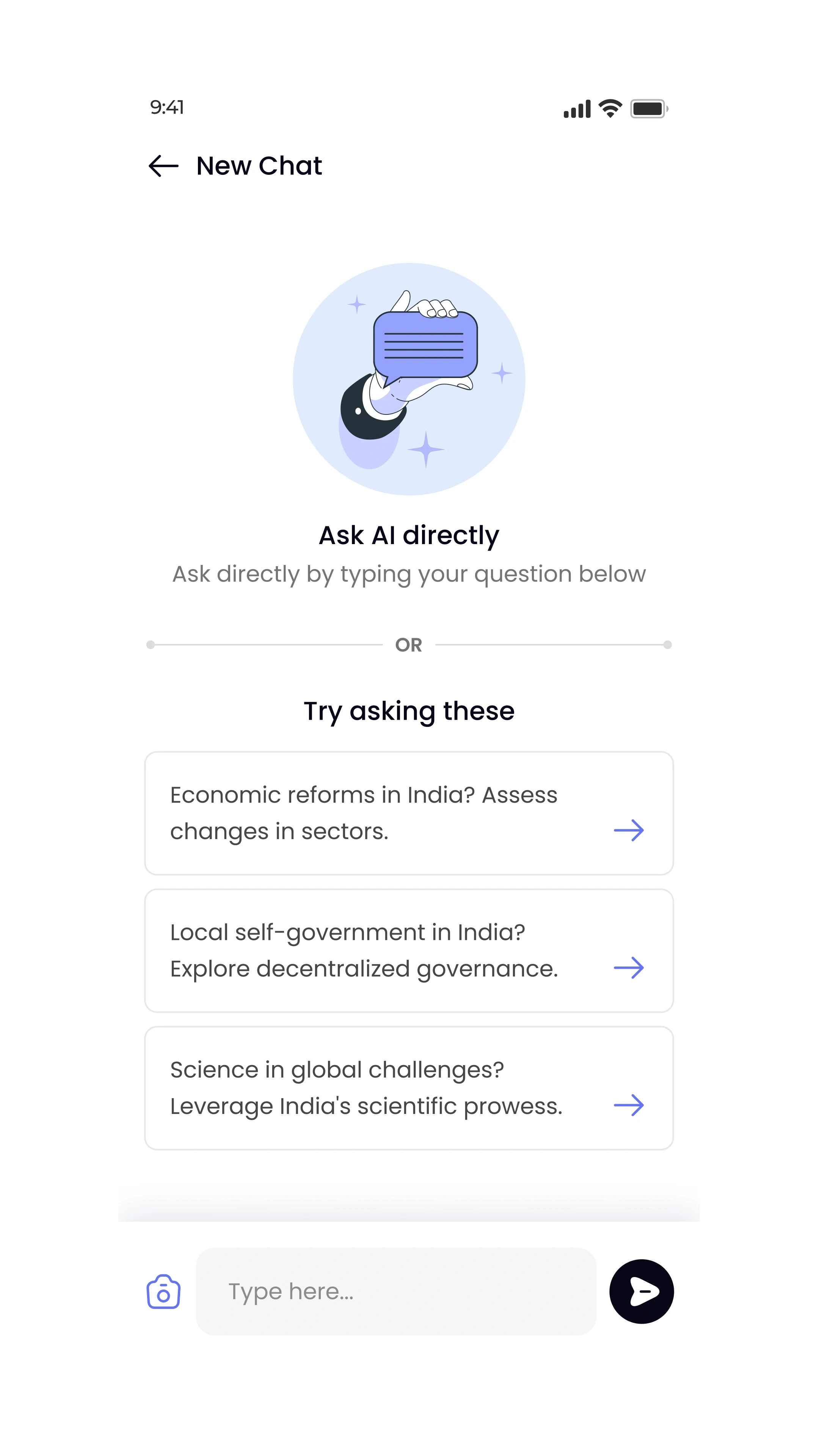
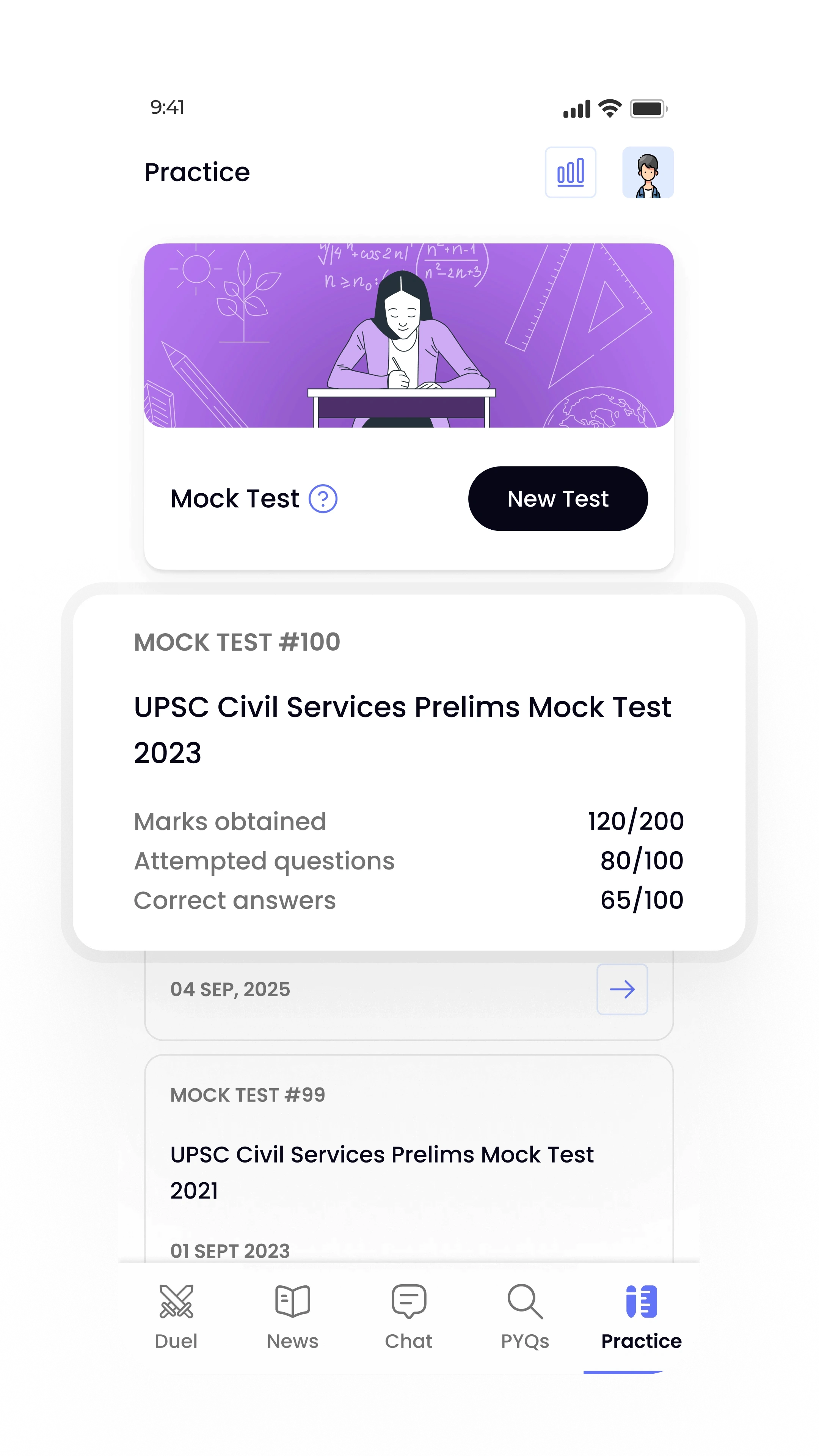
PadhAI, the AI-powered IAS exam app, lets you input your responses directly and get an immediate score estimate. The platform's AI tutor then maps your weak subject areas from GS Paper 1 onto the Mains syllabus, helping you plan study sessions without guesswork.
Is the Unofficial Answer Key Reliable?
Yes — with caution. Coaching institutes publish unofficial answer keys quickly and with expertise, but these are human-prepared documents.
Errors do occur, particularly on questions involving current affairs, environment, or science topics where multiple interpretations are possible.
The general practice among experienced aspirants is to use the unofficial key for a first estimate and then verify against the official provisional key once UPSC publishes it
If you find a discrepancy between your answer, the unofficial key, and the official key, that discrepancy may itself be grounds for an objection.
For maximum accuracy, compare answers across at least two unofficial keys from different sources before arriving at your score estimate.
Frequently asked question (FAQs)
When will the official UPSC Prelims Answer Key 2026 be released?
Can I challenge an answer in the UPSC Prelims Answer Key 2026?
Does CSAT score affect the UPSC Prelims cut-off?
Where can I download the UPSC Prelims Answer Key 2026 PDF?
How do I calculate my score using the UPSC Prelims Answer Key 2026?




Gajendra Singh Godara
Ex-UPSC Aspirant | Exam Preparation Expert
Gajendra Singh Godara is an IIT Bombay graduate and a UPSC aspirant with 4 attempts, including multiple Prelims and Mains appearances. He specializes in Polity, Modern History, International Relations, and Economy. At PadhAI, Gajendra leverages his firsthand exam experience to simplify complex concepts, creating high-efficiency study materials that help aspirants save time and stay focused.
No comments yet. Be the first to join the discussion!