Economic Survey 2025-26: Key Highlights & Summary PDF Download

Download the Economic Survey 2025-26 Summary PDF on India's GDP growth, agriculture, services & inflation trends. Note key highlights, major findings, and policy insights.

UPSC Prelims

Current affairs

Latest Update

Gajendra Singh Godara
Jan 30, 2026
12
mins read
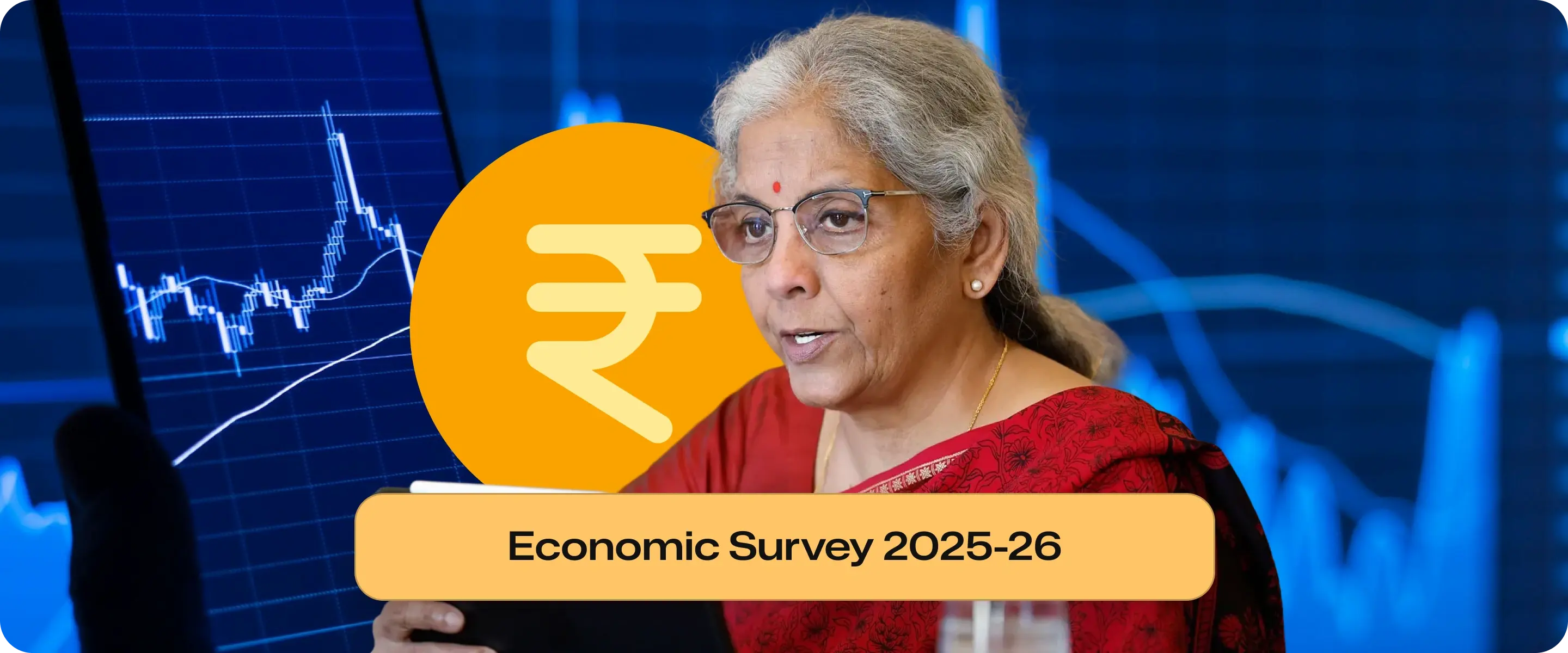
Economic Survey 2025-26

Key Points

  • The Economic Survey 2025-26 was tabled in Parliament on January 29, 2026, by the Union Finance Minister. Often described as the "report card" of the Indian economy, it serves as a critical document for policymakers, investors.

  • Authored by the Chief Economic Adviser (CEA), V. Anantha Nageswaran, this year’s survey provides a strategic roadmap for India's journey toward becoming a $5 trillion economy under the Viksit Bharat 2047 framework.

What is the Economic Survey 2025-26?

What is the Economic Survey 2025-26?

What is the Economic Survey 2025-26?

What is the Economic Survey 2025-26?

The Economic Survey of India is the flagship annual document of the Ministry of Finance. It provides a detailed review of the country's economic performance over the preceding financial year and outlines the government's perspective on macroeconomic performance, sectoral shifts, and emerging challenges.

Who Publishes the Economic Survey of India?

The Economic Survey of India is published by the Economic Division of the Department of Economic Affairs, Ministry of Finance, under the overall guidance of the Chief Economic Adviser (CEA). While it was first presented in 1950-51 as part of the budget documents, it was separated from the Union Budget in 1964 to allow for a more objective and independent review of the economy.

How to Download Economic Survey 2026 PDF?

Aspirants can download the Economic Survey 2026 document PDF format from the official website.

Join our WhatsApp Community

Join our WhatsApp Community

Join our WhatsApp Community

Join our WhatsApp Community

Difference Between Union Budget and Economic Survey

Difference Between Union Budget and Economic Survey

Difference Between Union Budget and Economic Survey

Difference Between Union Budget and Economic Survey

One of the most common questions aspirants ask is the difference between Union Budget and Economic Survey. Think of the Economic Survey as the "diagnosis" of the economy’s health and the Union Budget as the "prescription" or the financial plan for the next year.

Aspect

Economic Survey

Union Budget

Nature

Analytical and diagnostic document

Financial and legal statement

Focus

Past performance and future outlook

Future allocation of resources and taxes

Prepared By

Chief Economic Adviser

Finance Minister

Content

GDP trends, inflation, employment, sector-wise performance, and policy suggestions.

Tax proposals, government spending, fiscal deficit, and schemes.

Binding Nature

Advisory and non-binding

Legally binding financial plan

UPSC Current Affairs Magazines

UPSC Current Affairs Magazines

UPSC Current Affairs Magazines

UPSC Current Affairs Magazines

Read Latest UPSC Current Affairs

Read Latest UPSC Current Affairs

Read Latest UPSC Current Affairs

Read Latest UPSC Current Affairs

Economic Survey 2025-26 Summary: Key Macroeconomic Highlights

Economic Survey 2025-26 Summary: Key Macroeconomic Highlights

Economic Survey 2025-26 Summary: Key Macroeconomic Highlights

Economic Survey 2025-26 Summary: Key Macroeconomic Highlights

Global Context and Macroeconomic Stability

  • Economic Performance: India anticipates a full-year real growth rate of over 7%.

  • Credit Ratings: In 2025, India received credit rating upgrades from Morningstar DBRS, S&P (from BBB- to BBB), and R&I.

  • Geopolitics: Merchandise exports faced challenges from a new 25% reciprocal tariff and an additional 25% penal tariff from the US.

  • Power Gap: The Lowy Institute’s Power Gap Index gives India a score of -4.0, the lowest in Asia excluding Russia and North Korea, suggesting India is operating below its strategic potential.

Chapter 1: State of the Economy – Pushing the Growth Frontier

  • Growth Figures: The First Advance Estimates (FAE) for FY26 place real GDP growth at 7.4% and GVA growth at 7.3%.

  • Potential Growth: India’s medium-term potential growth rate has been revised upward from 6.5% to 7.0%.

  • Demand Side: Private Final Consumption Expenditure (PFCE) share in GDP rose to 61.5% in FY26, the highest since FY12. Gross Fixed Capital Formation (GFCF) share is estimated at 30.0%.

  • Supply Side: Services remain the key driver, growing at 9.1% in FY26.

  • Nowcasting: A new internal model nowcasts real GDP growth for Q3 FY26 at 7%.

Chapter 2: Fiscal Developments

  • Fiscal Deficit: The government fulfilled its 2021 promise to reduce the Union fiscal deficit by more than half from 9.2% in FY21, targeting 4.4% for FY26.

  • Revenue Resilience: Revenue receipts increased to 9.1% of GDP post-pandemic. Non-corporate tax collections rose to 3.7% of GDP in FY25 (PA).

  • Capital Expenditure: Effective capex as a share of GDP rose to 4.0% in FY25.

  • Debt Profile: General government debt-to-GDP ratio has been reduced by 7.1 percentage points since 2020. The goal is to converge to a debt-to-GDP ratio of 50 ± 1% by FY31.

Chapter 3: Monetary Management and Financial Intermediation

  • Monetary Policy: The repo rate was reduced by 100 bps to 5.25% by December 2025. Cash Reserve Ratio (CRR) was cut to 3.0%.

  • Banking Health: Gross Non-Performing Asset (GNPA) ratios declined to a multi-decade low of 2.2% (September 2025).

  • Capital Markets: Unique investors crossed the 12-crore mark in September 2025. Demat accounts exceeded 21.6 crore.

  • Insolvency (IBC): Creditors recovered 94% of the fair value of resolved businesses.

Chapter 4: External Sector

  • Exports: India’s total exports (merchandise and services) hit a record USD 825.3 billion in FY25.

  • Remittances: India remains the world's largest recipient, with inflows reaching USD 135.4 billion in FY25.

  • Foreign Reserves: Reserves reached USD 701.4 billion as of 16 January 2026, providing 11 months of import cover.

  • External Debt: The external debt-to-GDP ratio stands at a modest 18.4%.

Chapter 5: Inflation – Tamed and Anchored

  • Retail Inflation: Headline CPI inflation declined to 1.7% in FY26 (April–December).

  • Core Inflation: Adjusted core inflation (excluding precious metals like gold and silver) decelerated to 2.3% in December 2025.

  • Sectoral Reversal: The terms of trade for manufacturing relative to agriculture declined by 50%, from 1.29 in FY05 to 0.65 in FY25.

Chapter 6: Agriculture and Food Management

  • Production: Foodgrain production for AY 2024-25 is estimated at 3,577.3 LMT.

  • Horticulture: Production reached 367.72 million tonnes in 2024-25, surpassing foodgrains.

  • Support Schemes: PM-KISAN has released over ₹4.09 lakh crore since inception.

  • Irrigation: Gross irrigated area share rose to 55.8% in 2022-23.

Chapter 7: Services Sector

  • GDP Contribution: Services share in GDP rose to 53.6% in H1 FY26.

  • Global Positioning: India is the world’s 7th largest exporter of services.

  • GCC Ecosystem: India hosts over 1,700 Global Capability Centres, employing more than 19 lakh professionals.

  • Digital: Data centre capacity is projected to reach 8 GW by 2030.

Chapter 8: Industry – Structural Transformation

  • Tech Intensity: Medium- and high-technology activities now account for 46.3% of India’s total manufacturing value added.

  • Electronics: Mobile manufacturing production value rose from ₹18,000 crore (FY15) to ₹5.45 lakh crore (FY25).

  • Innovation: India ranks 3rd globally in scientific research output and 38th in the Global Innovation Index 2025.

  • MSMEs: They contribute 31.1% to GDP and roughly 48.6% to exports.

Chapter 9: Investment and Infrastructure

  • Connectivity: The National Highway network expanded by 60% since FY14 to 1,46,572 km.

  • Railways: 99.1% of the rail network was electrified by October 2025.

  • Aviation: Airports increased from 74 in 2014 to 164 in 2025.

  • Rural Water: Jal Jeevan Mission now covers over 81% of rural households.

Chapter 10: Environment and Climate Change

  • Renewables: Non-fossil sources now constitute 51.93% of total installed power capacity. India ranks 3rd globally in solar capacity.

  • Nuclear: The SHANTI Act, 2025 was passed to enable private sector participation in nuclear power. The target is 100 GW of nuclear capacity by 2047.

  • Green Bonds: Cumulative sovereign green bond issuance reached ₹72,697 crore.

Chapter 11: Education and Health

  • Schools: 13,076 PM SHRI schools have been established.

  • Higher Education: Gross Enrolment Ratio (GER) reached 29.5 in 2022-23.

  • Health Outcomes: IMR declined by 37% over the last decade to 25 deaths per 1,000 live births in 2023.

  • Obesity: 24% of women and 23% of men are now overweight or obese.

Chapter 12: Employment and Skill Development

  • Total Employment: 56.2 crore people were employed as of Q2 FY26.

  • Reforms: Four Labour Codes were notified for implementation in November 2025.

  • Unorganised Sector: The e-Shram portal has registered over 31 crore workers.

  • Training: Vocational training acquisition among the 15–59 age group rose to 34.7% in 2023-24.

Chapters 13-16: Rural, Urban, AI, and Strategic Resilience

  • Rural: The VB-G RAM G Act, 2025 replaces MGNREGA, providing a legal guarantee of 125 days of work.

  • Urban: Satellite data suggests India is 63% urban, significantly higher than the 31% reported in the 2011 Census.

  • AI: India’s strategy focuses on a "bottom-up" approach, prioritising small, application-specific models over resource-heavy frontier models.

  • Governance: The Task Force on Compliance Reduction has already implemented 76% of identified priority reforms across states.

Add as a preferred Source on Google

Add as a preferred Source on Google

Add as a preferred Source on Google

Add as a preferred Source on Google

New Themes in Economic Survey 2025-26

New Themes in Economic Survey 2025-26

New Themes in Economic Survey 2025-26

New Themes in Economic Survey 2025-26

The Economic Survey 2026 summary this year introduces several forward-looking themes crucial for UPSC Mains.

1. Evolution of the AI Ecosystem

India is positioning itself as a leader in AI applications.

  • Data Strategy: The Survey highlights data as a strategic resource and proposes a framework for trusted cross-border data flows while retaining domestic value.

  • Startup Ecosystem: India’s technology startup ecosystem is the 3rd largest in the world, with a rapid rise in GenAI startups.

2. Energy Transition: The Nuclear Push

Clean energy is no longer just about solar and wind.

  • Nuclear Target: The Survey sets a target of 100 GW of nuclear capacity by 2047.

  • SHANTI Act (2025): This new act enables private and state participation in the nuclear sector with a graded liability framework.

3. Urbanisation and Cities

Cities are viewed as "agglomeration economies" that need to work better for citizens.

  • Floor Space Index (FSI): The Survey notes that India's city FSI is lower than global peers and suggests unlocking land productivity.

  • Waste Management: 98% of urban wards now have door-to-door collection, up from negligible levels in 2014.

How to Prepare Economic Survey for the UPSC Exam?

How to Prepare Economic Survey for the UPSC Exam?

How to Prepare Economic Survey for the UPSC Exam?

How to Prepare Economic Survey for the UPSC Exam?

For Economic Survey 2026 UPSC preparation, follow the "3-Stage Strategy":

  1. For Prelims: Focus on growth rates (GDP, Inflation), fiscal deficit targets, and names of new acts like the SHANTI Act or Jan Vishwas Act.

  2. For Mains: Use keywords like "Virtuous Cycle of Investment," "Physical-Digital Convergence," and "Existential Priorities in Employment" for value addition in GS III and Essay papers.

  3. For Interview: Develop a balanced view on controversial topics like unemployment trends or the shift toward nuclear energy using the Survey's data-backed logic.

Frequently asked question (FAQs)

What is the Economic Survey 2025-26?
What are the key highlights of the Economic Survey 2025-26?
Who prepares the Economic Survey of India ?
When was the Economic Survey 2025-26 released?
Who is the current Chief Economic Adviser of India?

Conclusion

Conclusion

The Economic Survey 2025-26 is the definitive guide to understanding India's current economic health and future potential. For an aspirant, it provides the "official" version of facts that must be used in answers to gain a competitive edge.


Suggested posts

Union Budget 2026 Analysis: PDF Download & UPSC Highlights

The Union Budget is the Annual Financial Statement of the Government of India, detailing estimated receipts and expenditures for the upcoming financial year. Article 112 of the Indian Constitution mandates this presentation. The government usually sets the Union Budget date for February 1. This helps get approval before the new financial year starts on April 1.

Union Budget 2026-27 PDF Download and Document Structure

For aspirants wishing to read the primary sources, the "Budget" is not a single document but a set of papers. You can access these on the official website (indiabudget.gov.in). The key documents to download include:

  1. Annual Financial Statement (AFS): The constitutional document under Article 112.

  2. Finance Bill: The legal instrument to implement tax changes (Article 110).

  3. Key Features of Budget: A graphical summary useful for quick revision.

  4. Macro-Economic Framework Statement: Mandated by the FRBM Act, evaluating growth prospects.

Download Union Budget 2026-27 Key Highlights PDF

Download Union Budget 2026-27 At a Glance PDF

Download Union Budget 2026-27 Speech PDF

Union Budget 2026-27
Download the Economic Survey 2025-26 Summary PDF on India's GDP growth, agriculture, services & inflation trends. Note key highlights, major findings, and policy insights.

Union Budget 2026 Analysis: PDF Download & UPSC Highlights

The Union Budget is the Annual Financial Statement of the Government of India, detailing estimated receipts and expenditures for the upcoming financial year. Article 112 of the Indian Constitution mandates this presentation. The government usually sets the Union Budget date for February 1. This helps get approval before the new financial year starts on April 1.

Union Budget 2026-27 PDF Download and Document Structure

For aspirants wishing to read the primary sources, the "Budget" is not a single document but a set of papers. You can access these on the official website (indiabudget.gov.in). The key documents to download include:

  1. Annual Financial Statement (AFS): The constitutional document under Article 112.

  2. Finance Bill: The legal instrument to implement tax changes (Article 110).

  3. Key Features of Budget: A graphical summary useful for quick revision.

  4. Macro-Economic Framework Statement: Mandated by the FRBM Act, evaluating growth prospects.

Download Union Budget 2026-27 Key Highlights PDF

Download Union Budget 2026-27 At a Glance PDF

Download Union Budget 2026-27 Speech PDF

Union Budget 2026-27
Download the Economic Survey 2025-26 Summary PDF on India's GDP growth, agriculture, services & inflation trends. Note key highlights, major findings, and policy insights.

Green Revolution in India: History, Objectives & Impact

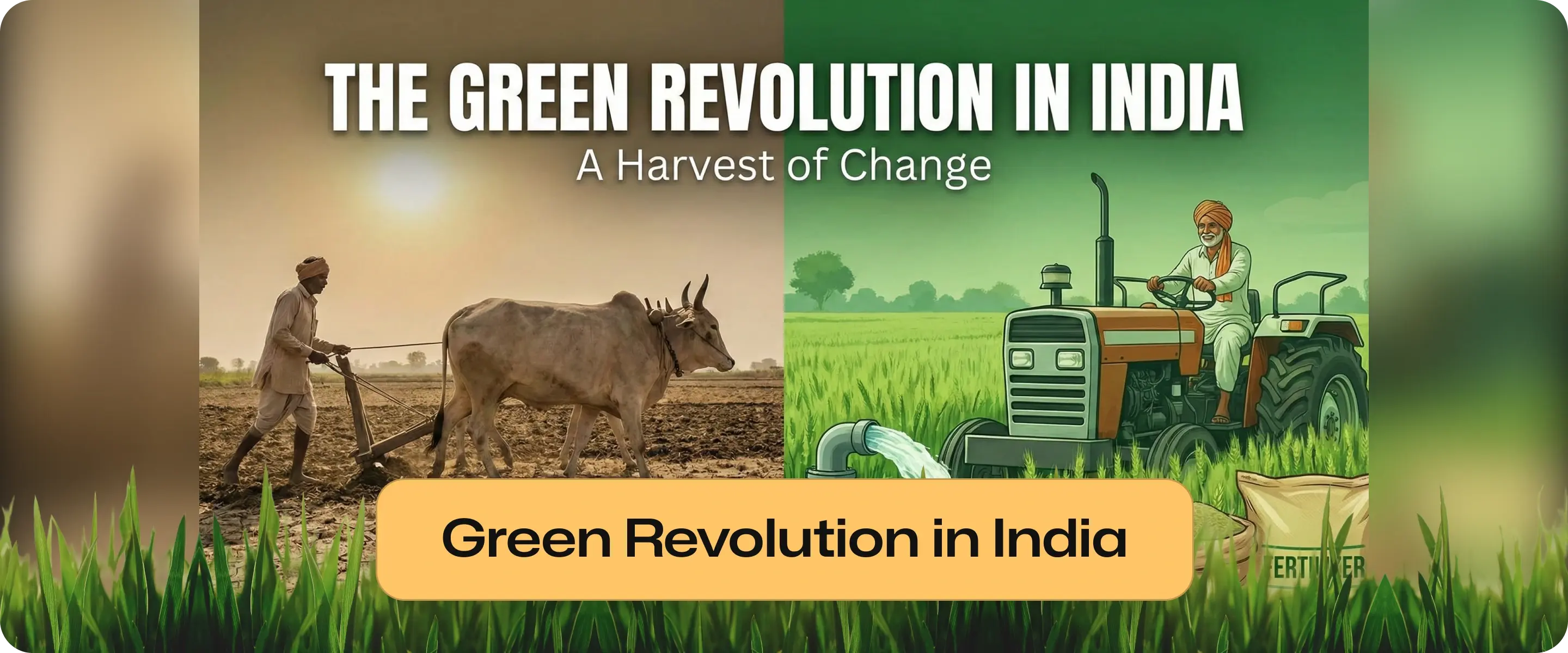
The Green Revolution in India was a period (from the mid-1960s) when new farming methods greatly increased crop yields. Traditional farming gave way to modern, technology-driven practices. Punjab and Haryana saw major yield increases. The Green Revolution increased India's grain self-sufficiency and prevented famines, but it also degraded soil and water, exacerbated rural inequality, and created long-term environmental and health problems.

Green Revolution in India
Download the Economic Survey 2025-26 Summary PDF on India's GDP growth, agriculture, services & inflation trends. Note key highlights, major findings, and policy insights.

Green Revolution in India: History, Objectives & Impact

The Green Revolution in India was a period (from the mid-1960s) when new farming methods greatly increased crop yields. Traditional farming gave way to modern, technology-driven practices. Punjab and Haryana saw major yield increases. The Green Revolution increased India's grain self-sufficiency and prevented famines, but it also degraded soil and water, exacerbated rural inequality, and created long-term environmental and health problems.

Green Revolution in India
Download the Economic Survey 2025-26 Summary PDF on India's GDP growth, agriculture, services & inflation trends. Note key highlights, major findings, and policy insights.

Food Security in India: Key Issues and Government Initiatives

In India, food security means that everyone should always have access to enough food that is safe and healthy, but this is still a very difficult task. Approximately 43% of children experience chronic malnutrition, which has an impact on their health and future, and nearly 195 million Indians remain undernourished despite recent economic growth, though the most recent FAO data (2024) shows 172 million undernourished people in India. 

According to the 2022 Global Food Security Index, India came in at number 68 out of 113 countries.  Among the main obstacles are poverty, supply chain problems, rising food prices, and unequal distribution.  Effective reforms and immediate action are required to ensure that everyone has access to affordable and wholesome food.What is Food Security?

Food Security in India
Download the Economic Survey 2025-26 Summary PDF on India's GDP growth, agriculture, services & inflation trends. Note key highlights, major findings, and policy insights.

Food Security in India: Key Issues and Government Initiatives

In India, food security means that everyone should always have access to enough food that is safe and healthy, but this is still a very difficult task. Approximately 43% of children experience chronic malnutrition, which has an impact on their health and future, and nearly 195 million Indians remain undernourished despite recent economic growth, though the most recent FAO data (2024) shows 172 million undernourished people in India. 

According to the 2022 Global Food Security Index, India came in at number 68 out of 113 countries.  Among the main obstacles are poverty, supply chain problems, rising food prices, and unequal distribution.  Effective reforms and immediate action are required to ensure that everyone has access to affordable and wholesome food.What is Food Security?

Food Security in India
Download the Economic Survey 2025-26 Summary PDF on India's GDP growth, agriculture, services & inflation trends. Note key highlights, major findings, and policy insights.
a close up of a cell phone with a blurry background

About Author

Gajendra Singh Godara

Growth | FTE| Resident at SigIQ

Gajendra Singh Godara brings authentic UPSC preparation insights from his four-attempt journey, having successfully cleared Prelims and written Mains multiple times. His deep expertise spans Polity, Modern History, International Relations, and Economy. At PadhAI, Gajendra transforms his extensive exam experience into accessible content that simplifies complex concepts for aspirants at every preparation stage. His firsthand understanding of UPSC's demands enables him to create targeted materials that save time while maximizing learning efficiency for current affairs, general studies, and optional subjects.

a close up of a cell phone with a blurry background

About Author

Gajendra Singh Godara

Growth | FTE| Resident at SigIQ

Gajendra Singh Godara brings authentic UPSC preparation insights from his four-attempt journey, having successfully cleared Prelims and written Mains multiple times. His deep expertise spans Polity, Modern History, International Relations, and Economy. At PadhAI, Gajendra transforms his extensive exam experience into accessible content that simplifies complex concepts for aspirants at every preparation stage. His firsthand understanding of UPSC's demands enables him to create targeted materials that save time while maximizing learning efficiency for current affairs, general studies, and optional subjects.

a close up of a cell phone with a blurry background

About Author

Gajendra Singh Godara

Growth | FTE| Resident at SigIQ

Gajendra Singh Godara brings authentic UPSC preparation insights from his four-attempt journey, having successfully cleared Prelims and written Mains multiple times. His deep expertise spans Polity, Modern History, International Relations, and Economy. At PadhAI, Gajendra transforms his extensive exam experience into accessible content that simplifies complex concepts for aspirants at every preparation stage. His firsthand understanding of UPSC's demands enables him to create targeted materials that save time while maximizing learning efficiency for current affairs, general studies, and optional subjects.

a close up of a cell phone with a blurry background

About Author

Gajendra Singh Godara

Growth | FTE| Resident at SigIQ

Gajendra Singh Godara brings authentic UPSC preparation insights from his four-attempt journey, having successfully cleared Prelims and written Mains multiple times. His deep expertise spans Polity, Modern History, International Relations, and Economy. At PadhAI, Gajendra transforms his extensive exam experience into accessible content that simplifies complex concepts for aspirants at every preparation stage. His firsthand understanding of UPSC's demands enables him to create targeted materials that save time while maximizing learning efficiency for current affairs, general studies, and optional subjects.

Latest UPSC Exam 2026 Updates

UPSC Calendar 2026 is released on 15th May, 2025.

UPSC Mains Result 2025 is now released.

Check out the updated and latest UPSC Syllabus 2026 here.

UPSC Notification 2025 was released on 22nd January 2025.

UPSC Prelims 2026 will be conducted on 24th May, 2026 & UPSC Mains 2026 will be conducted on 21st August 2026.

The UPSC Prelims 2026 is scheduled for May 24, 2026, while the UPSC Mains 2026 will be conducted from August 21, 2026.

The UPSC Selection Process is of 3 stages-Prelims, Mains and Interview.

UPSC Result 2024 is released with latest UPSC Marksheet 2024. Check Now!

Latest UPSC Exam 2026 Updates

UPSC Calendar 2026 is released on 15th May, 2025.

UPSC Mains Result 2025 is now released.

Check out the updated and latest UPSC Syllabus 2026 here.

UPSC Notification 2025 was released on 22nd January 2025.

UPSC Prelims 2026 will be conducted on 24th May, 2026 & UPSC Mains 2026 will be conducted on 21st August 2026.

The UPSC Prelims 2026 is scheduled for May 24, 2026, while the UPSC Mains 2026 will be conducted from August 21, 2026.

The UPSC Selection Process is of 3 stages-Prelims, Mains and Interview.

UPSC Result 2024 is released with latest UPSC Marksheet 2024. Check Now!

Latest UPSC Exam 2026 Updates

UPSC Calendar 2026 is released on 15th May, 2025.

UPSC Mains Result 2025 is now released.

Check out the updated and latest UPSC Syllabus 2026 here.

UPSC Notification 2025 was released on 22nd January 2025.

UPSC Prelims 2026 will be conducted on 24th May, 2026 & UPSC Mains 2026 will be conducted on 21st August 2026.

The UPSC Prelims 2026 is scheduled for May 24, 2026, while the UPSC Mains 2026 will be conducted from August 21, 2026.

The UPSC Selection Process is of 3 stages-Prelims, Mains and Interview.

UPSC Result 2024 is released with latest UPSC Marksheet 2024. Check Now!

Latest UPSC Exam 2026 Updates

UPSC Calendar 2026 is released on 15th May, 2025.

UPSC Mains Result 2025 is now released.

Check out the updated and latest UPSC Syllabus 2026 here.

UPSC Notification 2025 was released on 22nd January 2025.

UPSC Prelims 2026 will be conducted on 24th May, 2026 & UPSC Mains 2026 will be conducted on 21st August 2026.

The UPSC Prelims 2026 is scheduled for May 24, 2026, while the UPSC Mains 2026 will be conducted from August 21, 2026.

The UPSC Selection Process is of 3 stages-Prelims, Mains and Interview.

UPSC Result 2024 is released with latest UPSC Marksheet 2024. Check Now!

PadhAI UPSC App

PadhAI UPSC App

PadhAI UPSC App

We're PadhAI - a free UPSC prep app built by IITians, AI PhDs & top UPSC experts.

Why choose PadhAI?

Why choose PadhAI?

Why choose PadhAI?

Read daily top news (TH & IE) & Solve Current Affairs MCQs
Topic-wise search of 30+ yrs PYQs
24×7 AI tutor for doubt resolution
Practice 30k+ MCQs & full GS + CSAT mocks
Play Duel UPSC quizzes with fellow aspirants
Practice 30k+ MCQs & full GS + CSAT mocks
Play Duel UPSC quizzes with fellow aspirants
Practice 30k+ MCQs & full GS + CSAT mocks
Play Duel UPSC quizzes with fellow aspirants

Why choose PadhAI?

Read daily top news (TH & IE) & Solve Current Affairs MCQs

Topic-wise search of 30+ yrs PYQs

24×7 AI tutor for doubt resolution

Practice 30k+ MCQs & full GS + CSAT mocks

Play Duel UPSC quizzes with fellow aspirants

PadhAI UPSC App

We're PadhAI - a free UPSC prep app built by IITians, AI PhDs & top UPSC experts.

Why choose PadhAI?

Read daily top news (TH & IE) & Solve Current Affairs MCQs

Topic-wise search of 30+ yrs PYQs

24×7 AI tutor for doubt resolution

Practice 30k+ MCQs & full GS + CSAT mocks

Play Duel UPSC quizzes with fellow aspirants

PadhAI UPSC App

We're PadhAI - a free UPSC prep app built by IITians, AI PhDs & top UPSC experts.

Suggested posts

Suggested posts

Suggested posts

Union Budget 2026-27

Union Budget 2026 Analysis: PDF Download & UPSC Highlights

Download the Economic Survey 2025-26 Summary PDF on India's GDP growth, agriculture, services & inflation trends. Note key highlights, major findings, and policy insights.
Green Revolution in India

Green Revolution in India: History, Objectives & Impact

Download the Economic Survey 2025-26 Summary PDF on India's GDP growth, agriculture, services & inflation trends. Note key highlights, major findings, and policy insights.
Food Security in India

Food Security in India: Key Issues and Government Initiatives

Download the Economic Survey 2025-26 Summary PDF on India's GDP growth, agriculture, services & inflation trends. Note key highlights, major findings, and policy insights.
Union Budget 2026-27

Union Budget 2026 Analysis: PDF Download & UPSC Highlights

Download the Economic Survey 2025-26 Summary PDF on India's GDP growth, agriculture, services & inflation trends. Note key highlights, major findings, and policy insights.
Green Revolution in India

Green Revolution in India: History, Objectives & Impact

Download the Economic Survey 2025-26 Summary PDF on India's GDP growth, agriculture, services & inflation trends. Note key highlights, major findings, and policy insights.
Food Security in India

Food Security in India: Key Issues and Government Initiatives

Download the Economic Survey 2025-26 Summary PDF on India's GDP growth, agriculture, services & inflation trends. Note key highlights, major findings, and policy insights.

Download PadhAI App

Don't get left behind in your preparation

Download PadhAI App

Don't get left behind in your preparation

Download PadhAI App

Don't get left behind in your preparation

Download PadhAI App

Don't get left behind in your preparation

Current Affairs

UPSC Resources

UPSC updates

General studies

UPSC Preparation

Get FREE 1-Year PadhAI Premium Access (Worth ₹3,500)

Get FREE 1-Year PadhAI Premium Access (Worth ₹3,500)