State Energy Efficiency Index 2024: Key Highlights

Current affair

UPSC Prelims

Current affairs

Latest Update

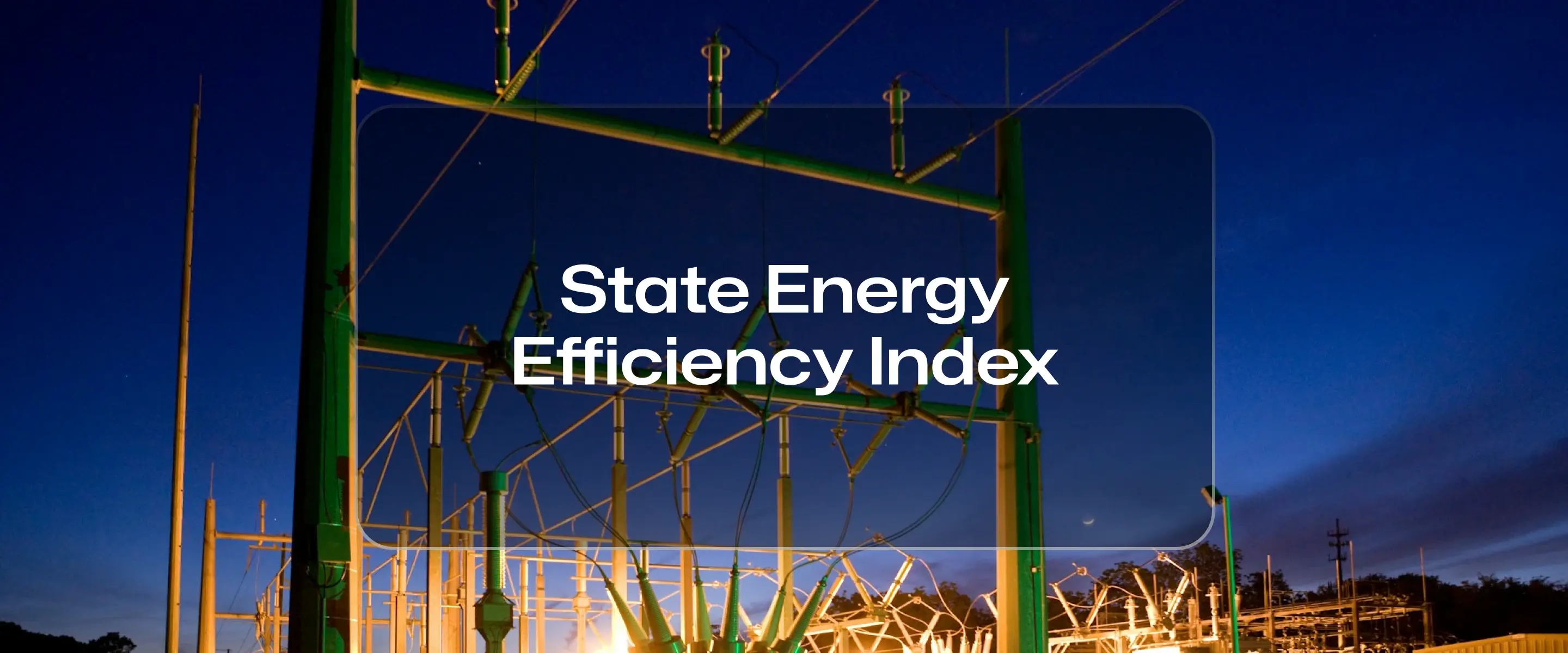
Power infrastructure at night with text overlay "State Energy Efficiency Index."

Introduction

Introduction

The State Energy Efficiency Index (SEEI) is developed by the BEE in collaboration with the Alliance for an Energy Efficient Economy (AEEE). It ranks all 36 States/UTs based on performance for the fiscal year 2023–24 (FY23-24). 
The index covers seven demand sectors (Buildings, Industry, Transport, Agriculture, Municipal Services, DISCOMs, and Cross-sector initiatives) and uses 66 quantitative indicators (e.g. building norms, vehicle policies). SEEI encourages data-driven monitoring, healthy competition and best-practice sharing among states.
States are classified into four performance categories: Front Runners(>60%), Achievers(50-60%), Contenders(30-50%), and Aspirants(<30%).
All 36 states/UTs have prepared State Energy Efficiency Action Plans (SEEAPs); 31 have formed state-level energy efficiency steering committees. These platforms facilitate  implementation.
It is a key policy tool guiding state-level actions toward India’s energy efficiency targets and climate commitments. The latest edition continues the trend of highlighting top achievers and identifying gaps. 

Why in the News?

  • The 6th edition of the State Energy Efficiency Index (SEEI) 2024 was released on 29 August 2025 by India’s Ministry of Power. 

  • This annual ranking, prepared by the Bureau of Energy Efficiency (BEE), assesses how effectively each State and Union Territory is implementing energy efficiency measures. 
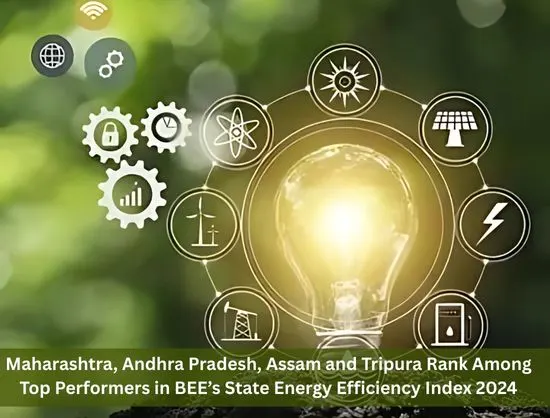
Light bulb surrounded by energy icons with text highlighting Maharashtra, Andhra Pradesh, Assam, and Tripura as top performers in BEE’s State Energy Efficiency Index 2024.

Join our WhatsApp Community

Key Highlights of the State Energy Efficiency Index (SEEI 2024)

  • Top States by Group: The index groups states by annual energy consumption. Group toppers are Maharashtra (Group 1: >15 MTOE), Andhra Pradesh (Group 2: 5–15 MTOE), Assam (Group 3: 1–5 MTOE), and Tripura (Group 4: <1 MTOE). These states led their consumption categories.

  • Performance Categories: States are ranked into four bands based on scores (out of 100):

    • Front Runners (>60%): 5 states. Andhra Pradesh, Karnataka, Maharashtra, Telangana, Tamil Nadu. These retained or improved top status from previous years.

    • Achievers (50–60%): 2 states. Assam, Kerala.

    • Contenders (30–50%): 5 states. Haryana, Punjab, Rajasthan, Odisha, Uttar Pradesh.

    • Aspirants (<30%): Remaining states with lower scores.

  • Year-on-Year Change: Compared to SEEI 2023, the number of Front Runners fell from seven to five. However, the same five states (AP, Karnataka, Maharashtra, Telangana, Tamil Nadu) continue to lead. Assam and Kerala moved up as Achievers.

  • Sectoral Progress: Notable achievements reported include:

    • Buildings: 24 states have notified the 2017 Energy Conservation Building Code (ECBC) for commercial buildings.

    • Industry: 10 states have formulated dedicated energy-efficiency policies for MSMEs (Micro Small & Medium Enterprises).

    • Transport: 31 states have electric mobility policies; 14 states mandate EV charging infrastructure in new buildings. This aligns with India’s push for green vehicles.

    • Agriculture: 13 states promote solar-powered irrigation pumps (Kerala leads with ~74% pump efficiency).

    • Cross-sector: All 36 states have State Energy Efficiency Action Plans; 31 states have high-level steering committees on energy transition.

  • Policy Innovations: SEEI 2024 highlights evolving tools: rollout of Energy Service Companies (ESCO) model, energy efficiency labels (e.g. star ratings for buildings/appliances), cluster-based energy audits for industries, and expanded Perform, Achieve, Trade (PAT) cycles. EV incentives and DISCOM demand-side management programs are also noted. These measures offer low-cost paths to meet India’s net-zero objectives.

  • Link to Climate Goals: The index helps states align with India’s environmental commitments. SEEI data will continue to be a vital monitoring tool for India’s sustainability and energy security targets.

UPSC Current Affairs Magazines

UPSC Current Affairs Magazines

Read Latest UPSC Current Affairs

Read Latest UPSC Current Affairs

About Bureau of Energy Efficiency (BEE)

  • Statutory body: BEE was established in 2002 under the Energy Conservation Act, 2001, under the Ministry of Power, to drive nationwide energy-efficiency policy and implementation.

  • Mission: Reduce the energy intensity of the Indian economy by designing policies and market mechanisms and by promoting self‑regulation and stakeholder participation.

  • Core instruments: Runs Standards & Labelling for appliances, Energy Conservation Building Code (ECBC), Perform–Achieve–Trade (PAT) for energy‑intensive industries, and Demand Side Management programs.

  • Regulatory and capacity roles: Notifies norms, certifies Energy Managers/Auditors, supports R&D and testing/certification infrastructure, and conducts awareness and training across sectors.
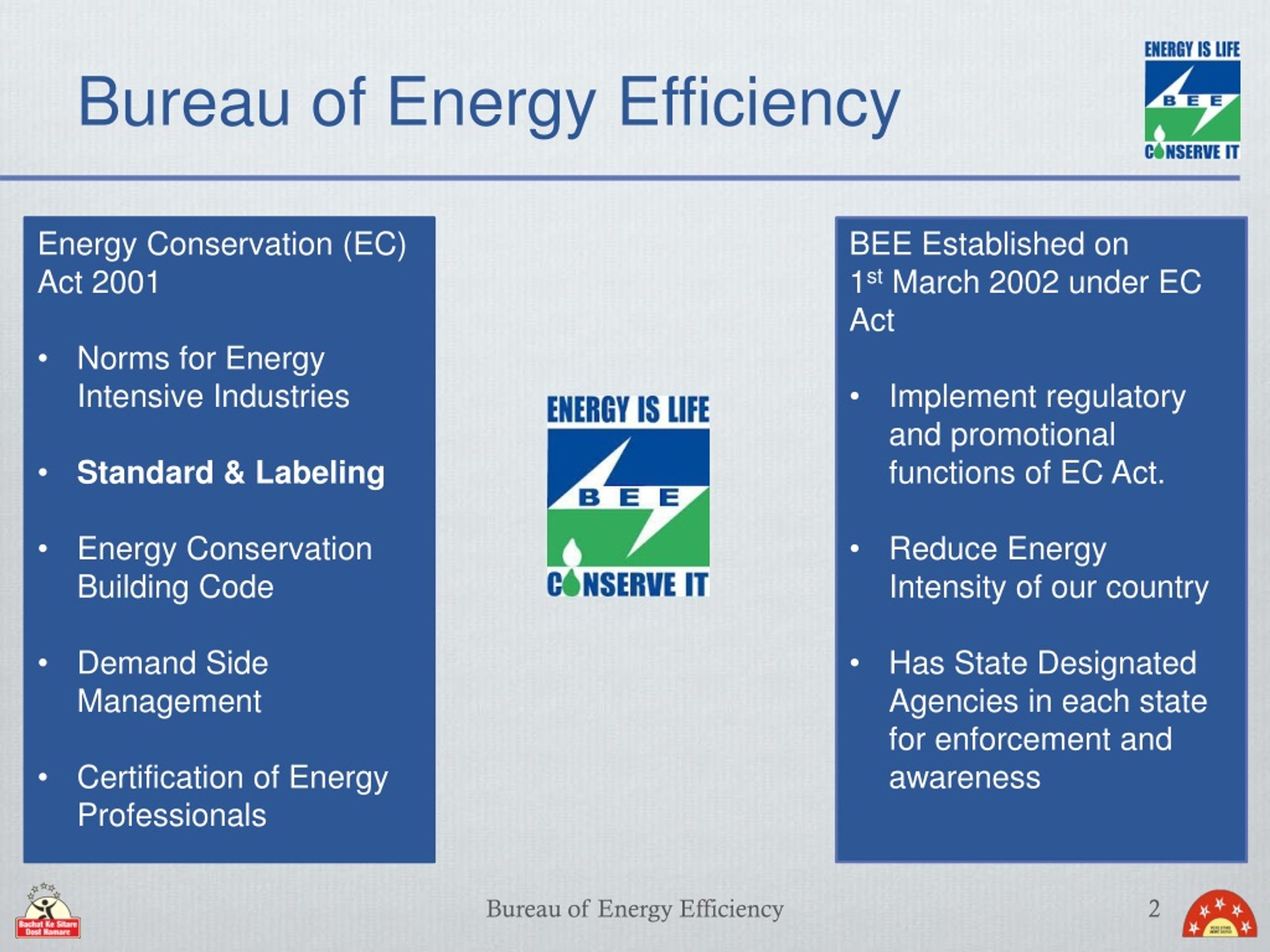
Bureau of Energy Efficiency infographic showing functions under the Energy Conservation Act 2001, including standards, labeling, codes, and its establishment in 2002.

Add as a preferred Source on Google

UPSC Previous Year Questions

Q. On which of the following can you find the Bureau of Energy Efficiency Star Label? (2016)

  1. Ceiling fans

  2. Electric geysers

  3. Tubular fluorescent lamps

Select the correct answer using the code given below:

(a) 1 and 2 only
(b) 3 only
(c) 2 and 3 only 
(d) 1, 2 and 3

Ans: (d)

Frequently asked question (FAQs)

Frequently asked question (FAQs)

Frequently asked question (FAQs)

What is the State Energy Efficiency Index (SEEI)?
Who releases the State Energy Efficiency Index?
When was SEEI 2024 released and for which year?
Which states topped SEEI 2024?
Who publishes the State Energy Efficiency Index?

Conclusion

Conclusion

The State Energy Efficiency Index is a critical tool to benchmark state efforts in conservation and efficiency. It highlights model states (like Maharashtra and Andhra Pradesh) and areas needing improvement. For UPSC aspirants, SEEI illustrates how India links policy (building codes, EVs, solar pumps) to climate goals. With nearly all states formulating energy action plans and joining global initiatives (e.g. ISA, GBA), energy efficiency is firmly on India’s agenda. Studying SEEI equips aspirants to answer questions on sustainable development, federal energy policies, and India’s NDC targets.

Internal Linking Suggestions

External Linking Suggestions

Suggested blogs

How Many Attempts for UPSC CSE: General, OBC, SC/ST, EWS

UPSC allows 6 attempts for General/EWS, 9 for OBC, and unlimited for SC/ST within age limits. Check category-wise attempts, age criteria, and rules.

How Many Attempts for UPSC

UPSC allows 6 attempts for General/EWS, 9 for OBC, and unlimited for SC/ST within age limits. Check category-wise attempts, age criteria, and rules.

How Many Attempts for UPSC CSE: General, OBC, SC/ST, EWS

UPSC allows 6 attempts for General/EWS, 9 for OBC, and unlimited for SC/ST within age limits. Check category-wise attempts, age criteria, and rules.

How Many Attempts for UPSC

UPSC allows 6 attempts for General/EWS, 9 for OBC, and unlimited for SC/ST within age limits. Check category-wise attempts, age criteria, and rules.

UPSC Mains Result 2025 Out: Roll-Number & Name-Wise PDFs

Check UPSC Mains Result 2025: Download Roll Number & Name Wise Pdf, Get Official UPSC Update.

UPSC Mains Result 2025

Check UPSC Mains Result 2025: Download Roll Number & Name Wise Pdf, Get Official UPSC Update.

UPSC Mains Result 2025 Out: Roll-Number & Name-Wise PDFs

Check UPSC Mains Result 2025: Download Roll Number & Name Wise Pdf, Get Official UPSC Update.

UPSC Mains Result 2025

Check UPSC Mains Result 2025: Download Roll Number & Name Wise Pdf, Get Official UPSC Update.

Types of Forests in India: Tropical, Montane, Alpine and Features

India's 5 forest types: Tropical Evergreen, Deciduous, Montane, Alpine & Mangroves. Includes Distribution map, Key species, Conservation efforts and Climate zones.

Types of Forests in India

India's 5 forest types: Tropical Evergreen, Deciduous, Montane, Alpine & Mangroves. Includes Distribution map, Key species, Conservation efforts and Climate zones.

Types of Forests in India: Tropical, Montane, Alpine and Features

India's 5 forest types: Tropical Evergreen, Deciduous, Montane, Alpine & Mangroves. Includes Distribution map, Key species, Conservation efforts and Climate zones.

Types of Forests in India

India's 5 forest types: Tropical Evergreen, Deciduous, Montane, Alpine & Mangroves. Includes Distribution map, Key species, Conservation efforts and Climate zones.

PadhAI UPSC App

We're PadhAI - a free UPSC prep app built by IITians, AI PhDs & top UPSC experts.

Why choose PadhAI?

Read daily top news (TH & IE) & Solve Current Affairs MCQs
Topic-wise search of 30+ yrs PYQs
24×7 AI tutor for doubt resolution
Practice 30k+ MCQs & full GS + CSAT mocks
Play Duel UPSC quizzes with fellow aspirants

Research methodology

PadhAI's research methodology ensures every article is accurate, UPSC-ready, and beginner-friendly. We curate current affairs analysis based on UPSC exam relevance by cross-referencing The Hindu, Indian Express, and PIB. General Studies (GS) topics are drafted from NCERTs and standard books such as M. Laxmikanth, Spectrum, and GC Leong, then reviewed by subject matter experts to eliminate factual errors. Additionally, we update aspirants with verified government exam notifications alongside expert blogs suggesting the best resources, syllabus, and comprehensive Prelims and Mains strategies.

a close up of a cell phone with a blurry background

About Author

Gajendra Singh Godara

Growth | FTE| Resident at SigIQ

Gajendra Singh Godara is an IIT Bombay graduate and a UPSC aspirant with 4 attempts, including multiple Prelims and Mains appearances. He specializes in Polity, Modern History, International Relations, and Economy. At PadhAI, Gajendra leverages his firsthand exam experience to simplify complex concepts, creating high-efficiency study materials that help aspirants save time and stay focused.

Latest UPSC Exam 2026 Updates

The final list of selected candidates for UPSC CSE 2025 is now available.
Check the category-wise cut-off marks for the UPSC Civil Services Examination 2025.
The official schedule for UPSC examinations in 2026 has been released on 15 May 2025.
The results of the UPSC Civil Services Mains Examination 2025 have been officially released.
Check the updated and latest syllabus for the UPSC Civil Services Examination 2026.
The official notification for the UPSC Civil Services Examination 2025 was released on 22 January 2025.
Access the UPSC Prelims 2025 question paper along with the unofficial answer key.

UPSC Exam Dates 2026

UPSC Prelims 2026 will be held on 24 May 2026, and UPSC Mains 2026 will begin on 21 August 2026.

UPSC Selection Process

The UPSC Civil Services selection process consists of three stages: Prelims, Mains, and the Interview.

UPSC Result 2024 & Marksheet

The UPSC Civil Services Result 2024 has been released along with the official marksheet.

Latest UPSC Exam 2026 Updates

The final list of selected candidates for UPSC CSE 2025 is now available.
Check the category-wise cut-off marks for the UPSC Civil Services Examination 2025.
The official schedule for UPSC examinations in 2026 has been released on 15 May 2025.
The results of the UPSC Civil Services Mains Examination 2025 have been officially released.
Check the updated and latest syllabus for the UPSC Civil Services Examination 2026.
The official notification for the UPSC Civil Services Examination 2025 was released on 22 January 2025.
Access the UPSC Prelims 2025 question paper along with the unofficial answer key.

UPSC Exam Dates 2026

UPSC Prelims 2026 will be held on 24 May 2026, and UPSC Mains 2026 will begin on 21 August 2026.

UPSC Selection Process

The UPSC Civil Services selection process consists of three stages: Prelims, Mains, and the Interview.

UPSC Result 2024 & Marksheet

The UPSC Civil Services Result 2024 has been released along with the official marksheet.

Join the discussion

No comments yet. Be the first to join the discussion!

Why choose PadhAI?

Read daily top news (TH & IE) & Solve Current Affairs MCQs

Topic-wise search of 30+ yrs PYQs

24×7 AI tutor for doubt resolution

Practice 30k+ MCQs & full GS + CSAT mocks

Play Duel UPSC quizzes with fellow aspirants

PadhAI UPSC App

We're PadhAI - a free UPSC prep app built by IITians, AI PhDs & top UPSC experts.

Why choose PadhAI?

Read daily top news (TH & IE) & Solve Current Affairs MCQs

Topic-wise search of 30+ yrs PYQs

24×7 AI tutor for doubt resolution

Practice 30k+ MCQs & full GS + CSAT mocks

Play Duel UPSC quizzes with fellow aspirants

PadhAI UPSC App

We're PadhAI - a free UPSC prep app built by IITians, AI PhDs & top UPSC experts.

Suggested blogs

How Many Attempts for UPSC

How Many Attempts for UPSC CSE: General, OBC, SC/ST, EWS

UPSC allows 6 attempts for General/EWS, 9 for OBC, and unlimited for SC/ST within age limits. Check category-wise attempts, age criteria, and rules.

UPSC Mains Result 2025

UPSC Mains Result 2025 Out: Roll-Number & Name-Wise PDFs

Check UPSC Mains Result 2025: Download Roll Number & Name Wise Pdf, Get Official UPSC Update.

Types of Forests in India

Types of Forests in India: Tropical, Montane, Alpine and Features

India's 5 forest types: Tropical Evergreen, Deciduous, Montane, Alpine & Mangroves. Includes Distribution map, Key species, Conservation efforts and Climate zones.

How Many Attempts for UPSC

How Many Attempts for UPSC CSE: General, OBC, SC/ST, EWS

UPSC allows 6 attempts for General/EWS, 9 for OBC, and unlimited for SC/ST within age limits. Check category-wise attempts, age criteria, and rules.

UPSC Mains Result 2025

UPSC Mains Result 2025 Out: Roll-Number & Name-Wise PDFs

Check UPSC Mains Result 2025: Download Roll Number & Name Wise Pdf, Get Official UPSC Update.

Types of Forests in India

Types of Forests in India: Tropical, Montane, Alpine and Features

India's 5 forest types: Tropical Evergreen, Deciduous, Montane, Alpine & Mangroves. Includes Distribution map, Key species, Conservation efforts and Climate zones.

Schools of Indian Philosophy

Schools of Indian Philosophy: Orthodox & Heterodox Schools

Schools of Indian Philosophy: Six Orthodox Schools of Thought & Heterodox Schools Based on Acceptance or Rejection of the Authority of the Vedas.

An abstract blue background with wavy lines

Don't get left behind in your preparation

Download PadhAI App

An abstract blue background with wavy lines

Don't get left behind in your preparation

Download PadhAI App

An abstract blue background with wavy lines

Don't get left behind in your preparation

Download PadhAI App

Current Affairs

UPSC Resources

UPSC updates

General studies

UPSC Preparation

Get FREE 1-Year PadhAI Premium Access (Worth ₹3,500)

Get FREE 1-Year PadhAI Premium Access (Worth ₹3,500)