Top 10 Toughest Exams in India 2026: Ranked by Success Rate

Gajendra Singh Godara
Last updated
12
mins read

The UPSC Civil Services Examination is widely considered India’s toughest exam: in the 2025 cycle, about 10 lakh+ applicants competed for fewer than 1,000 final selections, a success rate near 0.1–0.2%.
JEE Advanced, NEET-UG, GATE, CAT, CA Final, CLAT, NDA, UGC-NET and NID DAT complete the 2026 top-10, ranked below with verifiable numbers rather than adjectives.
Key takeaways
Difficulty here = success rate + syllabus size + competition + preparation time, not reputation alone
UPSC CSE 2025: 958 candidates recommended against 10 lakh+ applicants (UPSC final result, 2025)
JEE Advanced 2025: ~1.87 lakh appeared for 18,160 IIT seats, roughly a 10% seat ratio after the JEE Main filter of ~12 lakh
NEET-UG remains the largest single exam: ~20+ lakh candidates for about 1 lakh MBBS seats

How we rank difficulty
Every “toughest exams” list you will find ranks by vibes. This one uses four measurable inputs: selection ratio (seats or selections per applicant), syllabus breadth (subjects and stages), competition depth (how prepared the average rival is), and preparation time typically invested.
An exam with a brutal ratio but narrow syllabus (NDA) lands lower than one that combines a huge syllabus with a three-stage filter (UPSC).
Numbers are from the latest completed cycles (2024–25/2025–26), with conducting-body sources linked; where a body does not publish exact figures, we say so.
Join our WhatsApp Community
Toughest exams in India 2026: comparison table
Rank | Exam | Conducted by | Applicants (latest cycle) | Selections/seats | Approx. success rate | Attempts allowed |
1 | UPSC CSE | UPSC | 10 lakh+ apply; ~5 lakh appear | 958 recommended (2025) | ~0.1–0.2% | 6 (Gen), 9 (OBC), unlimited to age limit (SC/ST) |
2 | JEE Advanced | IITs (rotating) | 1.87 lakh appeared (2025) | 18,160 IIT seats | ~10% of Advanced pool; ~1.5% of JEE Main pool | 2 (consecutive years) |
3 | NEET-UG | NTA | ~20–23 lakh | ~1.1 lakh MBBS seats | ~5% for MBBS | No limit |
4 | GATE | IITs/IISc | ~6.5 lakh appear | ~16–18% qualify; PSU/IIT seats far fewer | ~16% qualify | No limit |
5 | CA Final | ICAI | ~60–70k per session | pass % per session | ~10–15% per session | No limit |
6 | CAT | IIMs (rotating) | ~3 lakh+ | ~5,500 seats at 21 IIMs | ~2% for IIMs | No limit |
7 | CLAT | Consortium of NLUs | ~60–75k | ~3,700 NLU seats | ~5% | No limit |
8 | NDA | UPSC + SSB | ~5–6 lakh per cycle | ~400 cadet vacancies | ~0.1% | Age-bound (16.5–19.5 yrs) |
9 | UGC-NET | NTA | ~8–12 lakh per cycle | ~6% qualify (JRF far fewer) | ~6% | No limit |
10 | NID DAT | NID | ~15k+ | ~600 seats across NIDs | ~4% | No limit |
Figures rounded from the most recent published cycle; verify each body’s latest bulletin before quoting in an exam answer.
1. UPSC Civil Services Examination (CSE)
Three stages across roughly 12 months: Prelims (objective + CSAT), Mains (nine descriptive papers), and the Personality Test.
The syllabus spans history, polity, economy, geography, science, ethics, and a full optional subject, which is why serious aspirants invest 10–18 months before their first attempt.
In the 2025 cycle UPSC recommended 958 candidates against 1,087 notified vacancies, out of an applicant pool above ten lakh.
That funnel, from ten lakh to under a thousand, is the sharpest of any Indian exam and the reason CSE tops every credible list.
Prelims 2026 was held on 24 May 2026; Mains begins 21 August 2026. If you are starting out, our beginner’s roadmap and study-hours guide map the first six months.
Add as a preferred Source on Google
2. JEE Advanced
The IIT entrance is a two-filter system. JEE Main (~12 lakh candidates) shortlists the top 2.5 lakh; of those, about 1.87 lakh appeared in 2025 for 18,160 IIT seats.
The paper is famous for questions that punish memorised methods, and rank decides both institute and branch, so the real fight is inside the top 5,000.
Two attempts, in consecutive years, add scheduling pressure that UPSC aspirants never face at 17.
3. NEET-UG
By sheer scale, nothing matches NEET: around 20–23 lakh registrations in recent cycles for roughly 1.1 lakh MBBS seats across government and private colleges, and only ~55,000 in government colleges where fees are affordable.
The syllabus (Class 11–12 Physics, Chemistry, Biology) looks finite; the cutoff creep is what makes it savage. A 5% MBBS conversion rate puts it third.
4. GATE
The Graduate Aptitude Test in Engineering qualifies ~16% of its ~6.5 lakh test-takers, but “qualifying” only buys a scorecard.
Actual M.Tech seats at IITs/IISc and PSU shortlists (IOCL, ONGC, NTPC) go to the top few thousand in each branch. Single three-hour paper, negative marking, and a score valid for three years.
5. CA Final
Chartered Accountancy is a marathon of attrition rather than one exam day: Foundation, Intermediate, articleship, then Final.
ICAI’s per-session Final pass percentages typically run 10–15%, and both groups must be cleared.
Counting from Foundation entry to CA membership, completion rates fall to single digits, which is why CA belongs in any top five despite unlimited attempts.
6. CAT
Over 3 lakh candidates compete each November for about 5,500 seats across 21 IIMs (more counting FMS, MDI, SPJIMR).
The exam itself is two hours of speed and pressure; the difficulty multiplies at the interview stage, where a 99 percentile still guarantees nothing at the older IIMs. Effective IIM conversion sits near 2%.
7. CLAT
The Consortium’s law entrance draws 60–75k candidates for roughly 3,700 undergraduate seats at the National Law Universities, with the top three NLUs taking barely 400. Reading-heavy passages under time pressure make percentile gaps unforgiving.
8. NDA
The UPSC-conducted written exam is only the gate; the five-day SSB interview eliminates most of those who clear it, and medicals eliminate more.
Around 5–6 lakh apply per cycle for ~400 vacancies, a selection rate comparable to CSE, compressed into a teenage eligibility window. It ranks eighth only because the syllabus is narrower.
9. UGC-NET
Eight to twelve lakh candidates per cycle chase Assistant Professor eligibility and the ~4,000-odd JRF slots. About 6% qualify NET; JRF cutoffs sit far higher.
Subject depth at the postgraduate level plus a bilingual paper keeps casual attempts unsuccessful.
10. NID DAT
India’s premier design entrance tests something coaching can barely manufacture: original visual thinking.
Roughly 15,000+ applicants compete for about 600 seats across NID campuses through two rounds (Prelims and Studio Test/interview). Small numbers, brutal ratio, unteachable syllabus.
Toughest exams in India vs the world
Globally, China’s Gaokao (13 million+ candidates) and the IIT-JEE usually headline “world’s hardest exam” lists, with UPSC CSE cited for having the harshest selection ratio among administrative exams anywhere.
South Korea’s CSAT and the US MCAT feature too. The honest comparison: no other major exam combines UPSC’s syllabus breadth with a sub-0.2% success rate, which is why international rankings routinely place it first or second worldwide.
Which is the No. 1 toughest exam in India?
Is UPSC tougher than IIT-JEE?
What is the success rate of UPSC?
Which exam has the most candidates in India?
Is CA tougher than UPSC?
Rankings make good headlines, but the practical question is fit: UPSC rewards breadth and endurance, JEE and NEET reward depth and speed, CA rewards persistence over years.
Whichever funnel you pick, the numbers above say the same thing: consistent daily preparation beats intensity.
If UPSC is your pick, start with the syllabus, check your attempt limits, and build a routine with the PadhAI app’s daily quizzes and 30+ years of PYQs.





Research methodology
PadhAI's research methodology ensures every article is accurate, UPSC-ready, and beginner-friendly. We curate current affairs analysis based on UPSC exam relevance by cross-referencing The Hindu, Indian Express, and PIB. General Studies (GS) topics are drafted from NCERTs and standard books such as M. Laxmikanth, Spectrum, and GC Leong, then reviewed by subject matter experts to eliminate factual errors. Additionally, we update aspirants with verified government exam notifications alongside expert blogs suggesting the best resources, syllabus, and comprehensive Prelims and Mains strategies.

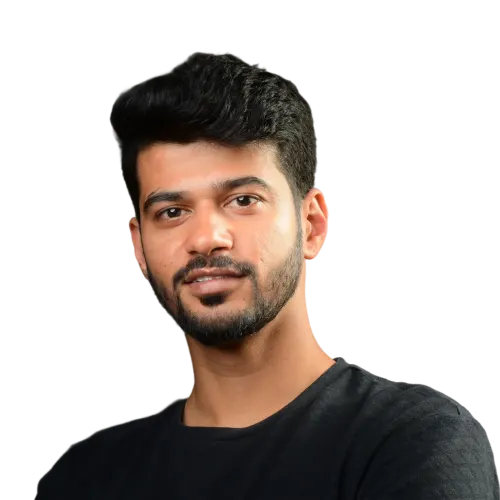
Gajendra Singh Godara is an IIT Bombay graduate and a UPSC aspirant with 4 attempts, including multiple Prelims and Mains appearances. He specializes in Polity, Modern History, International Relations, and Economy. At PadhAI, Gajendra leverages his firsthand exam experience to simplify complex concepts, creating high-efficiency study materials that help aspirants save time and stay focused.
No comments yet. Be the first to join the discussion!