Australia Bans Social Media for Under-16s: A Global First
Australia enforces social media ban for under-16s. Understand how the law works, exemptions, platform penalties, age verification technology, and global implications.

Gajendra Singh Godara
Last updated
8
mins read
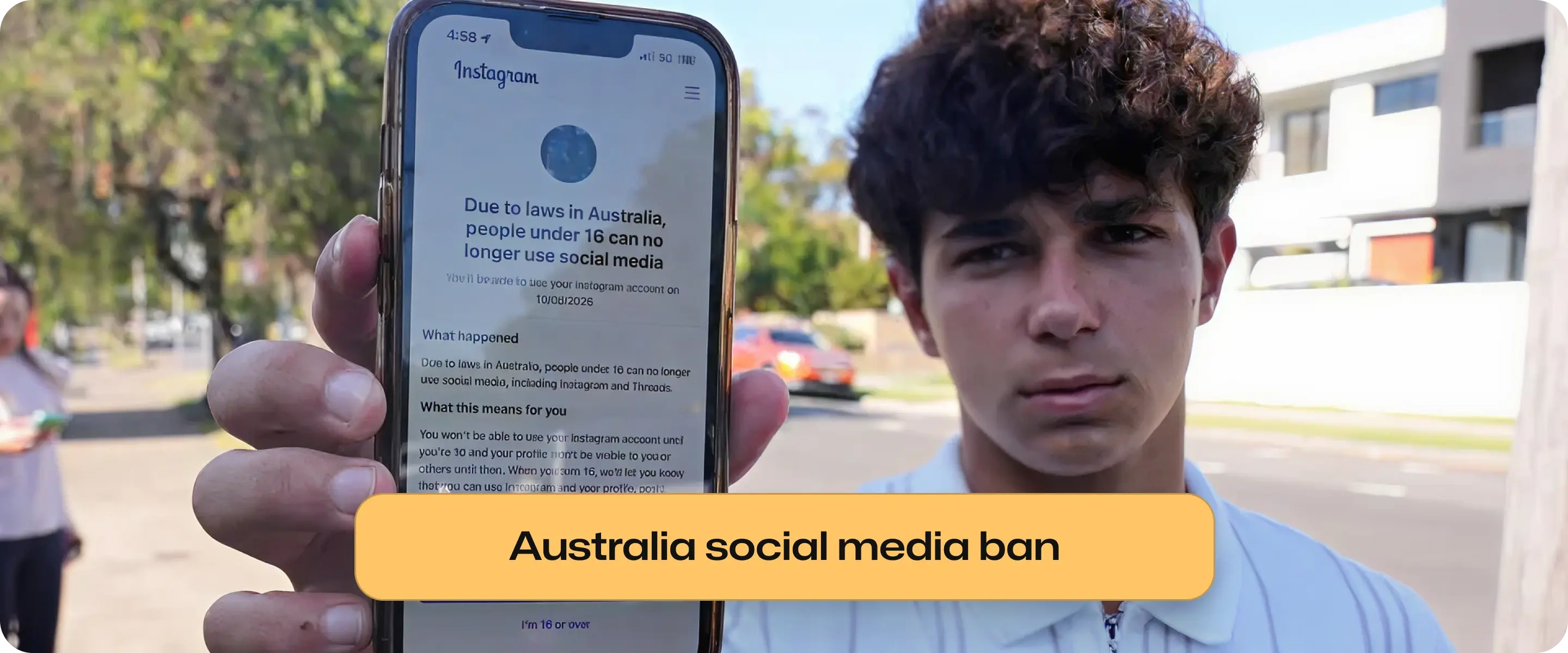
The Australian government has passed legislation that makes it illegal for social media platforms to allow children under 16 to hold accounts. This strict new law shifts the responsibility entirely onto tech giants. It demands that they redesign their systems to protect young users from online harms.
Here is a detailed breakdown of how Australia bans social media for minors and what this means for digital privacy and safety globally.
The new legislation Online Safety Amendment (Social Media Minimum Age) Act is clear and uncompromising. The Australian government decided that parental consent is not enough to protect children from the risks of social media.
The Age Limit: The minimum age for a social media account is now strictly 16. There are no exceptions for parental permission.
Existing Accounts Are Not Safe: The rule applies to everyone. Platforms must identify and remove underage users who already have accounts. There is no "grandfathering" clause for current users under 16.
The Target Platforms: The ban covers major services including TikTok, Instagram, Facebook, Snapchat, Reddit, X (Twitter), and YouTube.
New Platforms Included: The list also extends to newer or niche platforms like Twitch, Kick, and Threads.
You might think you can just ask your parents to sign a form. That is not an option here. The law aims to remove young teens from these environments entirely rather than managing their usage.
Join our WhatsApp Community
The government argues that social media hurts the mental health of young people. The social media ban in Australia targets the "addictive" design features of these apps.
Harmful Designs: The law seeks to protect kids from infinite scrolling, intense algorithmic targeting, and push notifications that disrupt sleep and focus.
Systemic Responsibility: The focus is on the "duty of care" of the platform. The government believes that these companies have built products that are fundamentally unsafe for developing minds.
Mental Health Crisis: Authorities link heavy social media use to rising rates of anxiety, bullying, and body image issues among teenagers.
The goal is to give children a childhood free from the pressures of a curated online life.
You are probably asking how a website can know your real age. Australia social media ban enforcement relies on technology rather than just asking users for their birth date.
Verification Methods
Platforms must take "reasonable steps" to verify age. They cannot just rely on a tick box. The legislation suggests a mix of privacy-preserving technologies:
Facial Estimation: Technology that analyzes a facial image to estimate age without identifying the person.
Voice Analysis: Systems that detect age markers in a user's voice.
Behavioral Signals: Analyzing account activity and interaction history to flag underage usage patterns.
Privacy Protections
The law explicitly states that platforms cannot force users to upload government IDs, such as passports or driver's licenses, as the primary verification method. This provision addresses privacy concerns about handing over sensitive documents to tech companies.
Penalties for Non-Compliance
The financial stakes are high. Tech companies face fines of up to AUD 49.5 million (approximately USD 33 million) for systemic breaches of the law.
Importantly, the penalties apply only to the platforms. There are no fines or punishments for children who manage to sneak on, or for the parents who let them.
Add as a preferred Source on Google
The ban is not a blanket blackout for the internet. The government acknowledges that young people need digital access for school and social connection.
Educational Tools: Google Classroom and other education-focused platforms remain accessible.
Messaging Apps: Dedicated messaging services like WhatsApp and Messenger Kids are exempt to allow family communication.
Gaming Platforms: Most gaming environments, including Roblox and Discord, are currently exempt. However, the regulator can change this list if users migrate to these platforms for social networking.
Access Without an Account: Underage users can still view public posts or videos on platforms like YouTube without logging in. The ban specifically targets account holding, which prevents data harvesting and algorithmic tracking.
The Australian government has exempted dating apps, gaming platforms, and AI chatbots from its age verification requirements, allowing these online services to operate without implementing age-restriction measures.
Major companies affected: Meta, Google, and TikTok must redesign their systems to comply with the new law.
Account deactivation: Meta has started removing accounts belonging to users under 16 years old.
Company stance: Tech companies publicly oppose the law but have committed to full compliance.
Children protected: Only platforms face penalties, children aren't punished for attempting to access social media.
The world is watching the social media ban in Australia. Countries like Denmark, Malaysia, and members of the European Union are studying this legislation as a potential template for their own safety laws.
India has taken a different path. The Digital Personal Data Protection Act, 2023 does not ban social media for minors. Instead, it relies on "verifiable parental consent". The DPDP Act 2023 defines children as under 18 years and requires verifiable parental consent for processing any personal data, not just social media access.
Consent vs. Ban: India focuses on getting parents involved rather than blocking access completely.
Data Protection: The Indian law prohibits tracking and behavioral monitoring of children, similar to the Australian goal, but without the strict age cutoff.
Frequently asked question (FAQs)
Why is this ban relevant to GS Paper 2 (Governance)?
What are the key Fundamental Rights concerns raised against the ban?
Does the ban affect the global Right to Privacy debate?
What is Australia’s social media ban for under-16s and when did it start?
How do social media platforms enforce the under-16 age restriction in Australia?




Research methodology
PadhAI's research methodology ensures every article is accurate, UPSC-ready, and beginner-friendly. We curate current affairs analysis based on UPSC exam relevance by cross-referencing The Hindu, Indian Express, and PIB. General Studies (GS) topics are drafted from NCERTs and standard books such as M. Laxmikanth, Spectrum, and GC Leong, then reviewed by subject matter experts to eliminate factual errors. Additionally, we update aspirants with verified government exam notifications alongside expert blogs suggesting the best resources, syllabus, and comprehensive Prelims and Mains strategies.


No comments yet. Be the first to join the discussion!