India-AI Impact Summit 2026: Theme, Three Sutras and Seven Chakras
India-AI Impact Summit 2026. Learn about the Three Sutras, Seven Chakras, Bhashini, BharatGen, and DPI-led AI growth and the India AI Mission's role in global tech.
Gajendra Singh Godara
Last updated
8
mins read
The global conversation around technology is witnessing a monumental shift. For years, the world’s most powerful nations focused on "AI Safety" and "Risk Regulation." However, in 2026, India has pivoted the narrative.
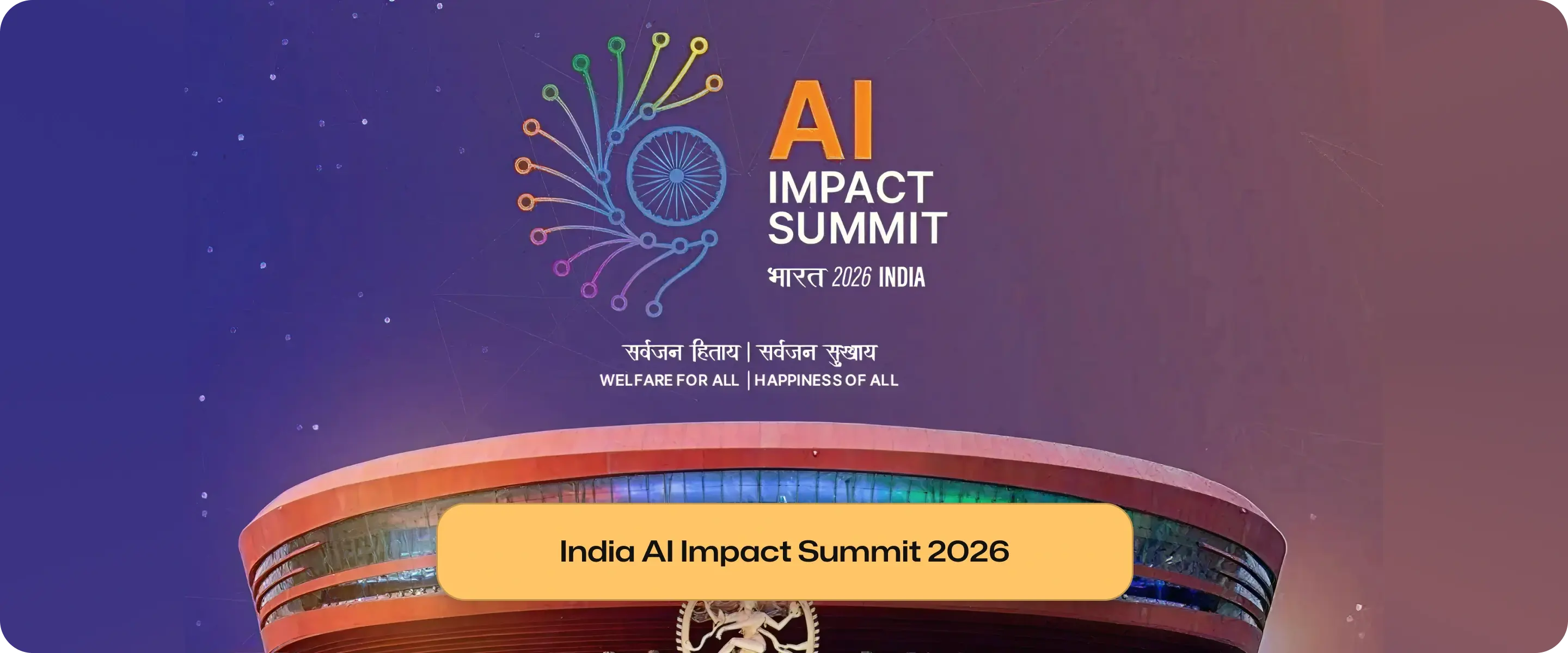
The India-AI Impact Summit 2026, held at the iconic Bharat Mandapam in New Delhi, marks a historic turning point where Artificial Intelligence (AI) is no longer just about guarding against risks, but about driving inclusive development.
It touches upon everything from Digital Public Infrastructure (DPI) to International relations and sustainable development.
In this blog, we’ll dive deep into the "Three Sutras," "Seven Chakras," and why this summit positions India as the "Bridge Power" between the West and the Global South.
The India-AI Impact Summit 2026 commenced on February 16, 2026, organized by the Ministry of Electronics and Information Technology (MeitY).
It is the first-ever global AI summit hosted in the Global South, moving beyond the safety-centric discussions of previous summits in the UK, Seoul, and Paris.
Under the overarching motto of "Sarvajana Hitaya, Sarvajana Sukhaya" (Welfare for all, happiness for all), the summit aims to ensure that AI benefits are shared equally across the globe, rather than being monopolized by a few tech giants.
Join our WhatsApp Community
To understand the core philosophy of the AI Impact summit, we must look at its structured approach through two Indian-inspired frameworks.
1. The Three Sutras (The Pillars)
These are the foundational threads that guide how AI should serve humanity:
People: Focuses on human welfare, empowering citizens through healthcare, education, and financial inclusion while protecting human dignity.
Planet: Emphasizes using AI for sustainable practices, climate resilience, and resource efficiency.
Progress: Harnesses AI as an engine for economic growth, inclusive governance, and efficient public service delivery.
2. The Seven Chakras (Working Groups)
The Sutras are translated into action through seven thematic working groups known as Chakras:
Chakra | Focus Area |
Human Capital | AI literacy, reskilling workers, and addressing the "AI divide" in the job market. |
Inclusion | Designing AI that accounts for diverse linguistic, cultural, and social needs. |
Safe & Trusted AI | Promoting ethical, secure, and reliable AI systems that protect privacy. |
Science | Promoting global collaboration in scientific research (Health, Materials, Climate). |
Democratizing Resources | Ensuring equitable access to compute power, datasets, and foundational models. |
Economic Growth | Scaling proven AI applications to boost productivity and social good. |
Resilience & Efficiency | Prioritizing "frugal AI"—energy-efficient systems for resource-constrained regions. |
India US Trade Deal
The summit is a flagship outcome of the India AI Mission, which was approved in 2024 with a massive budget of ₹10,371 crore.
The mission operates on "Seven Pillars," including IndiaAI Compute (offering 38,000+ GPUs) and Bhashini (real-time translation across 22 languages).
Key Institutional Frameworks:
MeitY: Provides policy direction and ecosystem support.
STPI (Software Technology Parks of India): Offers innovation infrastructure.
Digital India: Provides the foundational DPI (UPI, Aadhaar) upon which AI solutions are built.
India EU Free Trade Agreement
Add as a preferred Source on Google
For developing nations, this AI summit India is a game-changer. Here is why:
Shift from Safety to Development: While developed nations worry about existential risks, the AI summit 2026 focuses on practical use cases like improving the Human Development Index (HDI).
AI Commons: India advocates for making datasets and compute power accessible to all, preventing "technological colonialism" by big tech.
Digital Sovereignty: Through indigenous models like BharatGen (the world’s first government-funded multimodal LLM), India ensures data stays within borders and models are "culturally representative".
Strategic Diplomacy: India is acting as a "Bridge Power" between the tech-rich West and the tech-needy Global South.
UGC Bill 2026
The AI summit wasn't just about discussions; it saw the launch of several "Applied AI" tools:
Bharat-VISTAAR: An AI-based multilingual platform to help farmers with crop planning and pest control.
SAHI (Secure AI for Health Initiative): A policy framework for responsible AI adoption in healthcare.
BODH (Benchmarking Open Data Platform): A validation platform to test health AI solutions before real-world deployment.
YUVAi: A national program to enable students (Classes 8-12) with AI and social skills.
Despite the optimism, experts at the AI Impact summit highlighted several significant hurdles:
The "AI Divide": There is a risk that the gap between AI-capable nations and others could widen if resource democratization fails.
Job Displacement: Automation remains a major concern for the labor-intensive economies of the Global South.
Hardware Dependence: India still lacks domestically produced high-end GPUs, relying heavily on imports for its compute capacity.
Energy Consumption: AI data centers require massive amounts of power, posing a challenge to climate-smart development goals.
Algorithmic Bias: Ensuring that AI models trained on Western data don't carry inherent biases when applied to diverse Indian contexts.
Frequently asked question (FAQs)
What is the theme of the India-AI Impact Summit 2026?
What is the India-AI Impact Summit 2026?
What are the "Three Sutras" of the summit?
What is the significance of the "AI Commons" proposed at the summit?
What are the Seven Chakras of India-AI Impact Summit 2026?


Research methodology
PadhAI's research methodology ensures every article is accurate, UPSC-ready, and beginner-friendly. We curate current affairs analysis based on UPSC exam relevance by cross-referencing The Hindu, Indian Express, and PIB. General Studies (GS) topics are drafted from NCERTs and standard books such as M. Laxmikanth, Spectrum, and GC Leong, then reviewed by subject matter experts to eliminate factual errors. Additionally, we update aspirants with verified government exam notifications alongside expert blogs suggesting the best resources, syllabus, and comprehensive Prelims and Mains strategies.

No comments yet. Be the first to join the discussion!