Why the U.S. Attacked Venezuela and Monroe Doctrine
U.S. forces executed "Operation Absolute Resolve" on January 3, 2026, capturing Venezuelan President Nicolás Maduro and asserting American dominance under a revived Monroe Doctrine to secure oil reserves and counter Russian and Chinese influence in the Western Hemisphere.

Gajendra Singh Godara
Last updated
5
mins read
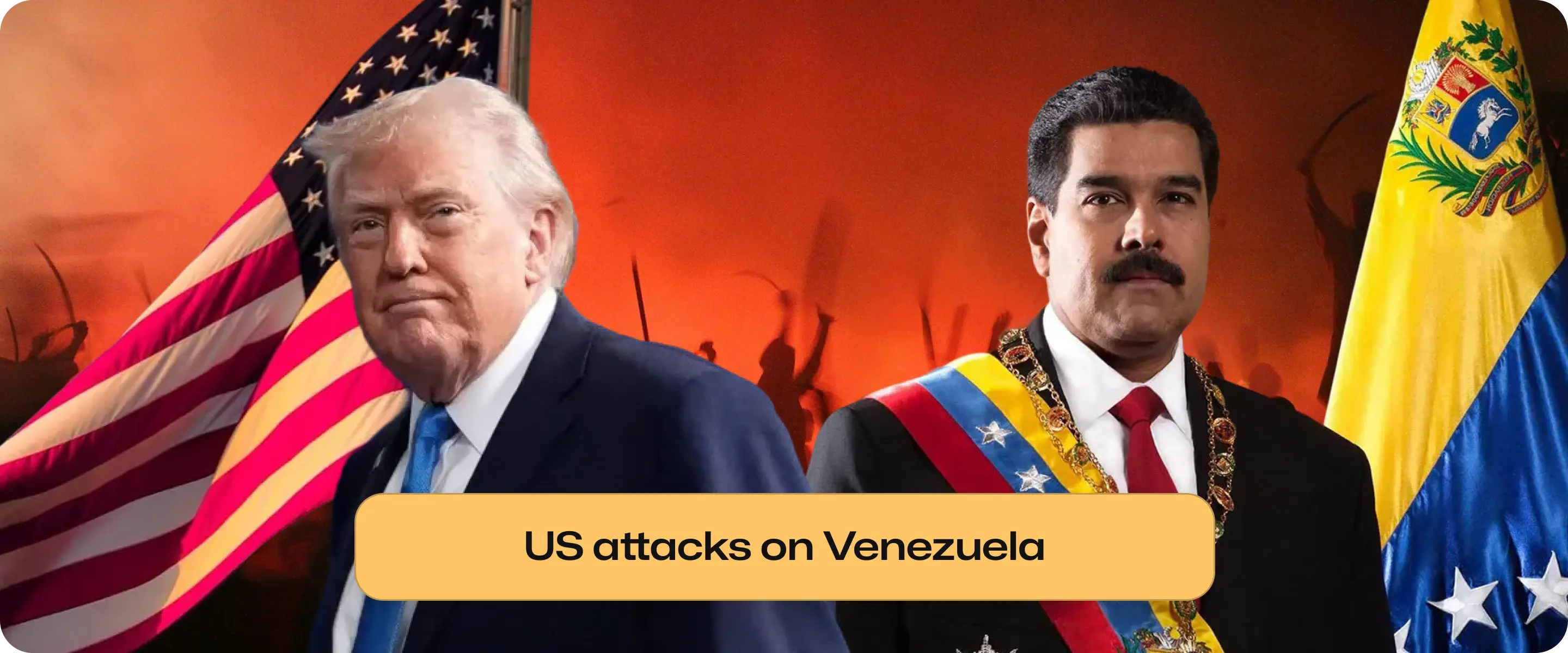
Successful Capture: "Operation Absolute Resolve" captured President Nicolás Maduro during a pre-dawn military raid in Caracas on January 3, 2026.
Legal Charges: Maduro was flown to New York to face indictments for narco-terrorism, drug trafficking, and weapons-related offenses.
Monroe Doctrine Revival: The U.S. justified intervention by reviving the 1823 Monroe Doctrine to eliminate Russian and Chinese regional influence.
Strategic Interests: Key motivations include securing the world's largest oil reserves, drug-trafficking and addressing the U.S. southern border migration crisis.
India's Response: India expressed "deep concern," calling for peaceful dialogue while navigating its strategic partnership with the United States.
On January 3, 2026, U.S. forces launched "Operation Absolute Resolve," capturing President Nicolás Maduro in Caracas to face narco-terrorism and drug trafficking charges.
The intervention shows a strong return to open interventionism. The U.S. justifies the military action with a new version of the Monroe Doctrine.
For UPSC aspirants, this development is a critical case study in International Relations (GS Paper 2). It marks a significant departure from decades of diplomatic isolation toward direct, coercive intervention.
Join our WhatsApp Community
The U.S. Operation Against Venezuela involved special operations forces targeting the Miraflores Palace. The operation was not without cost; reports indicate over 80 total casualties, including 32 Cuban military personnel providing security assistance to the Maduro government.
Charges Brought Against Nicolás Maduro
The legal justification provided by the US Department of Justice rests on long-standing indictments. Maduro faces charges in New York related to:
Narco-terrorism conspiracy.
Drug trafficking, with allegations of using state infrastructure to facilitate cocaine transit.
Weapons-related offences.
Washington has specifically designated groups like the Cartel de los Soles as foreign terrorist organizations, alleging Maduro himself led the cartel.
The U.S. intervention in Venezuela was driven by a combination of national security concerns, geopolitical strategy, and energy interests. The primary motivations include:
National Security & Narco-Terrorism: Washington justifies the operation as a strike against a "narco-state." It accuses the Maduro regime of leading the Cartel de los Soles and partnering with the Tren de Aragua network to traffic cocaine and fentanyl into the U.S.
Migration Crisis: The U.S. attributes rising southern border migration to Venezuela’s economic collapse. Over 8 million people have fled the country; the U.S. further alleges the deliberate release of inmates into migration flows to destabilize the region.
The "Don-roe" Doctrine: Marking a return to the Monroe Doctrine, the U.S. aims to reassert dominance in the Western Hemisphere, shifting from failed economic sanctions to direct coercive regime change.
Energy Hegemony: Controlling Venezuela’s 300+ billion barrels of oil—the world's largest reserves—is a core strategic goal. The U.S. seeks to rebuild the sector for American energy companies and secure supplies for global trade commitments. President Trump has explicitly stated an agenda to have US companies refurbish this infrastructure and extract oil to recover costs and reduce dependence on the Persian Gulf.
Countering Rivals: The attack seeks to dismantle the strategic foothold of China and Russia, neutralizing their military and economic influence in Latin America. Currently, China is the largest buyer of Venezuelan oil, accounting for nearly 80% of its purchases. Control over these fields would directly impact China's energy security.
Add as a preferred Source on Google
A central theme in the US–Venezuela Crisis is the "resurrection" of the Monroe Doctrine. Originally announced by President James Monroe in 1823, this doctrine established that any intervention by European powers in the Americas would be viewed as a hostile act against the US.
Feature | Details |
Origin | 1823, aiming to prevent European re-colonization. |
Core Principle | Separate spheres of influence for the Americas and Europe. |
Roosevelt Corollary (1904) | Asserted a "police power" for the US to intervene in Latin America to ensure stability. |
2026 Context | Used by the Trump administration to justify removing "outside influence" (China/Russia) from the hemisphere. |
By citing this 200-year-old policy, the US is showing its power in the Western Hemisphere. It signals that it will not accept opposing political ideas or foreign military presence in its "backyard."
The US-Venezuela Relationship has always been a tightrope walk for New Delhi. India used to import a lot of Venezuelan crude oil, reaching over $7 billion in 2018-19. However, trade has dropped to very low levels because of US sanctions.
India’s Official Response:
MEA Statement: India expressed "deep concern" and called for a peaceful resolution through dialogue.
Advisory: The Ministry of External Affairs urged Indian nationals in Venezuela to avoid non-essential travel and stay in contact with the Embassy in Caracas.
Strategic Balance: India must balance its "Global South" leadership, which champions sovereignty, with its critical strategic partnership with the US.
The international response highlights a fractured global order:
Condemnation: Russia, China, Brazil, and Colombia have opposed the military intervention, citing violations of the UN Charter and national sovereignty.
Concern: The European Union and Chile have called for respect for international law.
US Stance: Washington justifies the action under Article 51 of the UN Charter (Self-Defense), arguing that narco-terrorism constitutes an active security threat.
Frequently asked question (FAQs)
What is "Operation Absolute Resolve"?
What is the problem between the USA and Venezuela?
How does the Monroe Doctrine apply to the current U.S. Strikes in Venezuela?
What are the primary reasons cited by the US for the intervention?
Does this military action affect India’s energy security?
India must navigate this crisis by upholding Strategic Autonomy and advocating for a UN-led peaceful resolution. As global "resource wars" intensify, the focus should be on securing diverse energy supplies and protecting economic interests. Ultimately, New Delhi must balance its U.S. partnership while championing the Global South's stance on sovereignty and non-intervention.





Research methodology
PadhAI's research methodology ensures every article is accurate, UPSC-ready, and beginner-friendly. We curate current affairs analysis based on UPSC exam relevance by cross-referencing The Hindu, Indian Express, and PIB. General Studies (GS) topics are drafted from NCERTs and standard books such as M. Laxmikanth, Spectrum, and GC Leong, then reviewed by subject matter experts to eliminate factual errors. Additionally, we update aspirants with verified government exam notifications alongside expert blogs suggesting the best resources, syllabus, and comprehensive Prelims and Mains strategies.


No comments yet. Be the first to join the discussion!