World Economic Forum (WEF): Davos Summit 2026, Members & Key Reports
World Economic Forum 2026: Understand the Davos summit 2026, Members, Headquarters and reports like Global Risks Report. Learn how the WEF shapes policy in the Intelligent Age.

Gajendra Singh Godara
Last updated
7
mins read
Key Highlights on World Economic Forum 2026
Record-Breaking Attendance: The 2026 Annual Meeting has had the most government participation ever. Nearly 3,000 leaders from 130 countries attended, including a record 65 heads of state.
A Focus on Geopolitics: Under the theme "A Spirit of Dialogue," the summit is addressing a deeply fragmented world. High-profile attendees like U.S. President Donald Trump and Ukrainian President Volodymyr Zelenskyy are using the platform to navigate complex international relations.
Primary Global Risk: The Global Risks Report 2026 named "geo-economic confrontation" as the biggest threat to global stability. Armed conflict erupted in the state, and severe weather caused significant effects.
India’s Massive Presence: India sent its largest-ever delegation, featuring 100+ CEOs (including Mukesh Ambani) and senior ministers. The focus is on positioning India as the primary engine for global growth and a hub for tech innovation.
The "Intelligent Age" Agenda: Sessions are heavily focused on the rise of Agentic AI and the "Brain Economy." Leaders are discussing how to harness AI for productivity while ensuring the global workforce remains resilient against technological disruption.
Why in the News?
Record Global Participation: The World Economic Forum 2026 Davos summit has made headlines with record attendance, bringing together over 60 heads of state, including U.S. President Donald Trump, to discuss global stability.
Major Trade & Risk Reports: The forum is in focus due to a historic EU-India trade deal announcement and a 2026 report naming "geo-economic confrontation" as the world’s top risk.
The World Economic Forum (WEF) is often called the "Swiss Army Knife" of global diplomacy. It is a special place where the world's most important leaders come together to solve the biggest problems facing our planet.
The WEF has influenced the global agenda for over fifty years. This includes everything from the snowy peaks of Davos to its ongoing research projects. In a time of fast technology changes and global uncertainty, knowing how this organization works is important. This is true for anyone interested in global economics or international relations.
In this guide, we look at the World Economic Forum headquarters and its history. We talk about important WEF reports that influence global policy. This includes updates from the WEF 2026 Annual Meeting.
Join our WhatsApp Community
The World Economic Forum (WEF) is an international group that is not part of the government. It aims to "improve the state of the world."
The WEF serves as a platform for cooperation between the public and private sectors. It brings together leaders from business, politics, and civil society. They work together on economic, social, and environmental issues.
The WEF is different from groups like the United Nations or the World Trade Organization. It does not have formal legislative power.
Instead, it wields "soft power" by organizing high-level global dialogues. It serves as a link between private sector innovation and public sector rules. This creates a teamwork space where countries or companies can think of and carry out solutions.
The founders established the World Economic Forum in 1971. German economist Klaus Schwab originally founded it as the European Management Forum. When it started, the goal was to show European business leaders American management practices. This would help them compete better worldwide.
As the global landscape changed, so did the Forum. In 1987, they officially renamed it the World Economic Forum. This change showed its growing global mission and role as a neutral place for solving international disputes.
A key moment in its history happened in 1992. The Forum helped arrange a historic meeting between Nelson Mandela and South African President F.W. de Klerk. This event highlighted the WEF's special ability to offer a neutral space for important international talks.
Add as a preferred Source on Google
Klaus Schwab founded the World Economic Forum. He is a German economist and engineer. Schwab led the organization for over 50 years.
People recognize him for creating the idea of "stakeholder capitalism." This means that an organization should be responsible to all its stakeholders. These include employees, customers, local communities, and the environment. It is not just about making profits for shareholders.
The World Economic Forum headquarters is in Cologny, Switzerland. This beautiful area overlooks Lake Geneva. The most famous WEF events take place in Davos, a ski resort town. However, Cologny is the main center for the Forum's global work all year round.
To maintain its global influence, the WEF has expanded its footprint with several key international offices:
New York, USA: Focusing on global business and financial relations.
Beijing, China: Managing the Forum's deep engagement with the world's second-largest economy.
Tokyo, Japan: Strengthening ties with the Asian business community.
San Francisco, USA: Home to the Center for the Fourth Industrial Revolution, which focuses on emerging technology governance.
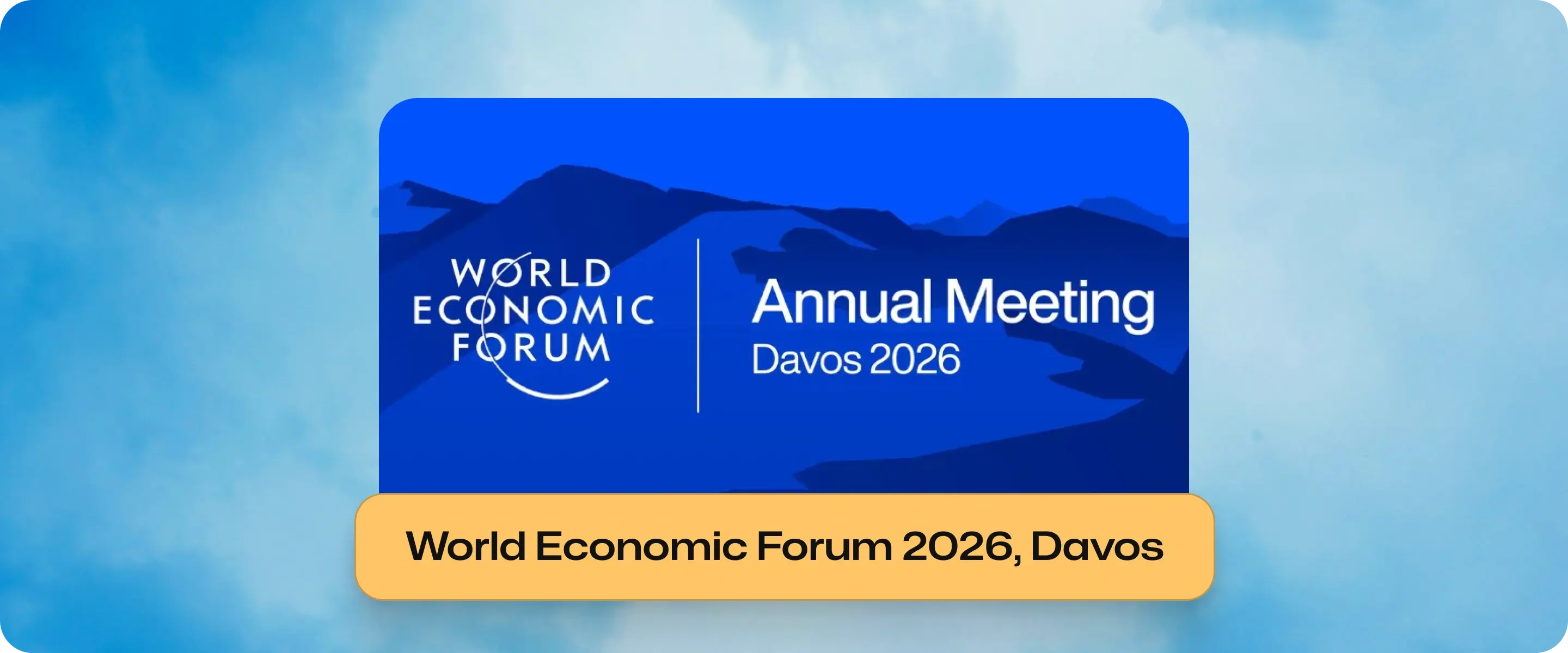
The most famous event for the organization is the World Economic Forum Annual Meeting. It takes place every January in Davos, Switzerland. The 2026 meeting, running from January 19 to 23, has marked a milestone with record-breaking participation.
The World Economic Forum has many members. These include big global companies like BlackRock, Salesforce, and Accenture. It also includes international organizations such as the IMF, WTO, and World Bank.
Heads of state and government are part of it too. Academics and civil society leaders also join. The forum has a large, invitation-only network of 1,000 major multinationals and other important stakeholders.
Political Leaders: U.S. President Donald Trump, European Commission President Ursula von der Leyen, and Ukrainian President Volodymyr Zelenskyy.
Tech Titans: Nvidia CEO Jensen Huang, Microsoft's Satya Nadella, and Google DeepMind's Demis Hassabis.
India's Delegation: India has sent its largest delegation ever. It includes over 100 CEOs, like Mukesh Ambani and Nandan Nilekani, and four Union Ministers. They aim to show that India can be a key driver of global growth.
The 2026 programme is centered around five pressing global challenges where public-private dialogue is deemed critical for progress:
Cooperation in a Contested World: Navigating geopolitical volatility and "geo-economic confrontation," which has been identified as a top risk for 2026.
Unlocking New Sources of Growth: Identifying economic pathways in an environment of high debt and rising inflation.
Investing in People: Building strong workforces and tackling the "brain economy" is important in the age of Artificial Intelligence. This refers to the competition for skilled talent in today's AI-driven world.
Deploying Innovation Responsibly: Focusing on the rise of "agentic AI" and ensuring technological breakthroughs benefit society as a whole.
Building Prosperity within Planetary Boundaries: Accelerating the energy transition and corporate nature commitments.
Influential World Economic Forum Reports
Beyond its meetings, the WEF is a prolific publisher of data-driven insights. Policymakers and business leaders eagerly await every World Economic Forum report. They value it for its benchmarks and long-term forecasts.
Global Risks Report 2026: This edition points out "geo-economic confrontation" as the biggest risk for a global crisis. State-based armed conflict follows closely behind.
Global Cooperation Barometer 2026: A new tool used to measure the health of international relations and trade.
Future of Jobs Report 2025: This report looks at how AI, economic changes, and the green transition will change jobs by 2030.
Global Gender Gap Report: Benchmarks the progress of nations toward gender parity in health, education, and politics.
Criticisms and Controversies
Despite its influence, the WEF is frequently scrutinized. Critics often point to its carbon footprint, with hundreds of private jets flying into Davos to discuss climate change. The organization is tax-exempt, and its high membership cost is only for top multinational companies. This has led to claims of elitism.
Furthermore, some argue that the Forum provides a platform for politicians to "whitewash" their initiatives without facing democratic accountability.
Frequently asked question (FAQs)
What is the World Economic Forum?
Where is the World Economic Forum (WEF) headquarters located?
Who is the founder of the World Economic Forum?
Where will the World Economic Forum 2026 be held?
What is the theme for the Davos 2026 Annual Meeting?
The World Economic Forum is seen as either a key player in global progress or a club for the elite. Founded by Klaus Schwab, the WEF is a strong force in international relations. As it moves into a new leadership era in 2026, the WEF shapes the path for our future in the "Intelligent Age."





Research methodology
PadhAI's research methodology ensures every article is accurate, UPSC-ready, and beginner-friendly. We curate current affairs analysis based on UPSC exam relevance by cross-referencing The Hindu, Indian Express, and PIB. General Studies (GS) topics are drafted from NCERTs and standard books such as M. Laxmikanth, Spectrum, and GC Leong, then reviewed by subject matter experts to eliminate factual errors. Additionally, we update aspirants with verified government exam notifications alongside expert blogs suggesting the best resources, syllabus, and comprehensive Prelims and Mains strategies.


No comments yet. Be the first to join the discussion!