Flash Floods in India: Meaning, Cloudburst, Causes & Impacts

Gajendra Singh Godara
12
mins read
Flash Flood Meaning
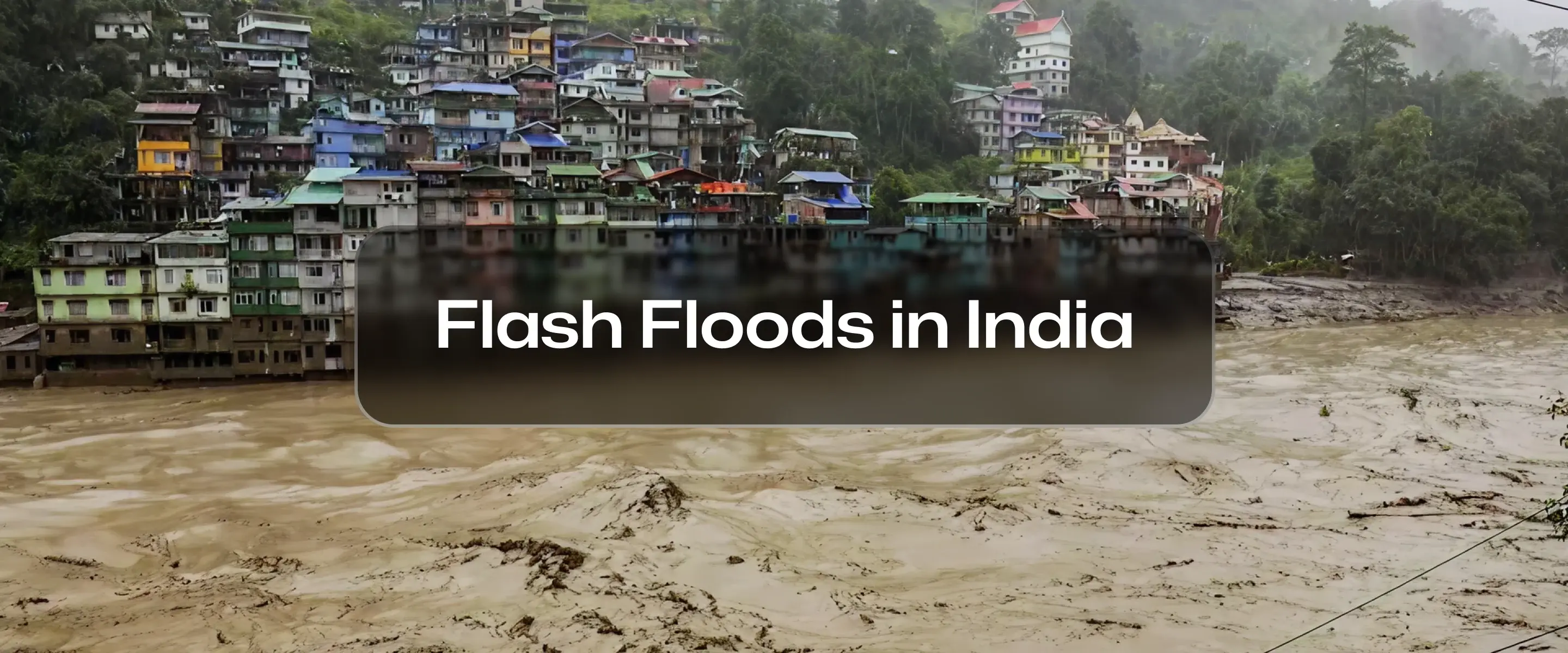
Flash floods are sudden, short-lived surges of water that follow intense rainfall, typically within 6 hours. They often occur in mountainous regions, where steep slopes and narrow channels channel rain into fast-moving torrents. These rapid floods can uproot trees and destroy homes, roads and bridges, causing widespread damage.
Flash floods can be caused by heavy monsoon downpours, cloudbursts (extreme rainstorms), or landslides that suddenly block streams.
A cloudburst is an intense rainfall over a small area (sometimes >10 cm of rain in minutes). Rapid snowmelt or glacial bursts can also send surges downstream. Human impacts like deforestation and urbanization exacerbate floods: concrete roads and roofs (impervious surfaces) prevent absorption, increasing runoff. In sum, flash floods combine heavy rainfall, terrain and human factors to create deadly, fast floods.
Why in the News?
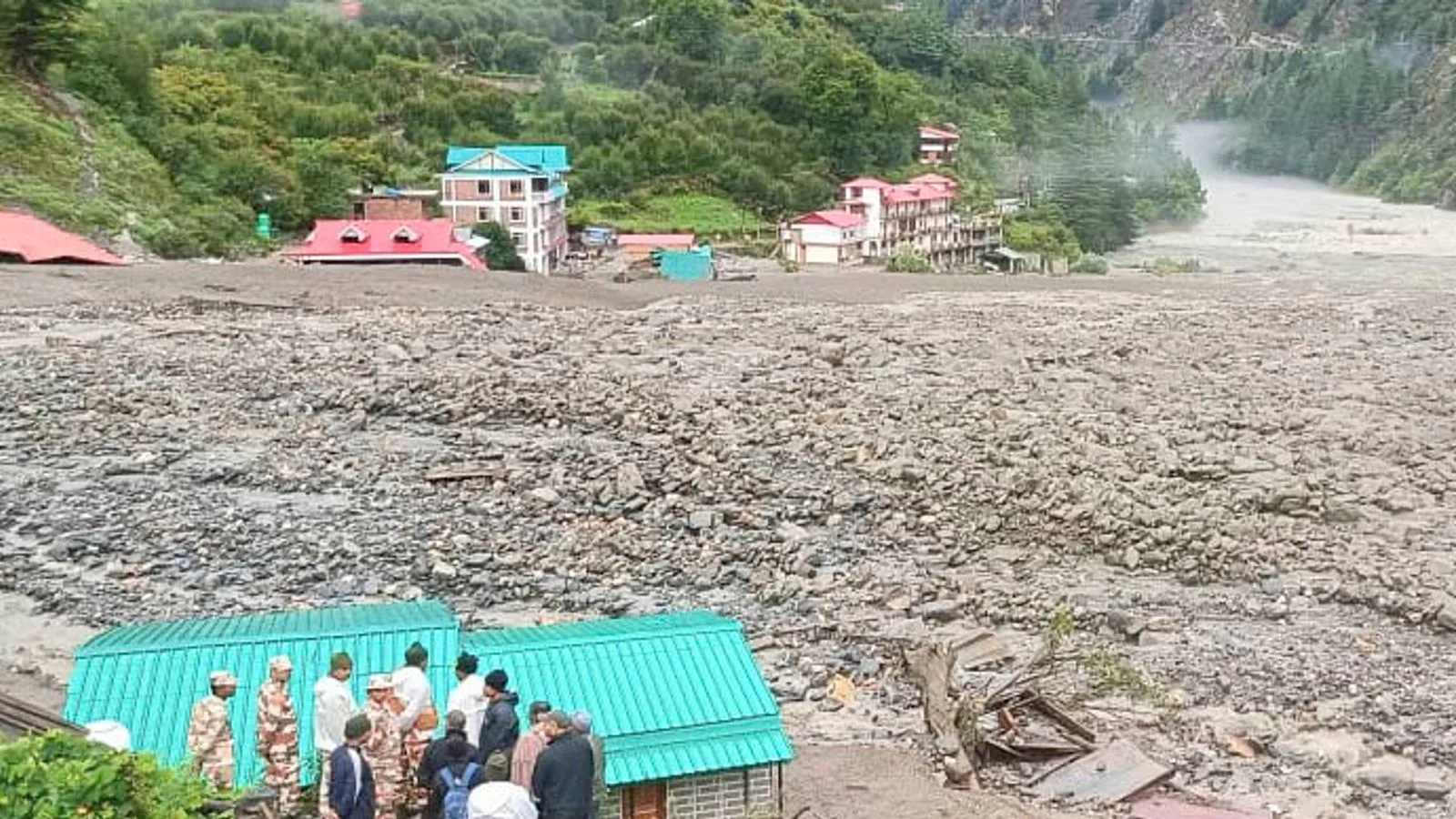
Uttarakhand, 2025: On Aug 5, 2025, the Kheer Ganga river in Uttarkashi’s Dharali town overflowed in a flash flood, sweeping away houses and killing four people.
Cause: Authorities report an extreme cloudburst (an intense, localized downpour) triggered this disaster. The cloudburst unleashed torrents of water and debris through the valley, overwhelming the village.
Join our WhatsApp Community
Causes of Flash Floods
Intense Rainfall & Cloudbursts: The most common cause is very heavy rain. A cloudburst (sudden intense rain) can dump over 10 cm of water in an hour, overwhelming drainage. This localized, extreme rainfall rapidly raises river levels and causes flash floods in nearby areas.
Orographic Lift: In the Himalayas, moist monsoon air is forced up the mountains (orographic lift), cooling and condensing into heavy rain. Strong upward winds can hold raindrops aloft, then release them all at once, creating cloudbursts.
Glacial/Snow Melt: Rapid melting of snow or glaciers (or glacial lake outbursts) can suddenly swell rivers. If a glacier or landslide dams a river and then breaks, the burst of water can flood downstream regions within hours.
Landslides and Debris Flows: Heavy rains can trigger landslides that block river channels. When these natural dams fail, they unleash flash floods downstream, often carrying huge boulders and sediment.
Human Factors: Deforestation and urban growth increase runoff. Removing trees reduces soil stability and water absorption. Impervious surfaces (roads, pavements, roofs) cause rainfall to flow directly into streams, intensifying floods. Urban drains may also choke, worsening flash floods.
Key Factors Behind Flash Floods in India
Combined Triggers, Not Just Rain: Only about 25% of flash floods are caused by extreme rainfall alone. Most occur when heavy rain meets already saturated soil, leading to instant surface runoff and widespread flooding.
Soil Saturation: If rain precedes the event, soil may already be wet. Studies show ~75% of flash floods in India result from heavy rain on saturated ground. When soil cannot absorb water, even moderate rain causes rapid runoff.
Not Always Immediate: Just 23% of extreme rainfall events cause flash floods within six hours. Instead, prolonged patterns of both low- and high-intensity rain build up flood risks.
Geographic Hotspots: The Himalayas, West Coast, and Central India are the most flash-flood prone. In the Himalayas, steep mountain slopes and rugged terrain drive flood formation, while "flashiness" or rapid streamflow response is dominant along the West Coast and Central India.
Upper Catchment Area Conditions: Heavy rain and landslides in a river’s upper catchment (headwaters) quickly funnel water downstream. Saturated soil and melting glaciers in headwaters increase flood volume.
Shifting Risk Zones: Climate change is redrawing flash-flood maps-semi-arid zones and previously low-risk areas are now seeing more events due to intensified, short-duration rainfall.
Role of Cloudbursts: Cloudbursts-localized, intense rainstorms typically over mountainous terrain-trigger sudden deluges and flash floods in areas like Uttarakhand
Add as a preferred Source on Google
What are the Impacts of Flash Floods in India?
Human Casualties: Flash floods are deadly. Globally, they cause ~5,000 deaths per year – about 85% of all flood fatalities. Fast-moving floodwaters can drown people and livestock, or trap them in debris.
Infrastructure Damage: Homes, roads, bridges, and power lines are often destroyed. The velocity of flash floods can uproot trees and wash away buildings. In Uttarakhand (2025), many structures were submerged or demolished by the debris-laden flood.
Economic Loss: Flash floods cause huge economic harm. Agricultural fields can be inundated, destroying crops. Businesses and tourism (pilgrimage routes in Himalayas) suffer major losses. Recovery costs (repairing infrastructure, relief camps) run into millions.
Environmental Impact: Sudden floods erode soil and destabilize slopes, leading to landslides. They carry debris (sediment, pollutants, oil) into rivers and lakes, harming ecosystems. Soil fertility can be altered by erosion and silt deposition.
Climate-Change Intensifies Flash Floods in India
Warming Atmosphere: For every 1°C rise in temperature, the atmosphere holds ~7% more moisture, leading to heavier downpours and increasing flash flood risks.
Extreme Rainfall Rise: Between 1981–2020, India saw a 2× spike in pre-monsoon extreme rainfall, with sharp rises also seen in monsoon and post-monsoon periods.
Monsoon Impact: Over 75% of flash floods occurred during the monsoon, making it the most critical season for flash flood causes and effects.
River Basin Trends: Brahmaputra, Ganga, and Krishna basins are now reporting higher “wet hours” and streamflow-even in regions previously not flood-prone.
Glacier Melt: Melting glaciers, especially in the Himalayas, have triggered flash floods, such as the 2021 Uttarakhand disaster, often mistaken as a cloudburst.
Detection and Forecasting of Flash Floods
Flash Flood Guidance Systems: Meteorological agencies are developing specialized alerts. For example, the Indian Meteorological Department’s Flash Flood Guidance System uses satellites and ground data to monitor rainfall, soil moisture and terrain. It aims to predict flash flood risk up to six hours in advance.
Rainfall Monitoring (Radar & Satellite): Weather radars track intense downpours in real time. Satellite imagery identifies towering storm clouds. These tools give early warning of cloudbursts or convective storms over vulnerable areas.
Hydrological Models: Computer models simulate how rain will run off the land. By inputting rainfall intensity, soil saturation, and topography, forecasters estimate flood peaks. Current studies emphasize combining rainfall forecasts with watershed data to map flash flood hotspots.
Community Alerts: Informed by forecasts, authorities issue warnings via SMS, sirens, social media and radio. Real-time updates on river levels and rain help communities evacuate. (Mongabay reports that India’s FFGS will alert citizens and relief teams in advance.)
What Mitigation and Prevention Strategies should be adopted?
Afforestation and Ecosystem Measures: Planting trees and restoring vegetation in catchments enhances absorption and stabilizes slopes. Large-scale afforestation and check dams (bunds) slow down runoff and prevent debris flow. Protecting wetlands and streams also buffers floodwaters.
Land-Use Planning and Zoning: Strict land-use laws are crucial. Construction should be banned in floodplains and unstable valleys. People should settle on higher, stable ground (e.g., slopes above flood channels). Vajiram & Ravi stress better land-use planning and region-specific adaptation to mitigate flash floods.
Infrastructure and Drainage: Cities can build more permeable surfaces (parks, green roofs) to reduce runoff. Improving stormwater drains and retention ponds helps manage sudden inflows. Rural areas benefit from small check dams that catch overflow upstream. Engineering solutions (like reinforced river embankments) also play a role.
Integrated Watershed Management: Controlling deforestation, terracing farms, and preventing soil erosion in hill regions all reduce sudden runoff. Watershed management (contour trenches, check dams) in upper catchments can dampen flood peaks.
Disaster Relief & Insurance: Quick-response teams (like NDRF/SDRF in India) and crop/livestock insurance schemes can help recovery. Though not preventive, they lessen economic shocks after flash floods.
What Is a Cloudburst?
Cloudburst Definition: A cloudburst is an extremely intense and highly localized rainfall event-typically 10 cm or more in one hour over an area of about 10 km × 10 km; alternatively, even 5 cm in 30 minutes qualifies as one .
Occurrence: These events are especially common in mountainous regions, such as the Himalayas, where orographic lift-moist air rising over terrain-triggers rapid condensation leading to torrential rain.
Forecasting Challenges: Due to their highly localized nature and rapid onset, cloudbursts are difficult to predict, often eluding both radar systems and high-resolution weather models .
Hazard Linkages: Cloudbursts frequently trigger flash floods and landslides, with devastating downstream effects, making them a key flash flood cause .
Disaster Risk Reduction: The National Disaster Management Plan (NDMP) 2019 explicitly includes cloudburst as a hazard requiring targeted Disaster Risk Reduction (DRR) strategies .
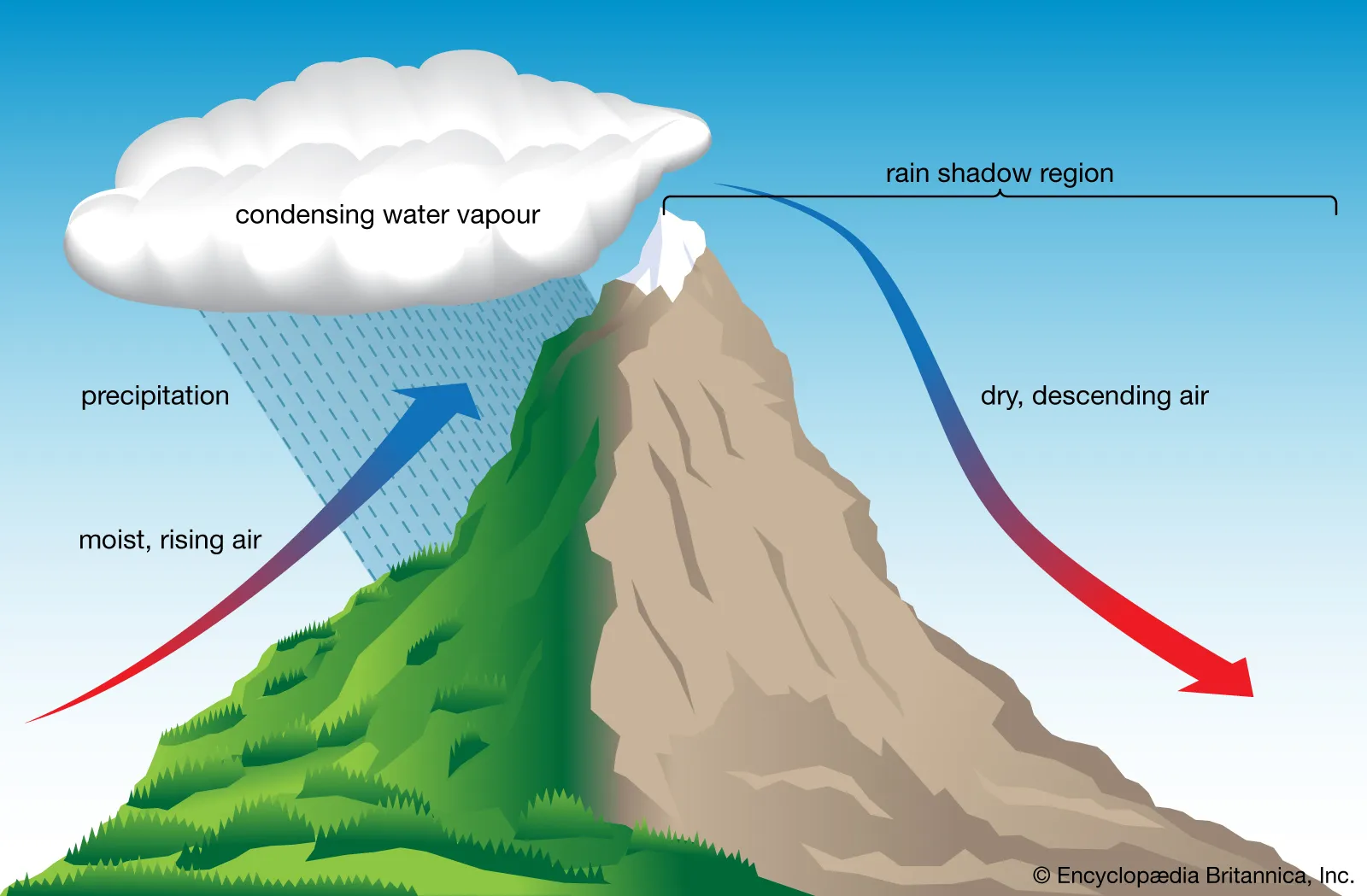
Image credit : Encyclopædia Britannica
Conclusion
What do you mean by flash floods?
Why are steep slopes dangerous during heavy rainfall?
What makes flash floods so sudden and dangerous?
How does precipitation affect river flooding in mountains?
Why are mountainous regions like the Himalayas more prone to flash floods and cloudbursts?
Flash floods are a major natural hazard in India, causing sudden destruction of life and property. Understanding their causes – from cloudbursts and heavy monsoon rains to human-induced runoff – is essential for disaster management. Early warning systems and community preparedness can save lives, while mitigation measures (reforestation, zoning, better infrastructure) reduce risk. In mountainous regions, special attention is needed due to steep slopes and intense storms. UPSC aspirants should note that flash floods link to climate change and sustainable development topics. For more on environmental disasters and disaster management, see related articles on Padhai Blogs.
Internal Linking Suggestions
Tsunami UPSC, Meaning, Characteristics, Causes, Impacts & Mitigation Measures
How to Begin Your UPSC Preparation : The Ultimate Guide For Beginners
40 Most Important Supreme Court Judgements of India : Landmark Judgements UPSC
GST Council (Goods and Services Tax Council): Constitutional Provisions, Functions, Way Forward
External Linking Suggestions
UPSC Official Website – Syllabus & Notification: https://upsc.gov.in/
Press Information Bureau – Government Announcements: https://pib.gov.in/
NCERT Official Website – Standard Books for UPSC: https://ncert.nic.in





Research methodology
PadhAI's research methodology ensures every article is accurate, UPSC-ready, and beginner-friendly. We curate current affairs analysis based on UPSC exam relevance by cross-referencing The Hindu, Indian Express, and PIB. General Studies (GS) topics are drafted from NCERTs and standard books such as M. Laxmikanth, Spectrum, and GC Leong, then reviewed by subject matter experts to eliminate factual errors. Additionally, we update aspirants with verified government exam notifications alongside expert blogs suggesting the best resources, syllabus, and comprehensive Prelims and Mains strategies.


Gajendra Singh Godara is an IIT Bombay graduate and a UPSC aspirant with 4 attempts, including multiple Prelims and Mains appearances. He specializes in Polity, Modern History, International Relations, and Economy. At PadhAI, Gajendra leverages his firsthand exam experience to simplify complex concepts, creating high-efficiency study materials that help aspirants save time and stay focused.
No comments yet. Be the first to join the discussion!