Ebola Virus Outbreak 2026 - Causes and Timeline
The May 2026 Ebola outbreak is spreading rapidly in democratic republic of Congo and there is a high risk of cross-border contamination as per WHO. This makes it a medical emergency globally.

Gajendra Singh Godara
Last updated
5 mins
mins read
Ebola Virus is a severe, often fatal disease spread by viruses belonging to the Orthoebolavirus genus of the filoviridae family. Africa Centres for Disease Control and Prevention (Africa CDC) and World Health Organization (WHO) have officially confirmed the Ituri Province Ebola outbreak 2026 originating from Democratic Republic of Congo.
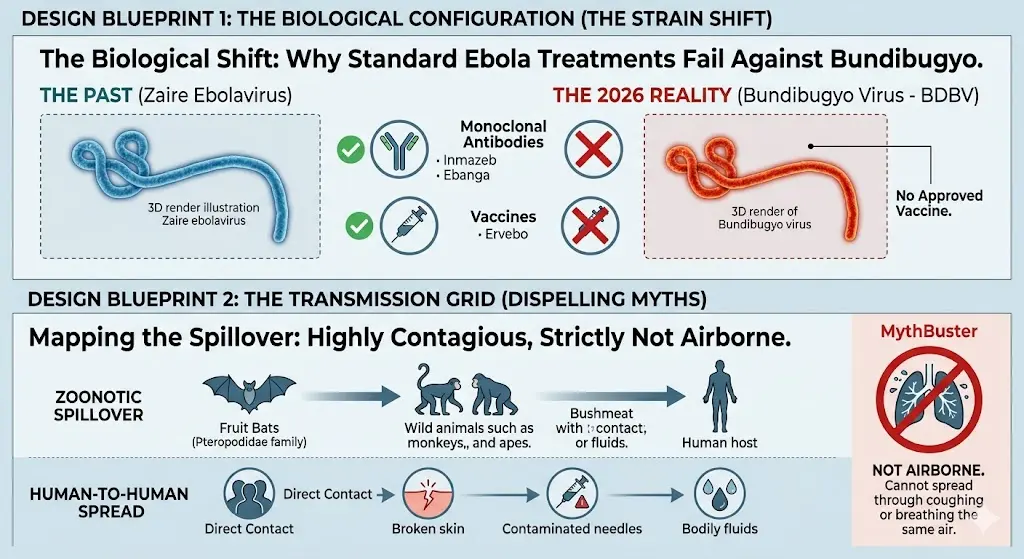
Ebola is a fatal illness in humans. Fruit bats (Pteropodidae family) are considered natural hosts of the Orthoebolavirus. Out of the six identified species of Orthoebolavirus, three strains are known to cause EBOLA-
Ebola virus (EBOV) causing Ebola virus disease (EVD).
Sudan virus (SUDV) causing Sudan virus disease (SVD).
Bundibugyo virus (BDBV) causing Bundibugyo virus disease (BVD).
Note: As of now, the ecology of BDBV is currently unclear and no reservoir host has yet been identified. Bats are suspected to harbor the virus, but this is unconfirmed.
Join our WhatsApp Community
The first known identification of the Ebola virus was through two simultaneous outbreaks in 1976:
Sudan virus disease in Nzara (now South Sudan)
Ebola virus disease in Yambuku (now the Democratic Republic of the Congo.) This outbreak occurred near the Ebola river , giving the virus its name.
In the May 2026 outbreak, the situation is critical as Genomic sequencing indicates a non-Zaire strain. Current vaccines and therapeutics were created to target Zaire ebolavirus strain. People depend on early intensive care, hydration and symptomatic treatment to recover from the new strain of Ebola Virus.
As per WHO, Fruit bats of the Pteropodidae family are natural hosts to this virus. The virus spreads to humans through direct contact from another person through broken skin or mucous membranes. It can also spread through contact with blood, secretions, organs or other bodily fluids of infected animals found ill/dead in the forest.
Add as a preferred Source on Google
Yes, the Ebola disease is caused by two types of direct contact.
Animal-to-human (zoonotic) transmission
Animals like fruit bats transmit to humans through close contact with the bodily fluids of infected animals.
Human-to-human transmission
Spreads through direct contact (through broken skin or mucous membranes) with the blood /bodily fluids of a person who is sick/dead from Ebola, or things contaminated with such fluids.
Burial ceremonies involve a deceased person or infected person making these the hotspot of Ebola virus outbreaks. The risks in such occasions are especially high due to following reasons:
Ebola virus remains highly infectious and active in bodily fluids of people long after they have passed away.
Lot of religions have traditions that involve physical contact with the corpse
Belongings, clothes and bedding belonging to the deceased person also become carriers of the virus.
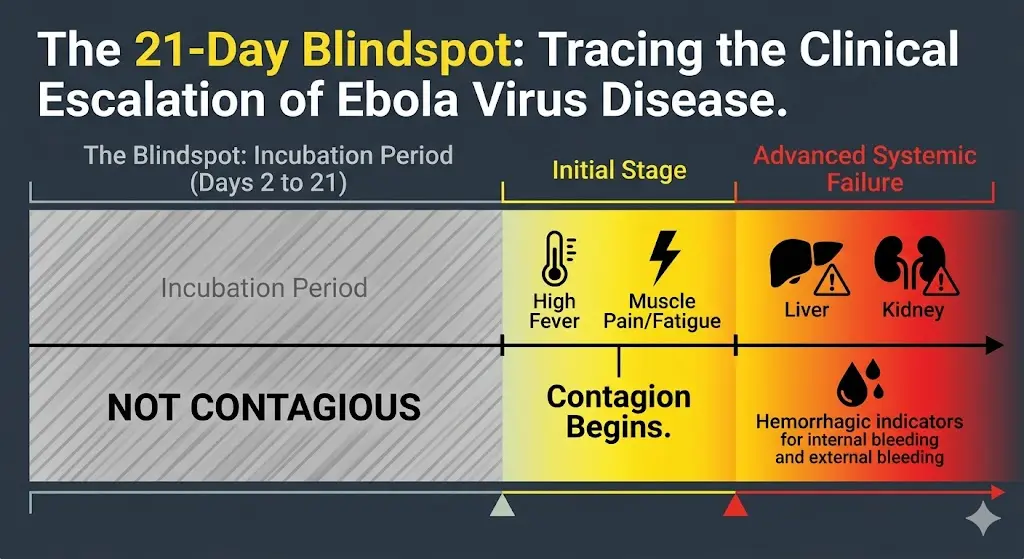
It takes 2-21 days from contact with the virus for the Ebola virus symptoms to show up. The symptoms can appear suddenly and cause shifts in the nervous system as well.
Early-stage symptoms
Early stage symptoms include:
fatigue
malaise
muscle pain
headache
sore throat
Advanced symptoms
Advanced symptoms include:
vomiting, diarrhoea,
abdominal pain rash,
impaired kidney
faulty liver functions.
ebola hemorrhagic fever
Other than these, bleeding is considered a common symptom but it is less frequent and more advanced. Some develop internal and external bleeding like including blood in vomit and faeces, from the nose, gums and/or vagina.
Impact on the nervous system causes irritability, confusion and aggression.
Healthcare workers should be on lookout for these symptoms in their patients.
It can be difficult for healthcare workers to distinguish the Ebola disease from other illnesses like malaria, typhoid, meningitis, etc at the early stages. There are some diagnosis methods that can confirm that it is Ebola Virus.
The following diagnostic methods are used to confirm suspicions of being infected with the virus:
Reverse Transcriptase Polymerase Chain Reaction (RT-PCR) assay
Antibody-capture enzyme-linked immunosorbent assay (ELISA)
Antigen-capture detection tests and Virus isolation by cell culture can also be done. Blood samples of infected persons should be handled as a biohazard and processed with adequate safety measures.
Is There a Cure for the Bundibugyo Strain
Approved vaccines and treatments are only available for Ebola virus strain and are being developed for other strains. Tackling the disease involves multiple other methods and symptomatic treatments.
Supportive care & rehydration
WHO has officially stated that caretakers can provide the best possible care for patients and increase their chance of survival.
This is called optimized supportive care, this covers the relevant tests to administer, how to manage pain, nutrition and co-infections (such as malaria), and other approaches that put the patient on the best path to recovery.
Approved Antibodies
Standard Ebola monoclonal antibodies are ineffective against this specific Bundibugyo outbreak, making early optimized supportive care the only option.
Vaccines for controlling the outbreak
There are no approved therapeutics, but experimental products are under development and a CORE protocol for clinical trials is available.
17th Ebola outbreak ( May 2026)
On May 16–17, 2026, the WHO Director-General officially declared the Bundibugyo Ebola outbreak a Public Health Emergency of International Concern (PHEIC). The Africa CDC and WHO warn of high regional transmission risks to neighbouring countries like Uganda and South Sudan.
As of May 17, 8–10 laboratory-confirmed cases have been identified along with roughly 340–390 suspected cases. There are also approx. 90–105 suspected deaths across Ituri Province, alongside 2 travel-linked cases in Uganda.
Goma Ebola case updates
Experts confirmed a positive Ebola case in the major transit hub of Goma (linked epidemiologically to Ituri). This directly prompted Rwanda to close its border with Goma, severely impacting humanitarian access.
Ebola PHEIC declaration (WHO)
WHO has deployed emergency teams and funds of USD 500,000 from its Contingency Fund for Emergencies (CFE) for contact tracing, cross-border surveillance and lab testing
Prevention and Treatment options
Community involvement and intervention is crucial to stop the rapid outbreak of Ebola Virus such as:
clinical care
surveillance and contact tracing
laboratory services
infection prevention and control in health facilities,
safe and dignified burials,
vaccination (only for Ebola virus disease)
social mobilization.
Raising awareness can help individuals get diagnosed early and focus on getting better. EVD is highly lethal with a fatality rate hovering around 50%, while earlier outbreaks have ranged in mortality rate from 25%-90%. Patients’ health should be monitored for 21 days at the least to prevent further spread and get necessary care as well as isolation for unaffected people.
UPSC Relevance of the Outbreak
For upsc aspirants, the current events in the Ebola virus outbreak are important in -
1. The Spatial & Economic Intersection (GS Paper I & III)
2. Governance, Biosecurity & Ethics (GS Paper II & IV)
Syllabus Pillar | The Isolated Fact (Information Layer) | The Connected System (Intelligence Layer) |
GS I: Geography | Ebola originates near the Ebola River in the DRC and Uganda. | Deforestation and forest fragmentation force fruit bats into closer contact with agrarian human settlements. |
GS II: Governance | WHO declared a Public Health Emergency (PHEIC). | Explores the limitations of the International Health Regulations (IHR) and global financing gaps in developing non-Zaire medical counter-measures. |
GS III: Economy | Outbreaks slow down regional GDP growth. | Health crises paralyze global supply chains of critical transition minerals (like cobalt and coltan from the DRC) due to labor quarantine shocks. |
GS IV: Ethics | Quarantines restrict individual freedom. | The fundamental classic tension between Individual Liberty (freedom of movement) vs. Utilitarian Collective Good (preventing a global pandemic). |
Frequently asked question (FAQs)
Is the Ebola virus airborne or highly contagious?
What are the primary symptoms of Ebola virus disease to watch for?
Why is the May 2026 Ebola outbreak causing global alarm?
What is the primary ebola treatment available for patients?
What is the ebola virus origin, and how does it enter human populations?




Research methodology
PadhAI's research methodology ensures every article is accurate, UPSC-ready, and beginner-friendly. We curate current affairs analysis based on UPSC exam relevance by cross-referencing The Hindu, Indian Express, and PIB. General Studies (GS) topics are drafted from NCERTs and standard books such as M. Laxmikanth, Spectrum, and GC Leong, then reviewed by subject matter experts to eliminate factual errors. Additionally, we update aspirants with verified government exam notifications alongside expert blogs suggesting the best resources, syllabus, and comprehensive Prelims and Mains strategies.


No comments yet. Be the first to join the discussion!