Biodiversity Hotspots in India: Map, Facts & Conservation
Biodiversity hotspots in India cover 4 regions: Himalaya, Indo-Burma, Western Ghats, Sundalands. They are home to 28,000+ endemic plants, 100+ endangered mammals, and 79 threatened birds, with protected areas and major conservation programs.

Gajendra Singh Godara
Last updated
7
mins read
Add a comment
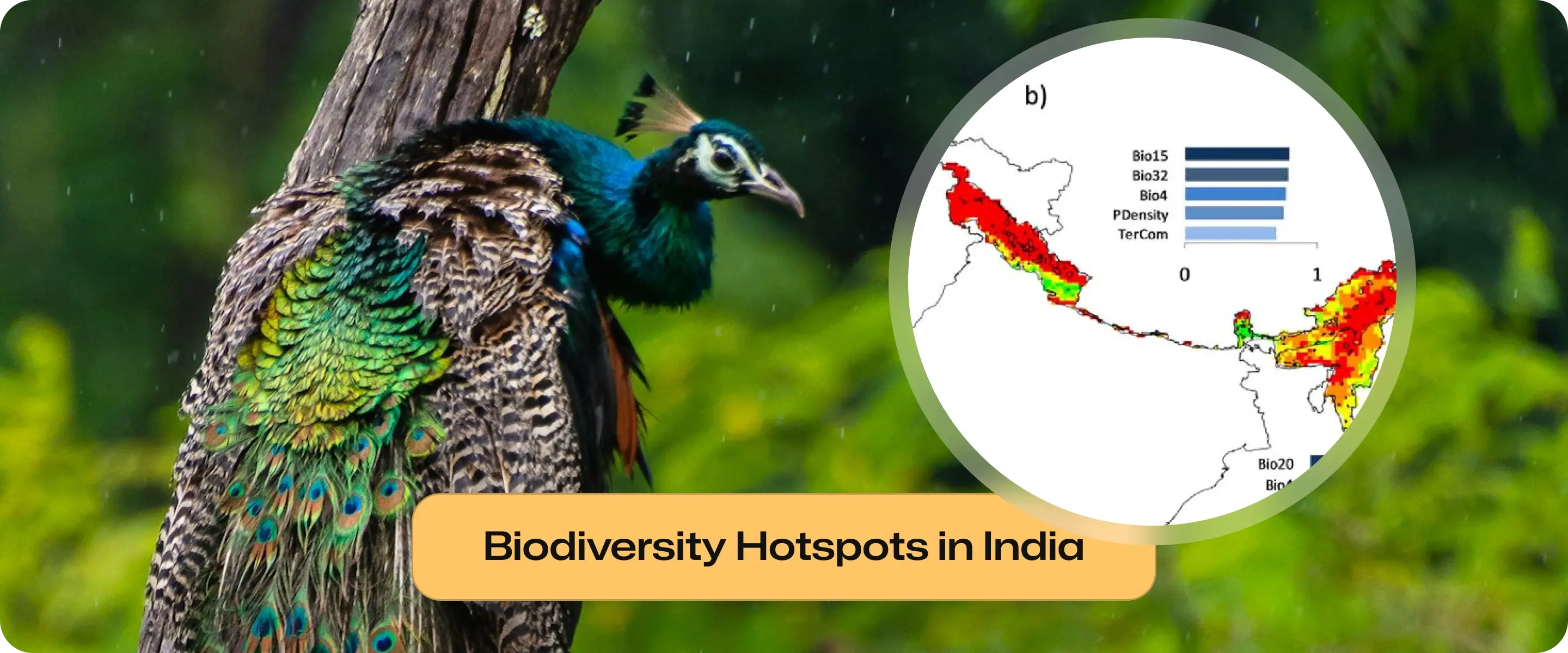
Hotspots: Himalaya, Indo-Burma, Western Ghats, Sundalands
Endemic Plants: 28,209
Endangered Mammals: 103
Endangered Birds: 79
Protected Area: 554,589 km²
Threats: Habitat loss, poaching, invasives, climate, urbanization
Biodiversity Hotspot is defined as a biogeographic area that is an important reservoir of biodiversity and threatened by human activities.
The idea of a biodiversity hotspot was conceptualised by Norman Myers in 1988. Conservation International formally accepted the idea and defined the following criteria for identifying hotspots:
The region should be home to at least 1500 species of vascular plants , indicating high endemism (the ecological phenomenon where a species is restricted to a specific geographic region)
The region has lost at least 70% of its original habitat
There are a total of 36 biodiversity hotspots recognized in the world as of 2026. They cover 2.3% to 2.5% of earth’s surface and are home to 50% of the world's endemic species as well as 43% of all terrestrial vertebrates.
Join our WhatsApp Community
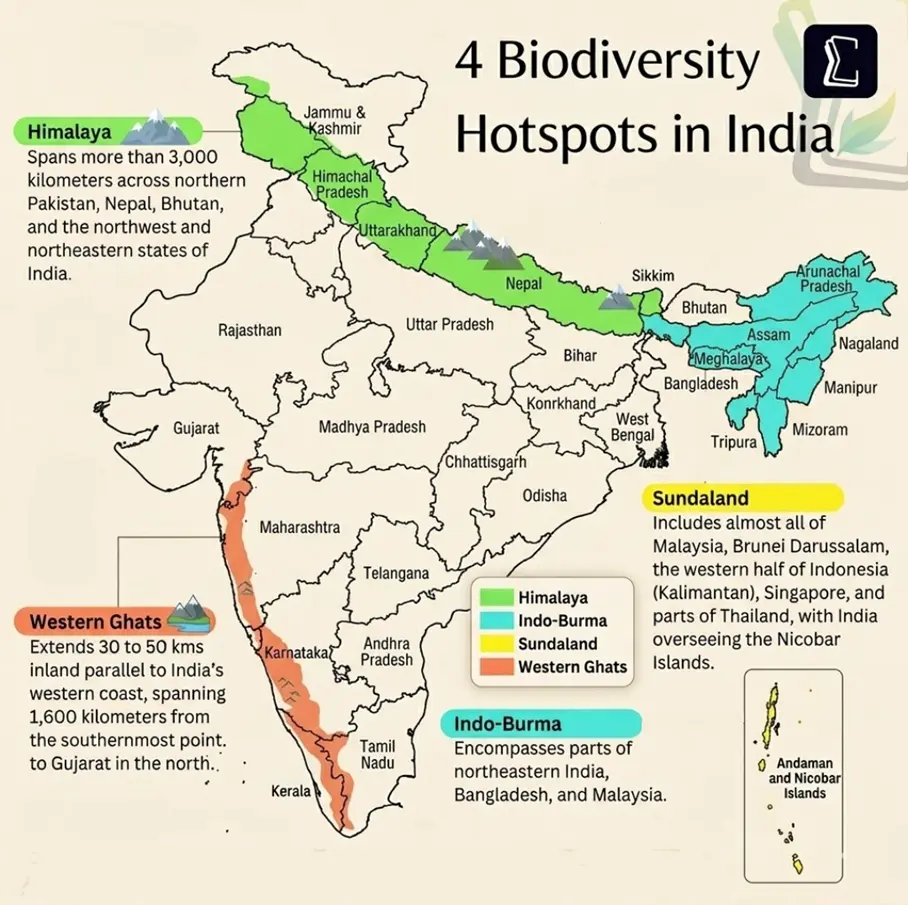
India is home to four of the world’s biodiversity hotspots:
Himalayas
Indo-burma region
Sundaland (Nicobar Islands)
Western Ghats
The states covered in these hotspots is given below:
Biodiversity Hotspot | States/Union Territories Covered |
Himalaya | Jammu & Kashmir, Himachal Pradesh, Uttarakhand, Sikkim, Arunachal Pradesh, part of northern West Bengal |
Indo-Burma | Arunachal Pradesh, Assam, Manipur, Meghalaya, Mizoram, Nagaland, Tripura, West Bengal, Andaman & Nicobar Islands |
Sundalands (Nicobar Islands) | Nicobar Islands (Union Territory of Andaman & Nicobar) |
Western Ghats | Maharashtra, Goa, Karnataka, Kerala, Tamil Nadu, small parts of Gujarat |
Add as a preferred Source on Google
The attributes of the four biodiversity of India are provided in the table below:
Attribute | Himalaya | Indo-Burma | Western Ghats | Sundalands |
Hotspot original extent (km²) | 741,706 | 2,373,057 | 189,611 | 150,063 |
Hotspot vegetation remaining (km²) | 185,427 | 118,653 | 43,611 | 100,571 |
Endemic plant species | 3,160 | 7,000 | 3,049 | 15,000 |
Endemic threatened birds | 8 | 18 | 10 | 43 |
Endemic threatened mammals | 4 | 25 | 14 | 60 |
Endemic threatened amphibians | 4 | 35 | 87 | 59 |
Extinct species* | 0 | 1 | 20 | 4 |
Human population density (people/km²) | 123 | 134 | 261 | 153 |
Area protected (km²) | 112,578 | 235,758 | 26,130 | 179,723 |
Area protected (km²) in categories I–IV** | 77,739 | 132,283 | 21,259 | 77,408 |
Flagship / Iconic Species | Snow Leopard, Himalayan Monal, Red Panda | Asian Elephant, Gibbon, Bengal Tiger | Lion-tailed Macaque, Malabar Civet, Nilgiri Tahr | Nicobar Megapode, Dugong, Saltwater Crocodile |
Major Protected Areas | Great Himalayan NP, Valley of Flowers, Nanda Devi NP | Namdapha NP, Kaziranga NP, Manas NP | Silent Valley NP, Periyar WLS, Anamalai NP | Campbell Bay NP, Galathea Bay NP, Nicobar Islands WLS |
Key Threats | Deforestation, overgrazing, climate change | Habitat fragmentation, poaching, logging | Agricultural expansion, monoculture plantations, invasive species | Sea-level rise, deforestation, invasive species |
UPSC Tips | Himalaya = north + NE hills; know flagship species & key NPs | Indo-Burma = NE states + Andaman; focus on tiger, elephant, biosphere reserves | Western Ghats = SW peninsula; recall endemic mammals & amphibians | Sundalands = Nicobar islands; focus on marine/avian endemics and climate vulnerability |
*Extinctions recorded since 1500
**Categories I–IV provided highest protection
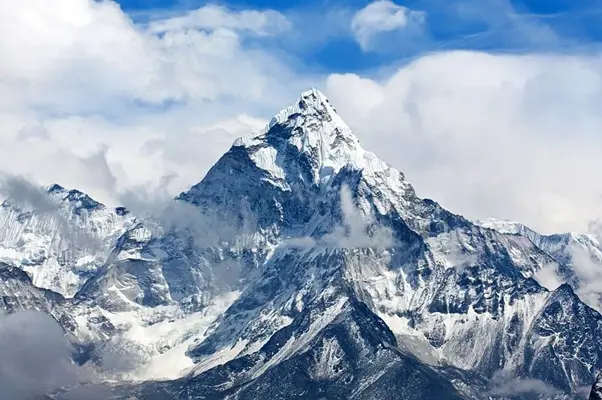
Himalaya
Protected areas & biosphere reserves
Important protected areas include:
Great Himalayan National Park Conservation Area (HP) which is also a UNESCO World Heritage Site.
Valley of Flowers National Park (Uttarakhand)
Nanda Devi National Park (Uttarakhand)
Khangchendzonga National Park (Sikkim)
Namdapha National Park (Arunachal Pradesh)
Neora Valley National Park (WB)
Singalila National Park (WB)
Pakhui Wildlife Sanctuary (Arunachal Pradesh)
Indo‑Burma
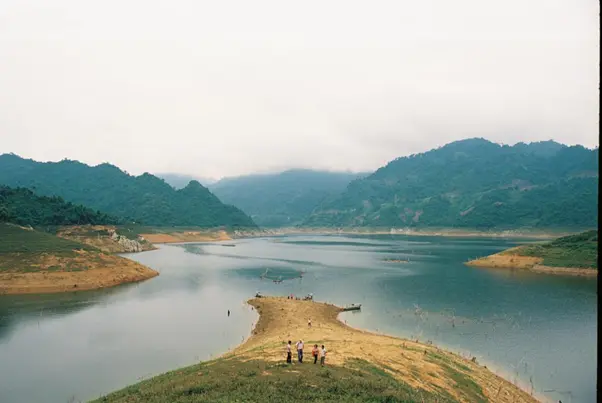
Protected areas & biosphere reserves
Protected areas in the Indo-Burma region include:
Namdapha National Park (Arunachal Pradesh) which is the only park in the world with four feline species of big cats (tiger, leopard, snow leopard, and clouded leopard).
Kaziranga National Park (Assam) is famous for the one-horned rhinoceros, also providing habitat for the Bengal tiger and wild buffalo.
Keibul Lamjao National Park (Manipur) is the world’s only floating park located on Loktak Lake, specifically to protect the endangered Sangai (brow-antlered deer).
Manas National Park (Assam) is a UNESCO World Heritage Site known for its tiger population.
Murlen National Park (Mizoram)
Nokrek National Park (Meghalaya)
Sundalands (Nicobar Islands)
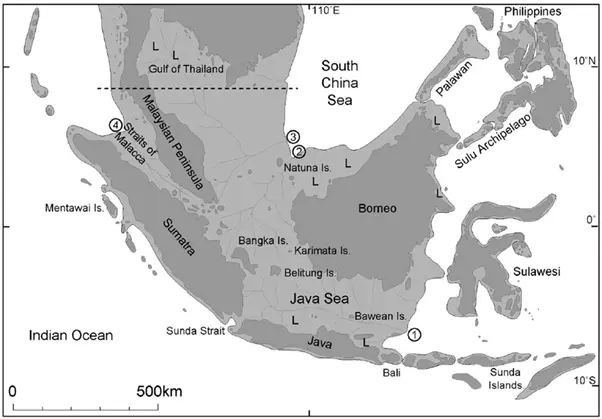
Protected areas & biosphere reserves
In India, the Sundalands region consists of the Great Nicobar Biosphere Reserve. The biosphere reserve includes Campbell Bay & Galathea National Parks.
Western Ghats

Protected areas & biosphere reserves
Important biosphere reserves and protected areas in this region are:
Nilgiri Biosphere Reserve (Tamil Nadu, Kerala, and Karnataka): India’s first biosphere reserve.
Agasthyamala Biosphere Reserve(Kerala/Tamil Nadu)
Eravikulam National Park (Kerala)
Silent Valley National Park (Kerala)
Anamalai Tiger Reserve (Tamil Nadu)
Periyar National Park/Wildlife Sanctuary (Kerala)
The concept of biodiversity hotspot is different from biosphere reserve, national park and wildlife sanctuary. This table illustrates the key differences:
Feature / Attribute | Biodiversity Hotspot | National Park (NP) | Wildlife Sanctuary (WLS) | Biosphere Reserve (BR) |
Definition | Geographical region with high species richness, endemism, and significant habitat loss | Legally designated area to protect wildlife & habitats | Legally designated area to protect wildlife & habitat, with some regulated human activity | Large area combining protected zones and human-inhabited areas to conserve ecosystems & promote sustainable development |
Primary Objective | Identify regions of global conservation priority | Strict protection of species and habitats | Protect species & habitats while allowing limited human activity | Integrate conservation with sustainable use and community development |
Legal Status | Conceptual / scientific designation; not a legal entity | Protected under Wildlife Protection Act, 1972 | Protected under Wildlife Protection Act, 1972 | Declared under the UNESCO Man and Biosphere program + Indian government notification |
Area | Large biogeographic region; may span multiple states or countries | Relatively small, well-defined areas | Larger than NPs sometimes, but still focused areas | Very large; often contains multiple NPs, WLS, and human settlements |
Human Activity Allowed | No direct restriction; it’s a classification | Usually prohibited except regulated tourism | Limited: grazing, minor resource use, research | Core: strict; Buffer & Transition: sustainable human use allowed |
Focus | Biodiversity prioritization for conservation globally | Strict conservation of habitats & species | Conservation of habitats with some local use | Holistic ecosystem management + conservation + human livelihood integration |
Examples in India | Himalaya, Indo-Burma, Western Ghats, Sundalands | Valley of Flowers NP, Kaziranga NP, Silent Valley NP | Govind Pashu Vihar WLS, Dibru-Saikhowa WLS, Parambikulam WLS | Nanda Devi BR, Manas BR, Nilgiri BR, Nicobar BR |
India’s diverse geography and climate is famous for having the richest flora in the world
Many species found in India are endemic species highlighting the unique evolutionary history and ecological importance of these areas.
India’s biodiversity helps the global ecosystem in the following ways:
Ecological balance: pollination, soil fertility and water regulation essential for ecology.
Economic Impact: Sectors like agriculture, forestry and fisheries impact the economy of India directly supporting livelihood and industries.
Climate Change Mitigation: Indian forests neutralize almost 11% of the greenhouse gas emission of the country.
Medicinal Resources: The rich flora of the country consists of many plant species used in traditional medicine or Ayurveda.
Eco-tourism: preserving these regions not only generates income from tourism but also creates awareness about the environment and why it must be protected.
Cultural significance: Many cultures have sacred groves, which are important in their rituals and traditions. This, in turn, helps to encourage local conservation efforts.
Although there are specific threats faced by different Indian hotspots, many of the common issues faced by these regions are:
Habitat loss & fragmentation
Poaching & illegal trade
Climate change impacts
Invasive species
Urbanization & industrialization
This table shows varying impact of these threats on different hotspots:
Threat Type | Key Himalayan Impact | Key Western Ghats Impact | Key Indo-Burma Impact | Key Sundalands Impact |
Habitat Loss | Dams/Roads | Monoculture/Mining | Shifting Cultivation | Infrastructure Projects |
Poaching | Musk/Pelts | Ivory/Sandalwood | Rhino Horn/Pangolin | Marine life/Dugong |
Climate | Glacial Melt | Extreme Rainfall | Wetland Changes | Sea-level Rise |
Invasives | Lantana | Wattle/Acacia | Water Hyacinth | Spotted Deer |
Urban/Ind. | Tourism pressure | High pop density | Oil/Gas extraction | Port/Airport dev |
Government Initiatives
The following table discusses the conservation efforts and government initiatives over the years in the field of environmental conservation:
Category | Name | Purpose | Impact |
National Laws | National Biodiversity Act, 2002 | Manage biological resources & ensure benefit-sharing | Protects biodiversity hotspots and promotes sustainable use |
Wildlife Protection Act, 1972 | Safeguard wildlife & habitats; regulate hunting & trade | Enables creation of NPs & WLS; protects endangered species | |
Forest (Conservation) Act, 1980 | Restrict non-forest use of forest land | Secures habitats in biodiversity hotspots | |
International Treaties | Convention on Biological Diversity (CBD) | Guide biodiversity conservation & sustainable use | Aligns India with global biodiversity goals |
Ramsar Convention on Wetlands | Promote wetland conservation & sustainable use | Protects key wetland ecosystems in India | |
Key Conservation Initiatives | Protected Areas | Establish NPs, WLS, & tiger reserves | Provide legally protected habitats for species |
Community Engagement | Involve local communities in conservation | Encourages sustainable management and stewardship | |
Research & Monitoring | Study biodiversity & threats | Informs policy and conservation strategies | |
Success Stories | Project Tiger | Protect tigers & their habitats | Tiger population rose from ~2,000 to 3,000+ |
Western Ghats Conservation | Habitat restoration & community participation | Preserved endemic species; strengthened local involvement | |
Community-Led Initiatives | Integrate indigenous knowledge with modern conservation | Sustains ecosystems while improving local livelihoods |
Prelims Questions
1. Consider the following statements:
Biodiversity hotspots are located only in tropical regions.
India has four biodiversity hotspots — the Himalayas, Western Ghats, Indo‑Burma region and Andaman & Nicobar Islands. (UPSC CSE Prelims 2010)
Answer: Neither 1 nor 2 is correct.
2. Which of the following regions is recognised as a biodiversity hotspot? (UPSC CSE Prelims 2021)
A) Himalayan region
B) Sahara Desert
C) Gulf of Mexico
D) Central Asia
Answer: Himalayan region.
Mains Questions
What is a ‘hot spot’? Describe the hot spots of India, giving names of a few important species. (UPSC CSE Mains Botany Paper II 2012)
2. Evaluate the significance of biodiversity hotspots in the context of environmental sustainability. Discuss implications for global conservation efforts. (UPSC CSE Mains GS Paper 1 2019)
India’s biodiversity hotspots are habitats for many endangered flora and fauna species. Preserving these areas is important for ecological balance and the overall well-being of humans. Effective conservation strategies at central level and community led strategies at a local level are important for protection of the biodiversity hotspots of India and its wildlife.


Gajendra Singh Godara
Ex-UPSC Aspirant | Exam Preparation Expert
Gajendra Singh Godara is an IIT Bombay graduate and a UPSC aspirant with 4 attempts, including multiple Prelims and Mains appearances. He specializes in Polity, Modern History, International Relations, and Economy. At PadhAI, Gajendra leverages his firsthand exam experience to simplify complex concepts, creating high-efficiency study materials that help aspirants save time and stay focused.

No comments yet. Be the first to join the discussion!