Best UPSC Online Coaching 2027: Fees, Classes, 7 Checks
Last updated

There is no single best online coaching for every UPSC 2027 aspirant. A beginner who needs a full teaching sequence may prefer a faculty-led foundation course.
A working professional may need evening classes and reliable recordings. A repeater may get better value from tests and answer feedback.
A disciplined self-learner may not need another lecture package at all. This guide compares seven providers with first-party 2027 course pages. Some cohorts had started or carried a past admission date, so check enrolment before shortlisting.
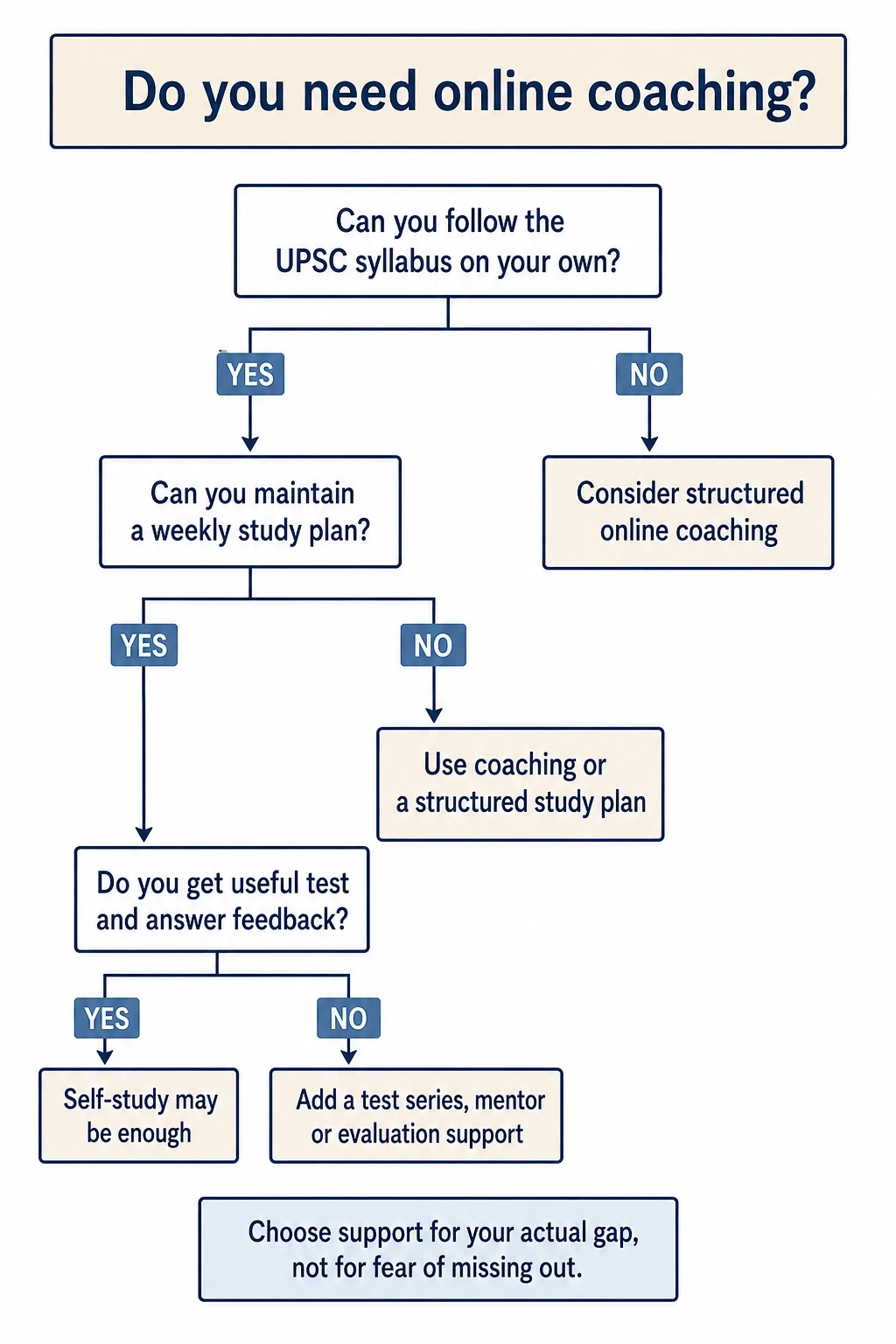
Decide whether your real gap is teaching, practice, feedback or accountability before buying a full course.
The seven providers compared here have first-party pages for a 2027 offer, but some batches have started or carry a past admission date.
A quoted fee is not the total cost until you check Goods and Services Tax (GST), books, optional subjects, validity and refund terms.
Working professionals should protect against lecture backlog by checking weekly hours, recording access and view limits in writing.
Free coaching can mean a government scheme, open resources, a trial or a freemium tool. They are not the same offer.
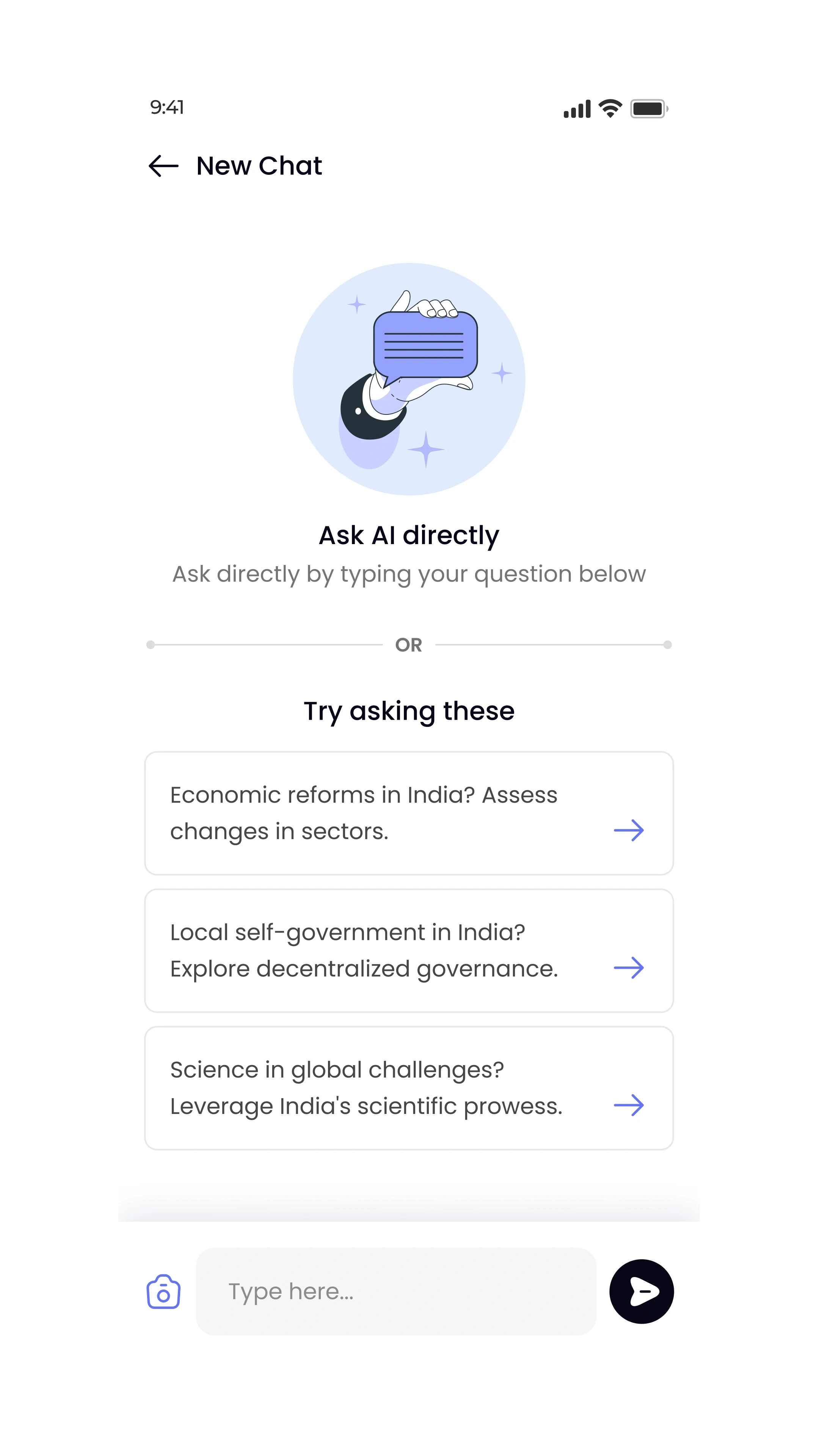
PadhAI can accompany online coaching with daily current affairs, Previous Year Questions (PYQs), AI Tutor support, quizzes, Mains answer feedback and study planning.
Join our WhatsApp Community
This is a research-only comparison. No course was bought or completed for this guide. PadhAI publishes the comparison and includes its own product only under the structured self-study category.
A provider entered the comparison only when its own site carried a live page for a 2027 course or batch. The check was completed on 23 August 2026. Inclusion is not an endorsement.
Each option was assessed against the same questions:
What does the course teach: General Studies (GS), Civil Services Aptitude Test (CSAT), current affairs, Essay and optional subjects?
Is delivery live, recorded or hybrid, and what weekly time does it demand?
How long can the learner use recordings and materials?
Does practice include Prelims tests, Mains answers, evaluation, doubts or mentoring?
What fee is shown, does it include GST, and which add-ons cost extra?
What do the cancellation and refund terms say for the exact plan?
Which learner profile can realistically use the offer?
The UPSC annual calendar page carried the 2027 calendar at this check. The CSE 2027 notification was not yet listed on the active examinations page.
Treat calendar dates as provisional until UPSC issues the notification.
Start with the bottleneck in your present study week. If you cannot build basic subject understanding or sequence the syllabus, a foundation course can help.
If you already understand the subjects but rarely practise, a large lecture library may only create more backlog.
Decision rule: Full coaching solves a teaching and structure problem. It does not automatically solve revision, practice or feedback.
PadhAI.ai can form a practice layer when full teaching is not the missing need. It brings AI-assisted current affairs, PYQs, quizzes, doubt support and Mains answer feedback into self-study.
It is not a faculty-led foundation course and is currently English-only. Before paying for any system, use the UPSC study planner to test whether its workload fits your week.
Add as a preferred Source on Google
Reader | Main need | Best format | What to avoid | Shortlist rule |
|---|---|---|---|---|
Beginner | Complete sequence and clear basics | Full foundation course with a manageable schedule | Large bundles with an unclear completion load | Shortlist only if GS, CSAT, practice, validity and timetable are documented |
Working professional | Flexible access and a predictable weekly load | Evening live, recorded or hybrid with long validity | Short recording windows and rigid daily classes | Get recording access, view limits, weekly hours and doubt support in writing |
Budget learner | Core support without avoidable add-ons | Lower-cost course, module, scheme or structured self-study | Sticker prices that omit GST, books, tests or optional subjects | Compare final payable and missing components, not the starting price |
Repeater | Diagnosis, tests, answer feedback and targeted gaps | Test series, mentoring, optional or a practice stack | Paying again for lectures already completed | Buy only the missing module after an error and coverage audit |
Table note: These are editorial shortlist rules based on teaching, delivery, practice, access and cost. They are not provider ratings.
Provider | Best fit | Delivery | Practice and feedback | Verified fee basis | Main caution |
|---|---|---|---|---|---|
ClearIAS | Learners comparing lower-priced recorded and live foundation formats | Live and recorded | Tests, evaluation and mentor scope vary by plan | Recorded is ₹49,999; the page has conflicting live values of ₹59,999 and ₹69,999 | Resolve the price conflict and read the strict no-refund terms before payment |
Vajiram & Ravi | Learners prepared for a high-volume scheduled programme | Live online | Published tests and extended Mains support; exact service scope depends on the course | ₹1,55,000 including GST, or ₹1,69,000 including GST with CSAT | The batch commenced 15 December 2025. Check enrolment, workload and the three-day cancellation window |
NEXT IAS | Learners wanting a dated batch and detailed base pricing | Live online | Tests, mentoring and materials are described for the foundation course | ₹1,18,644.06 plus GST for the displayed one-year online plan | Get the final tax-inclusive amount and live-online refund rule; the public payment terms describe classroom courses |
ForumIAS | Learners seeking an evening option and integrated mentoring | Online, offline and hybrid variants | The programme describes tests, mentoring and Mains support | Not publicly confirmed | D7 and D8 began 17 August 2026. Obtain price, missed-class access and refund terms in writing |
StudyIQ | Hinglish learners who value evening delivery and long displayed access | Live online with recorded access | Prelims and Mains tests, evaluated answers and books are described | Not publicly confirmed | The admission date shown was 18 June 2026; cash price and ordinary refund terms were not sufficiently visible |
Sleepy Classes | Price-sensitive learners willing to compare distinct plan scopes | Live online with trial option | Tests, evaluation and mentoring vary by plan | Multiple official plan prices; map one price to one plan | The refund policy uses a short request window with exclusions |
Unacademy | Learners who prefer multi-educator subscription access | Live platform subscription and named 2027 batch | Depends on plan, educator and batch | UPSC plans show monthly starting equivalents until duration and checkout are fixed | Total cost and included services depend on the subscription. Cancellation usually ends renewal without refund, unless the separate refund policy says otherwise |
Table sources: linked first-party course and policy pages. Checked 23 August 2026. “Not publicly confirmed” means the accessible official page did not answer the field; it does not mean the feature or policy is absent.
ClearIAS gives the clearest choice between live and recorded foundation formats, but its pricing page creates an immediate verification task.
One table shows the 2027 live option at ₹59,999, while another part says live coaching starts at ₹69,999. The recorded figure is ₹49,999.
This can suit someone who wants a lower-priced recorded route or a live plan without moving cities.
Before paying, save the checkout screen and ask which tests, CSAT support, books and access dates attach to that exact price. Its strict no-refund terms make this more important.
The published programme covers twelve months, hundreds of live sessions, study material, Prelims tests and later Mains support.
Its GST-inclusive prices are also easier to read than a base fee that still needs tax added.
Timing is the catch. The displayed batch commenced in December 2025. A live page does not prove that a new learner can still join and recover every missed class.
Ask where you would start, which recordings you would receive and when access would end.
NEXT IAS lists several 2027-28 one-year live online batches dated in August and September 2026.
That makes the offer more current than a page tied to an old cohort.
Three-hour class blocks may still become heavy once revision, current affairs and practice are added.
The base price is ₹1,18,644.06 plus GST, so it cannot be compared directly with a GST-inclusive quote.
There is another loose end: the public payment policy describes a classroom-course refund window but does not clearly extend it to live online buyers.
Forumias: Useful Structure If a Suitable Cohort Is Still Open
ForumIAS describes a 51-week programme with GS, CSAT, Essay, current affairs, tests and mentoring. Its D8 evening online batch is relevant to working professionals on paper.
Yet both D7 and D8 started on 17 August 2026, six days before this review.
Three questions now matter: Is late admission open? Will you receive every missed session? How long will recordings work? The public pages did not show a fee.
Ask for one written quote covering GST, books, tests, mentoring, optional subjects and the refund position.
StudyIQ: a Detailed Course Page with an Expired Admission Date
StudyIQ's Pratigya page describes a Hinglish evening programme with GS, current affairs, CSAT, Essay, Ethics, Prelims tests, evaluated Mains answers and printed books. It also shows a long access period.
The admission date is the catch. The page says 18 June 2026, yet it remains online without a visible cash price or complete ordinary refund policy.
That proves the 2027 offer existed, not that a seat is open now. Treat it as a lead to verify, not an open-seat promise.
Sleepy Classes: Lower Entry Prices, but Plan Mapping Matters
Sleepy Classes publishes several 2027 offers on one page. The ₹17,999 live foundation plan, ₹19,999 advanced foundation plan and ₹49,999 mentorship-heavy plan do not buy the same support.
A low number pulled out of that context can mislead.
This is worth exploring if your budget is tighter and you know whether you need group guidance, evaluated answers or one-to-one mentoring.
Watch the sample lecture, compare the plan rows, and read the refund exclusions before using the 24-hour request window as a safety net.
Unacademy: Platform Breadth with Duration-Based Cost
Unacademy's Elevate page lists an English 2027 full-syllabus batch with 320 live classes.
The wider UPSC subscription gives access according to the selected tier rather than selling only one fixed foundation course.
That flexibility can help if you want to compare educators or combine batches. It also makes the real cost less obvious. Starting monthly equivalents are not the same as the total payable.
Choose a duration, calculate the checkout total and check which educators, tests, optional subjects and mentoring remain available for that period.
UPSC Online Coaching Fees and Hidden Costs
Provider | Listed fee | Tax status | Books or optional included? | Access validity | Refund information |
|---|---|---|---|---|---|
ClearIAS | ₹49,999 recorded; live price conflict to resolve | Not publicly confirmed for the selected plan | Check by plan; optional not assumed | Exact end date not publicly confirmed | Official terms say no refunds; check exact-plan applicability |
Vajiram & Ravi | ₹1,55,000; ₹1,69,000 with CSAT | Displayed as including GST | Eighteen books are described; optional not assumed | Student portal access is described; capture exact dates and limits | Online cancellation request within three days; check course conditions |
NEXT IAS | ₹1,18,644.06 for the displayed one-year online plan | GST extra | Materials are described; optional not assumed | Not publicly confirmed for the selected batch | Classroom terms were found; online applicability is not publicly confirmed |
ForumIAS | Not publicly confirmed | Not publicly confirmed | Not publicly confirmed | Not publicly confirmed | Not publicly confirmed |
StudyIQ | Not publicly confirmed | Not publicly confirmed | Eighteen books are described; optional not assumed | 730 days displayed; check start and end dates | Ordinary policy not sufficiently visible; campaign claims require complete terms |
Sleepy Classes | ₹17,999, ₹19,999 or ₹49,999 depending on plan | Check the selected plan | Check the selected plan | Multiple views are stated; exact end date is not publicly confirmed | Eligible requests considered within 24 hours, subject to exclusions |
Unacademy | From ₹1,524, ₹2,048 or ₹6,190 per month equivalent by tier | Check at checkout | Depends on subscription and batch | Depends on the selected duration | Cancellation usually ends renewal without refund, unless the separate refund policy says otherwise |
Table sources: linked provider pages in the main comparison. Checked 23 August 2026. Prices and offers can change. Capture the final checkout and policy for the exact course before payment.
Some cells are blank because the providers did not publish enough information. That blank is useful: it shows what you still need to ask.
A counsellor's verbal assurance is hard to use later, so get the answer by email or on an official support ticket.
Full Coaching, Modular Support or Structured Self-Study?
Model | Good for | You still need | Time burden | Cost pattern | Main limitation |
|---|---|---|---|---|---|
Full faculty-led coaching | Beginners who need teaching order, classes and accountability | Revision, independent practice and a realistic completion plan | High and timetable-driven | Large upfront or instalment commitment, often with add-ons | Can create lecture backlog and may duplicate material for repeaters |
Modular support | Learners with a defined gap such as CSAT, optional, tests or mentoring | A complete base plan and self-directed study for other areas | Medium and targeted | Pay for selected support, though several modules can add up | Gaps remain if the diagnosis is wrong |
Structured self-study with PadhAI | Disciplined learners who mainly need planning, current affairs, PYQs, quizzes, doubts or answer feedback | Standard books, syllabus coverage, judgment, revision and human help where needed | Flexible, but consistency is essential | Lower recurring tool cost plus books or chosen modules | Not faculty-led coaching, English-only and not a universal substitute for mentoring or optional teaching |
Table note: This is an editorial model comparison, not a price or outcome ranking. PadhAI features were checked on its official product page and Google Play listing on 24 August 2026.
How Padhai Can Support an Online Coaching Plan
Online coaching can explain the syllabus and give you a teaching schedule. It may still leave daily gaps between classes: a doubt that cannot wait for the next session, current affairs that need revision, PYQs linked to today's topic, or a Mains answer that needs another attempt. PadhAI is designed for this practice layer.
PadhAI feature | How to use it with coaching | Best use | Keep in mind |
|---|---|---|---|
Daily current affairs | Read selected issues, connect them with related PYQs and carry one example into class notes. | Linking current affairs to the exam | Check important facts against the original source. |
AI Tutor and BookChat | Ask a syllabus doubt after class or question a passage from an NCERT or reference book. | Clearing small doubts between classes | Verify important interpretations and disputed facts. |
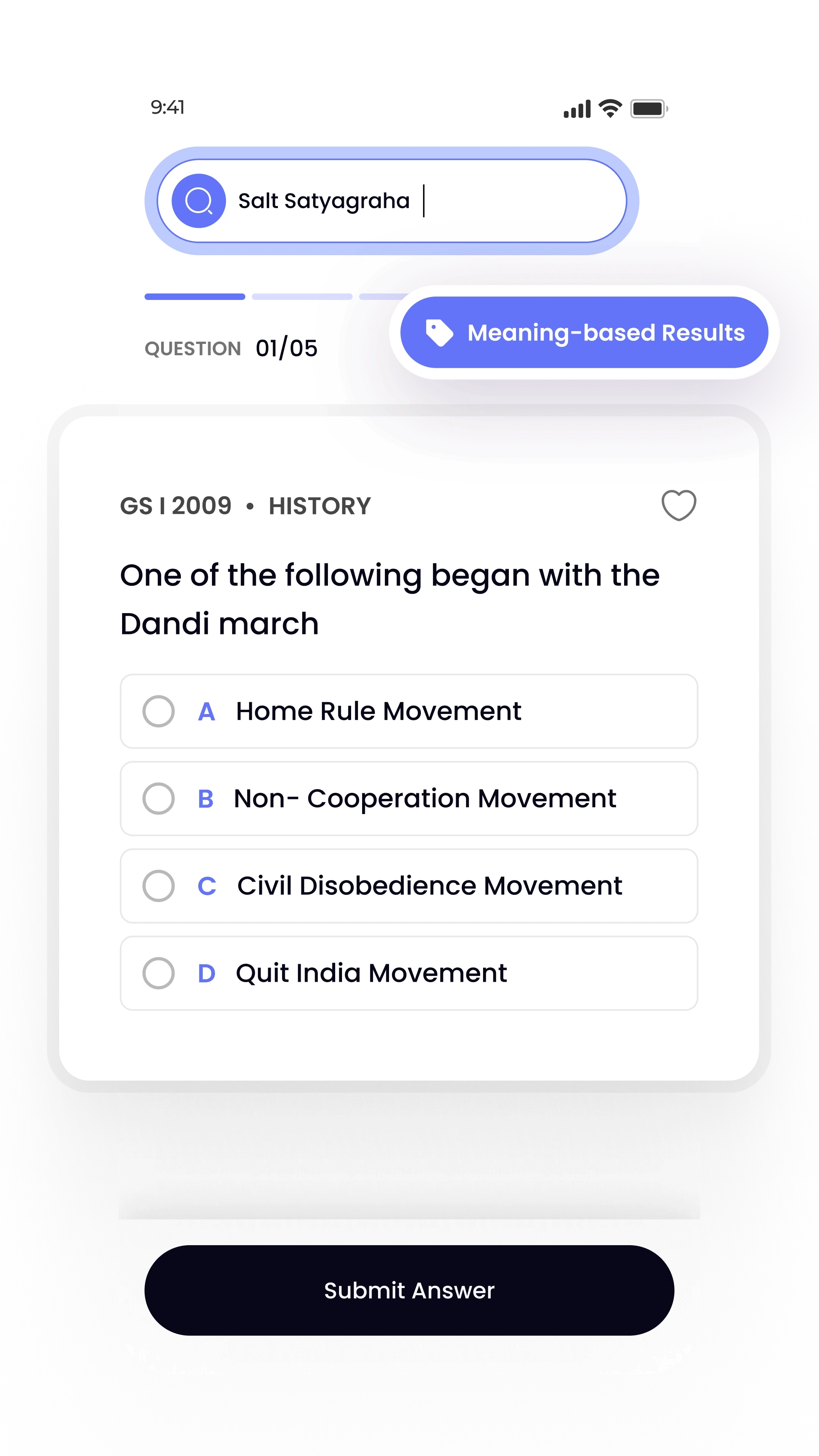
Meaning-based PYQ search | Search the topic taught in class and see how UPSC framed it in earlier papers. | Turning lectures into exam-pattern practice | You still need to solve the question yourself. |
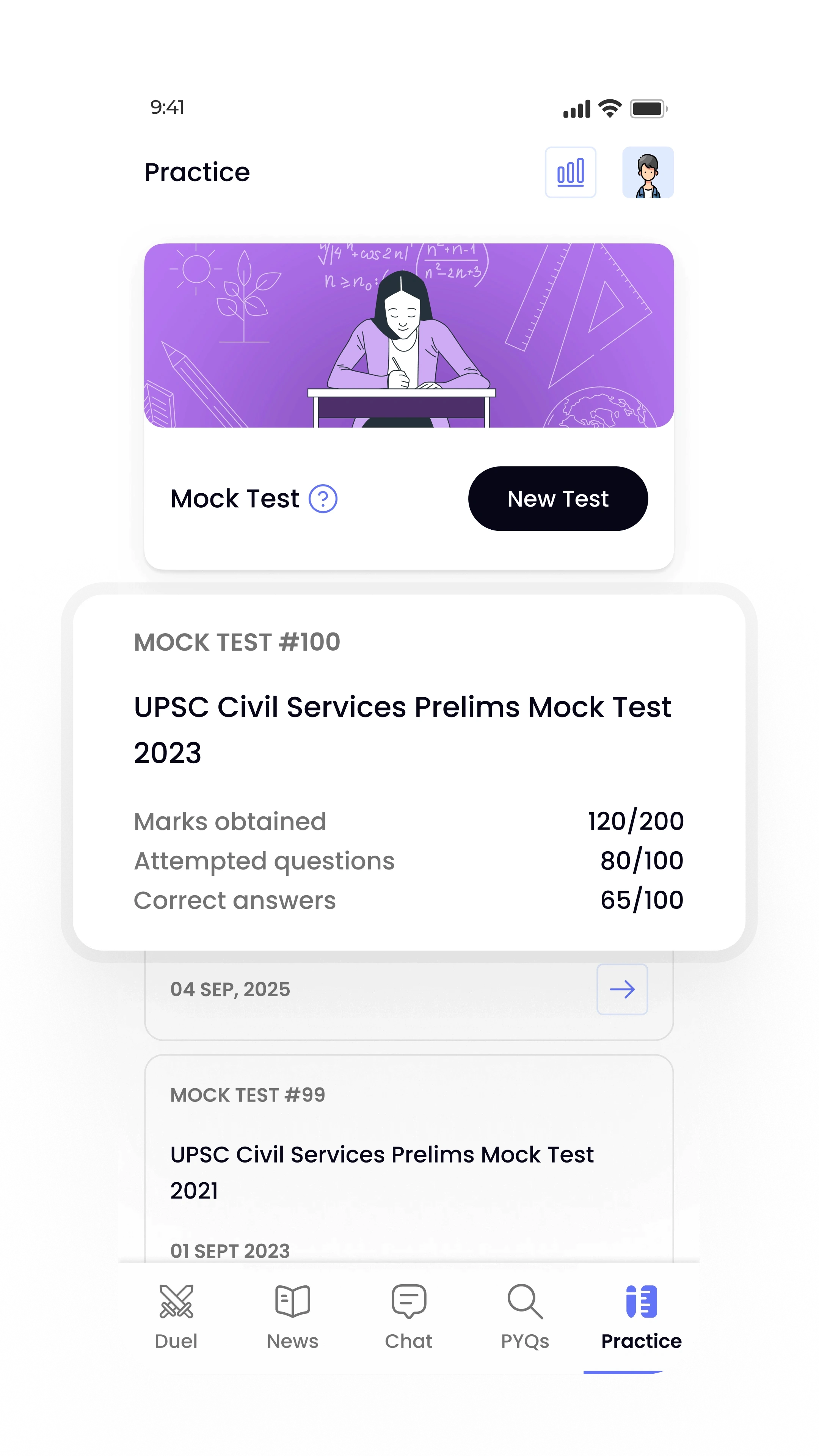
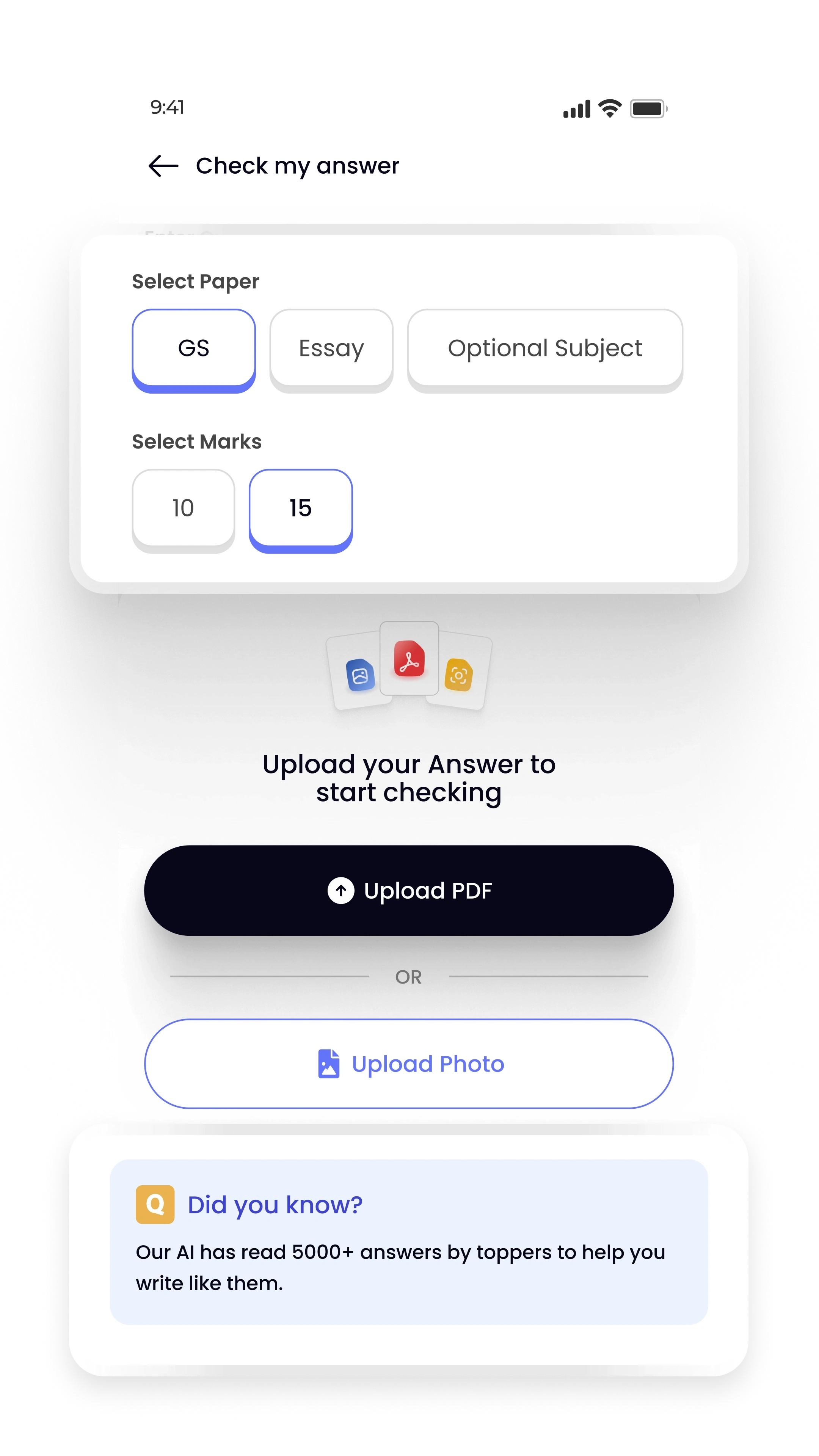
Mains answer evaluation | Write an answer, review feedback on structure and content, then rewrite it while the topic is fresh. | Building a repeatable answer-writing loop | Keep handwritten practice and read the question demand yourself. |
Duels and daily quizzes | Use a short quiz after revision or during a crowded workday. | Recall practice and consistency | Quiz scores do not predict final UPSC performance. |
Study planner | Place classes, revision, PYQs and answer writing in the same weekly plan. | Protecting practice time from lecture backlog | Revise the plan when a backlog appears. |
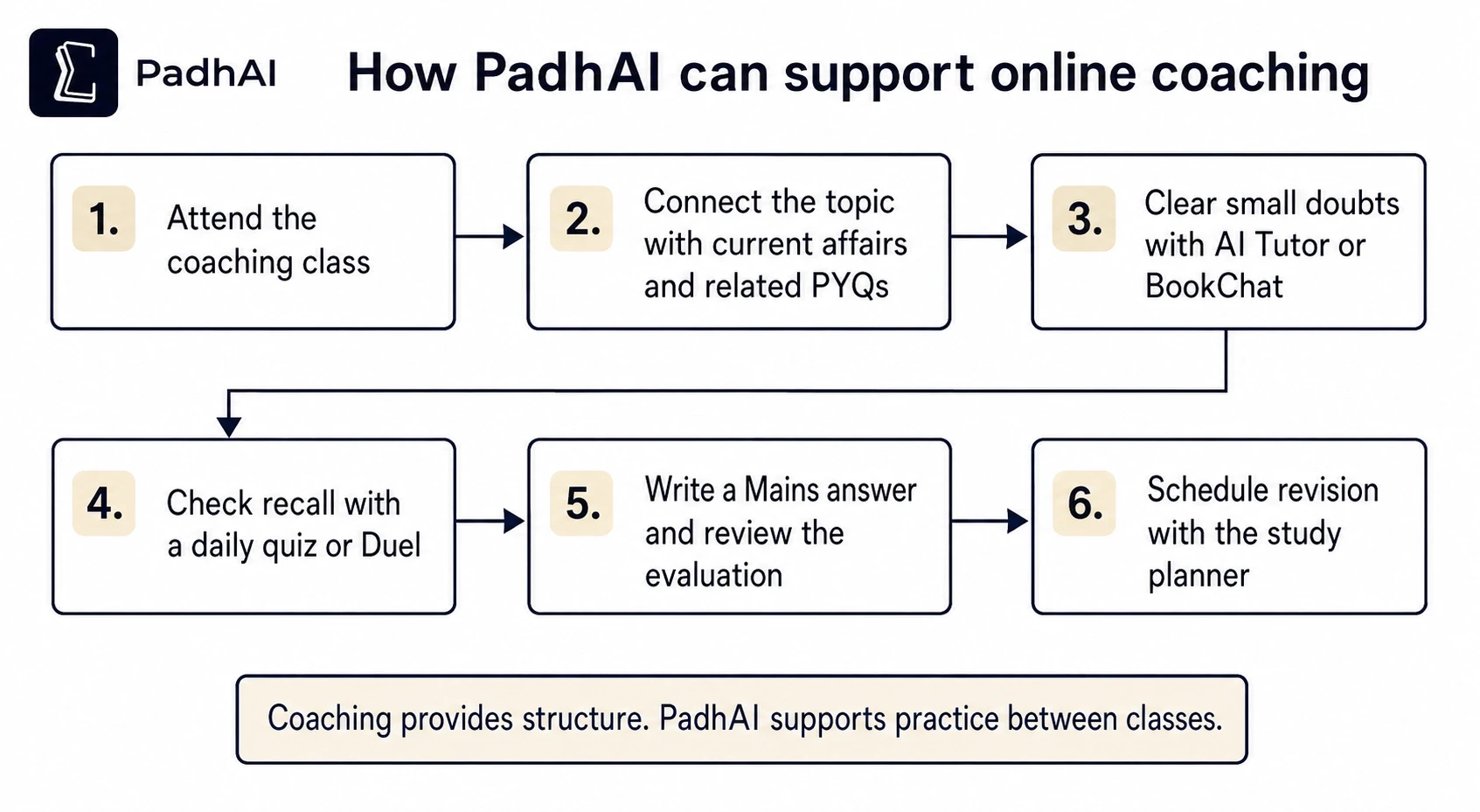
A beginner can keep a faculty-led course for concept teaching while using PadhAI for doubts, current affairs and practice between classes.
A working professional or repeater can use the same features without buying another lecture package when the missing need is practice rather than teaching.
Build the companion workflow with PadhAI's current affairs resources, UPSC previous-year questions, Mains answer-writing practice, daily UPSC quiz and study planner.
Keep the app work tied to the UPSC syllabus, recommended UPSC books and the preparation strategy hub.
Try PadhAI with your current coaching plan:
Test one current-affairs topic, one PYQ and one short answer, then keep the workflow only if it improves your next revision session.
What Works for a Working Professional or Repeater?
A working professional needs a plan that survives a difficult Tuesday, not only an ideal Sunday.
A practical weekday may contain 60 minutes of core study, 30 minutes of current affairs and 30 minutes of questions or one short Mains answer. The weekend can hold longer revisions and a test.
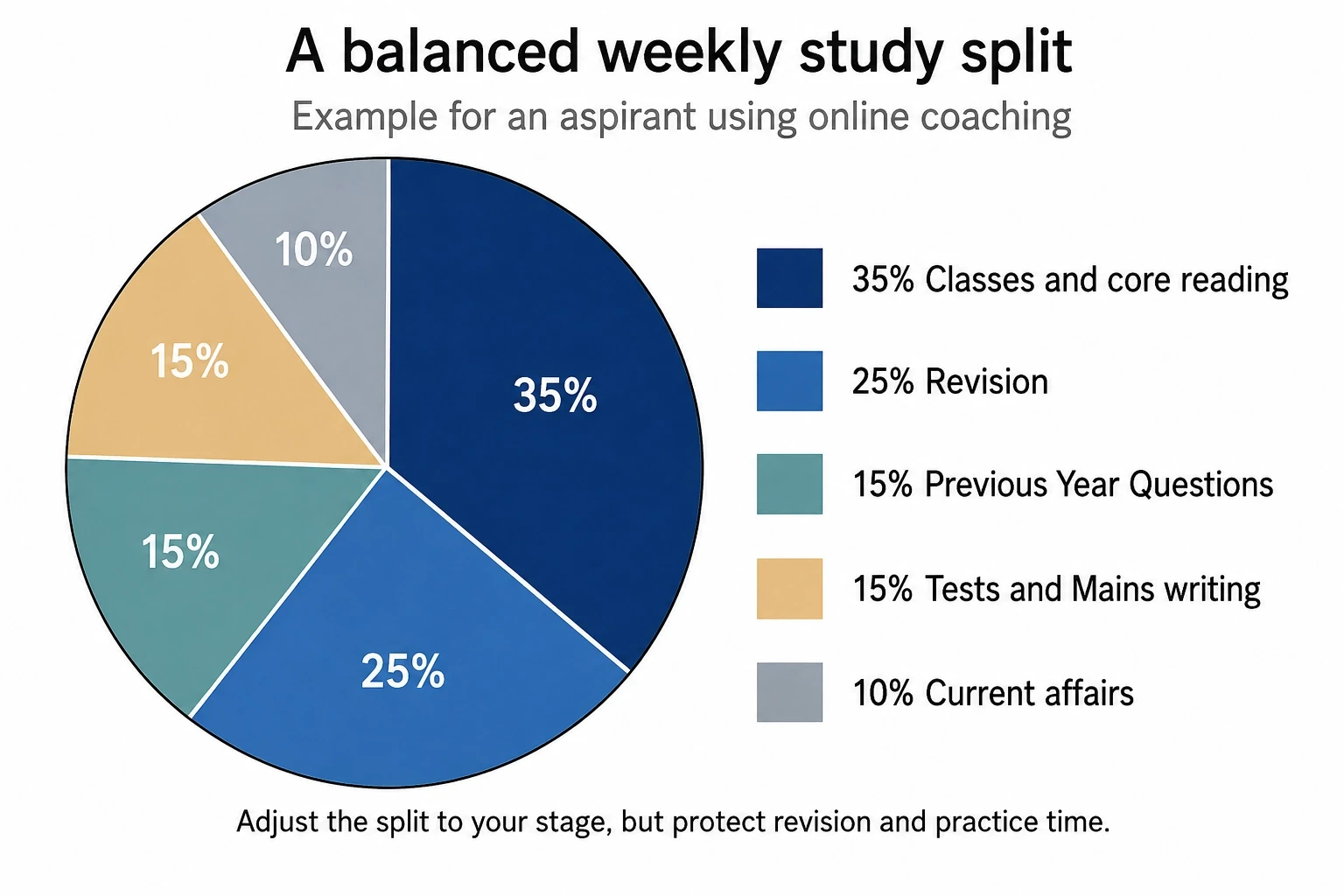
That routine makes recording validity and lecture load decisive. An evening live class can help only if its end time, missed-session access and weekly hours fit your work.
ForumIAS had an evening online cohort, StudyIQ listed evening classes, and recorded or platform options can be flexible, but current admission and access still need confirmation.
A repeater should first list unfinished work by exam stage. If the list says “revise notes, solve PYQs, improve elimination and get Mains answers evaluated,” another full foundation course may be unnecessary.
One possible PadhAI workflow is to read the daily current-affairs brief, attempt a Duel, practise linked PYQs and submit a Mains answer for feedback.
Keep handwritten practice and source verification outside the app.
For a broader schedule, use the study planner, practise and review Mains answers, and work through UPSC previous-year questions each week. On a crowded day, take a short daily UPSC quiz instead of skipping practice.
Seven Checks Before You Pay to Any UPSC Coaching
Name the exact 2027 product. Save the course name, delivery mode and batch start date.
Get the final payable amount. Ask for the GST-inclusive total and every compulsory charge in writing.
Map every inclusion. Separate GS, CSAT, Essay, current affairs, optional subjects, tests, books, mentoring and answer evaluation.
Get access rules in writing. Ask for start and end dates, recording windows, view limits, supported devices and extension charges.
Examine Mains evaluation. Ask how answers are evaluated, who evaluates them and whether the written terms promise a response time.
Read the exact cancellation and refund policy. Note the deadline, usage exclusions, deductions, renewal rule and request method.
Save the evidence. Keep the offer page, written quote, invoice and official support replies together.
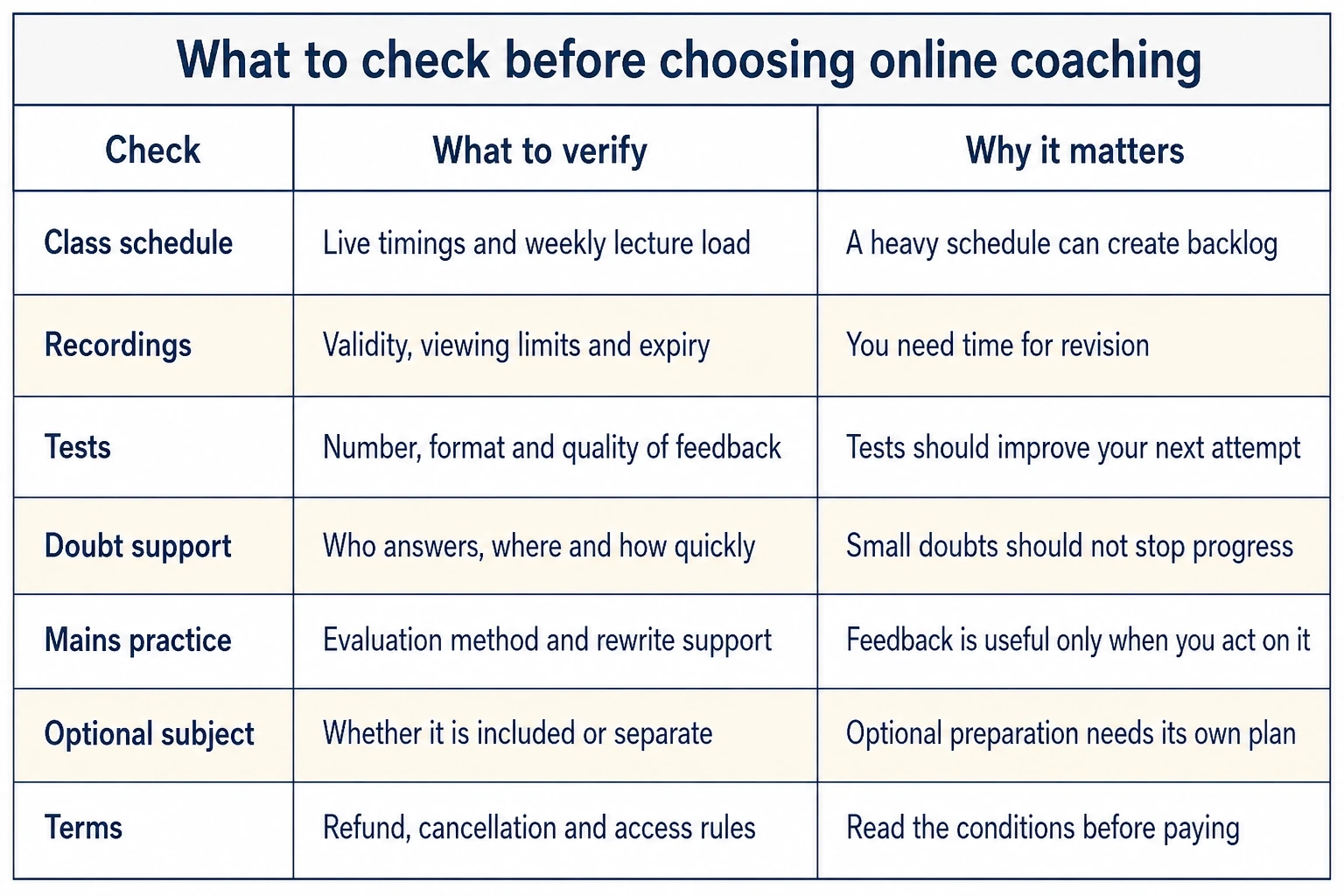
Before the sales deadline, watch a real class and test the platform on your own device. Ask one academic question and one policy question through official support.
The CCPA coaching-advertising guidance explains why clear course, fee, refund and result claims matter.
Shortlist checklist
Before choosing, you should be able to tick every relevant box:
☐ I know whether I need full teaching, a module or a practice system.
☐ The weekly workload fits my real calendar.
☐ The course language and faculty style work for me.
☐ I have the exact GST-inclusive total for my chosen plan.
☐ I know what is excluded, especially CSAT, optional subjects and advanced test series.
☐ Access lasts long enough for my 2027 attempt, with recording and device rules clear.
☐ The answer-evaluation and mentor process is specific enough to use.
☐ I saved the refund, cancellation and renewal terms that apply to my plan.
☐ I checked the batch is still open and that I can access missed classes.
☐ I chose the option because it solves a defined study problem, not because it claims the most ranks.
Frequently asked question (FAQs)
Which online coaching is best for UPSC 2027?
How much does UPSC online coaching cost?
Is free online coaching available for UPSC preparation?
Which UPSC online coaching is suitable for working professionals?
Can PadhAI replace a UPSC online coaching course?
Yes, but “free” covers different things.
Government or publicly supported coaching: Eligibility, income limits, seat numbers and application windows apply. In November 2025, the Department of Social Justice and Empowerment and PW Foundation announced a 15,000-beneficiary programme spanning UPSC, SSC and banking examinations.
The release does not assign all 15,000 places to UPSC or show a current application window. Check the official announcement and the present scheme cycle.
Open learning resources: UPSC notices, syllabi, question papers and public lectures can be accessed without a course fee. They do not automatically create a study sequence or feedback system.
Trials and demo classes: A sample can help you judge pace, language and interface. It does not prove the quality of a year-long programme.
Freemium tools: Some features are free while deeper use is paid. Check which actions need a subscription and whether free-use limits can change.
Never pay an agent for a “guaranteed” government coaching seat. Use the named department or institution's official page and read the current eligibility rules.
Make the Next Decision Right for Career
Choose a full course when you need teaching order and accountability. Choose a module when an audit reveals one specific gap.
Choose structured self-study when you can direct your own coverage and need a better practice loop. Compare only the two or three options that pass your shortlist rule.
Do not start by buying the longest course. First test the study loop you are missing. Download PadhAI on Google Play and use it beside your existing classes for one week.
Keep it only if the current affairs, PYQs, doubts, quizzes or answer feedback improve your next revision session.



No comments yet. Be the first to join the discussion!