UPSC EPFO Notification 2026: APFC Out, 80 Posts, Application Form
UPSC has opened 80 Assistant Provident Fund Commissioner posts in EPFO, with applications from 22 August to 11 September 2026. The Enforcement Officer and Accounts Officer posts are not part of this cycle, because EPFO withdrew the 311-post requisition in June 2026. Here are the vacancies, eligibility, fee and exam pattern, with what is confirmed and what is still pending.

Last updated

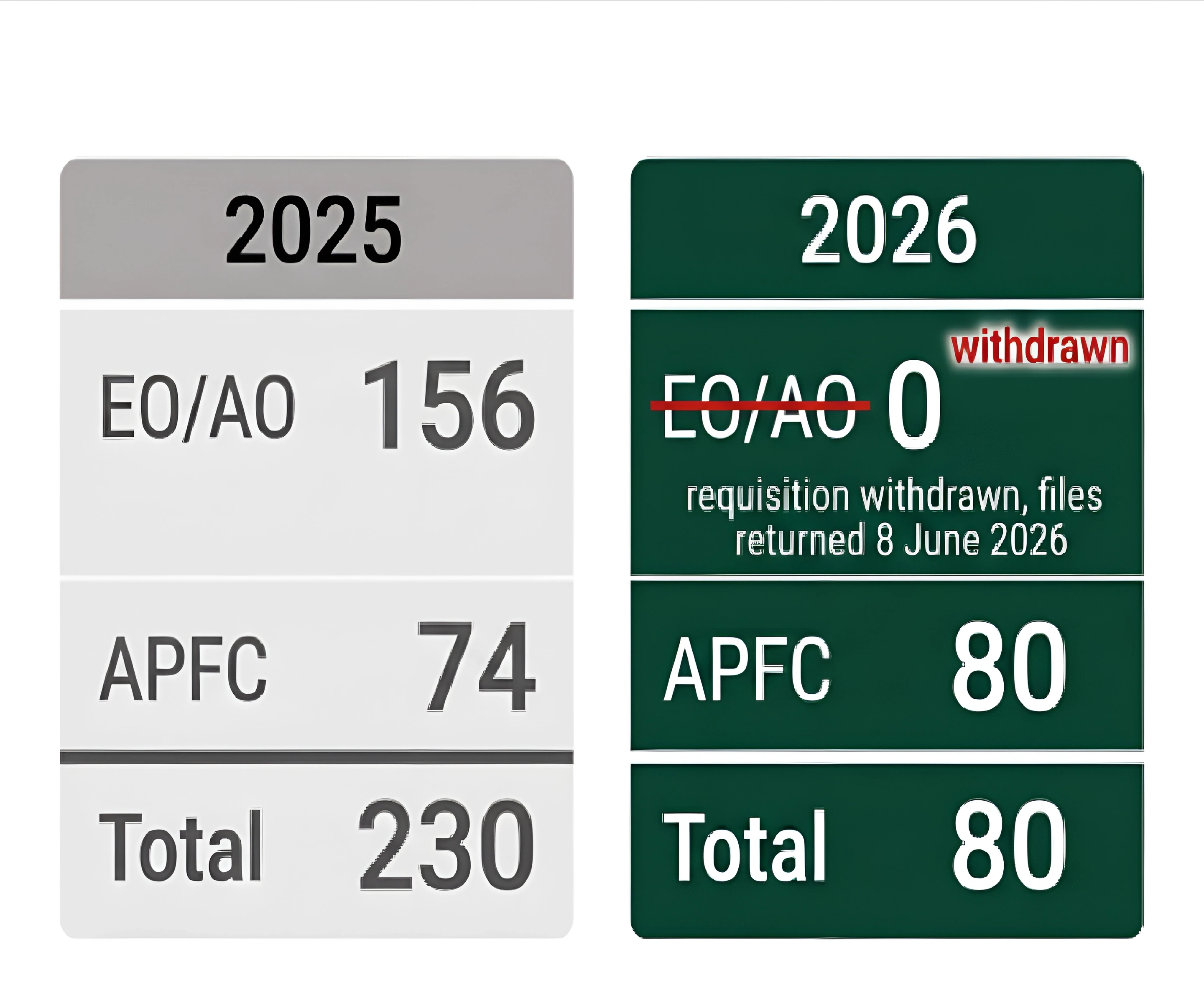
UPSC has opened recruitment for 80 Assistant Provident Fund Commissioner posts in EPFO.
Applications run from 22 August to 11 September 2026 on the UPSC online application portal. The fee is 25 rupees, and women, SC, ST and PwBD candidates pay nothing.
The Enforcement Officer and Accounts Officer posts are not in this cycle. EPFO had sent UPSC a requisition for 311 EO/AO vacancies, then pulled it. UPSC returned those files on 8 June 2026.
So the 391 figure that has been circulating since last year, 311 EO/AO plus 80 APFC, is down to just 80.
You can confirm the current position yourself on the UPSC recruitment advertisements page, where no 2026 EO/AO advertisement appears.
If you have spent months preparing specifically for EO/AO, that is a hard thing to read. The syllabus overlap with APFC is heavy though, so the work is not wasted if you are eligible to switch.
The age limit is the thing to check first, because APFC allows 35 where EO/AO allows 30.
Item | Detail |
Recruiting body | Union Public Service Commission, for EPFO under the Ministry of Labour and Employment |
Post | Assistant Provident Fund Commissioner (APFC) |
Vacancies | 80 |
Short notice | 19 August 2026 |
Applications open | 22 August 2026 |
Last date | 11 September 2026 |
Application fee | 25 rupees. Women, SC, ST and PwBD exempt |
Pay level | Level 10, Group A |
Maximum age | 35 years as on 11 September 2026 |
Selection | Recruitment Test, then interview at UPSC Bhawan, New Delhi |
Exam date | Not announced |
Apply at |
Join our WhatsApp Community
EPFO raises the requisition and UPSC runs the exam. If EPFO withdraws the requisition, UPSC has nothing to advertise. That is what happened here.
The 311 EO/AO posts went back to the department in June 2026, and no replacement requisition has been notified since.
EPFO has not published a reason. Until the department sends a fresh requisition, there is no EO/AO exam to prepare a timeline for, and any site giving you an EO/AO exam date for 2026 is guessing.
What this means in practice: if you are under 35 and hold a degree, apply for APFC. It is the only EPFO opening on the table right now.
Category | Vacancies |
Unreserved | 29 |
OBC | 18 |
SC | 15 |
ST | 10 |
EWS | 8 |
Total | 80 |
PwBD (included in the total above) | 3 |
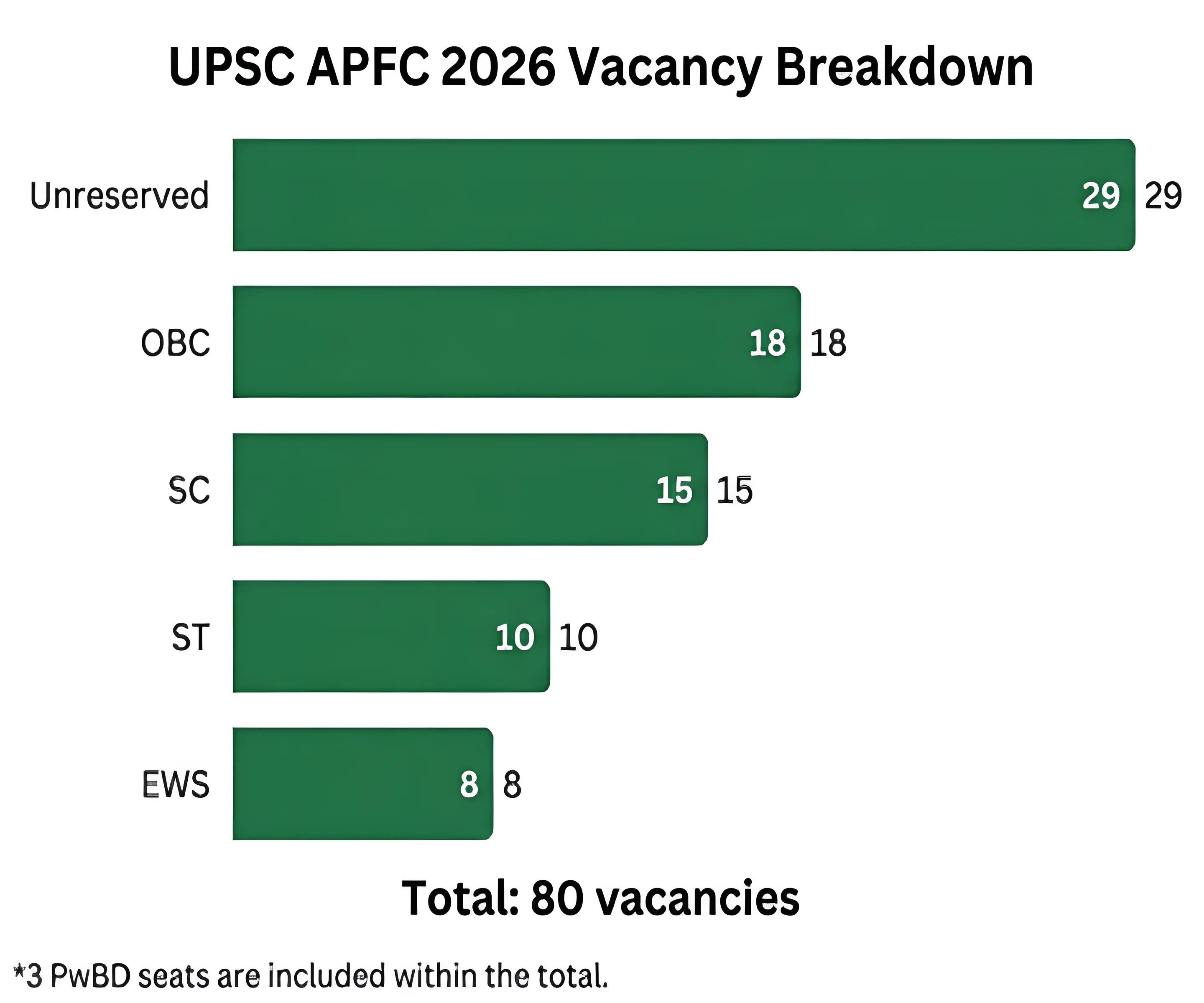
The three PwBD seats sit inside the 80, they are not additional.
Add as a preferred Source on Google
Event | Date |
Short notice | 19 August 2026 |
Application window opens | 22 August 2026 |
Last date to apply | 11 September 2026 |
Age reckoned as on | 11 September 2026 |
Recruitment Test | Not announced |
Interview | Not announced |
For the wider exam year, including the Civil Services and other UPSC papers you may be sitting alongside this one, see the UPSC calendar.
You need a bachelor's degree in any discipline from a recognised university, held by the closing date. There is no prescribed minimum age.
A diploma in company law, labour laws or personnel management counts as a desirable qualification. It is not mandatory, whatever some coaching pages tell you.
Not having one does not stop you applying, though it can help if UPSC needs a tie-breaker at the shortlisting stage.
Category | Relaxation | Maximum age |
Unreserved and EWS | None | 35 |
OBC (non-creamy layer) | 3 years | 38 |
SC and ST | 5 years | 40 |
Ex-servicemen | 5 years | 40 |
Central government employees | 5 years | 40 |
EPFO employees | 5 years | 40 |
PwBD (UR and EWS) | 10 years | 45 |
PwBD (OBC) | 13 years | 48 |
PwBD (SC and ST) | 15 years | 50 |
Age is counted as on 11 September 2026, the closing date. Confirm your exact entitlement against the detailed notification before you pay the fee, because relaxation categories are where most rejections start.
If you also track your Civil Services eligibility, our UPSC age calculator handles that exam. Do not use it for APFC.
It reckons age as on 1 August and caps the general category at 32 with six attempts, none of which applies here. For APFC, use the table above.
The fee is 25 rupees, payable online or by cash at an SBI branch. Women candidates and those in the SC, ST and PwBD categories do not pay. The fee is not refundable, and paying it does not by itself confirm eligibility.
Go to upsconline.nic.in and complete the One Time Registration if you have not already.
Open the Online Recruitment Application for the APFC advertisement and fill the form.
Upload your photograph, signature and supporting documents in the sizes the portal specifies.
Pay 25 rupees, or claim exemption if you qualify.
Submit before 11 September 2026 and save the printout of your submitted form.
Do not leave this to the final evening. UPSC's portal slows badly in the last 48 hours of any window, and the Commission does not extend deadlines for candidates who could not log in.
9. Selection process
Two stages. First a Recruitment Test, then an interview.
The Recruitment Test is an objective paper that carries the bulk of the weight. Candidates who clear it are shortlisted and asked to submit a Detailed Application Form.
The interview follows at UPSC Bhawan in New Delhi, which is the only venue UPSC uses for it. There is no second centre, so budget for the travel.
The final merit list combines both scores. Document verification and a medical check come after that.
10. Exam pattern
Element | Detail |
Mode | Offline, OMR based |
Questions | 120 multiple choice |
Marks | 300 |
Duration | 2 hours |
Medium | English and Hindi |
Negative marking | One third of the marks for that question |
Interview | 100 marks |
A third of a mark off for every wrong answer changes how you should attempt the paper. At 2.5 marks a question, a wrong answer costs you roughly 0.83.
Blind guessing across ten questions you know nothing about is close to break-even at best and usually worse.
A third of a mark off for every wrong answer changes how you should attempt the paper.
At 2.5 marks a question, a wrong answer costs you roughly 0.83. Blind guessing across ten questions you know nothing about is close to break-even at best and usually worse.
The marking scheme and the working scoring method are set out on our UPSC EPFO answer key 2025 page, which uses the real paper.
11. Syllabus
The paper spreads across general English and a wide general studies base. The subjects UPSC has drawn on in past APFC papers are these:
General English
Indian freedom struggle and culture
Current events and developmental issues
Indian polity, economy and the Constitution
General accounting principles
Industrial relations and labour laws
General science and computer applications
General mental ability and quantitative aptitude
Social security in India
Labour law is the section that separates candidates. The four labour codes passed in 2020, on wages, industrial relations, social security and occupational safety, come up repeatedly, and so does the EPF and Miscellaneous Provisions Act 1952. If you are coming from a general UPSC background, this is the part you have to build from scratch.
12. Salary and what the job involves
APFC is a Group A post at Level 10 of the 7th CPC matrix, starting at 56,100 rupees basic.
Dearness allowance, house rent allowance and transport allowance sit on top, so the gross is materially higher and varies by city.
To see what Level 10 could look like after the next revision, put it into our 8th Pay Commission calculator.
The work is regulatory. An APFC oversees provident fund compliance in an assigned area, handles claims and settlements, runs inspections of employers, and decides cases under the EPF Act.
It is a field posting with quasi-judicial powers, which is unusual at this entry level and is a large part of why the post is competitive.
13. What the 2025 cycle tells you
The last full cycle advertised 230 posts, 156 EO/AO and 74 APFC, and the Recruitment Test was held on 30 November 2025.
The full breakdown is in our UPSC EPFO 2025 notification guide. Against that, 80 APFC posts this year is a slightly larger APFC intake than last year, even though the overall EPFO recruitment is much smaller without EO/AO.
The reason to look at last year is the paper, not the numbers. The 2025 question paper and answer key are the closest thing you have to a model of what UPSC asks for this post, and the labour law weighting in that paper is a better guide than any predicted syllabus.
Cut-offs from that cycle are also a useful calibration. They ran roughly 165 to 178 for general category candidates and 125 to 140 for ST, out of 300.
If you are scoring mock tests, those are the bands to measure yourself against rather than a generic percentage target.
14. How to prepare from here
You have roughly three weeks until applications close and no announced exam date, which is an awkward but workable position. Apply first, then plan.
Get the application in during the first week of the window, before the portal load builds. Then start on labour law and social security, because that is the section with the least overlap with standard UPSC preparation and the one where marks are most reliably available.
Current affairs and polity you can carry over. Accounting principles need a fixed slot each week if your background is not commerce.
Because the paper is entirely objective, timed MCQ practice is worth more here than essay-style revision.
The daily UPSC quiz is a reasonable way to keep that habit going while you wait for a date.
Watch upsc.gov.in for the exam date rather than relying on a coaching site's prediction. Once UPSC publishes the time table, you will typically have a clear runway to plan revision against.
Frequently asked question (FAQs)
Is the UPSC EPFO 2026 notification out?
Why is there no EO/AO vacancy in 2026?
What is the age limit for APFC 2026?
How much is the application fee?
When is the APFC exam date?






No comments yet. Be the first to join the discussion!