National Civil Services Day 2026: Theme, History, Significance
National Civil Service Day is a commemorative event that honors Indian administrative officers. The Department of Administrative Reforms and Public Grievances organizes this annual function. It promotes public service excellence on April 21.

Gajendra Singh Godara
Last updated
4
mins read
Key Highlights
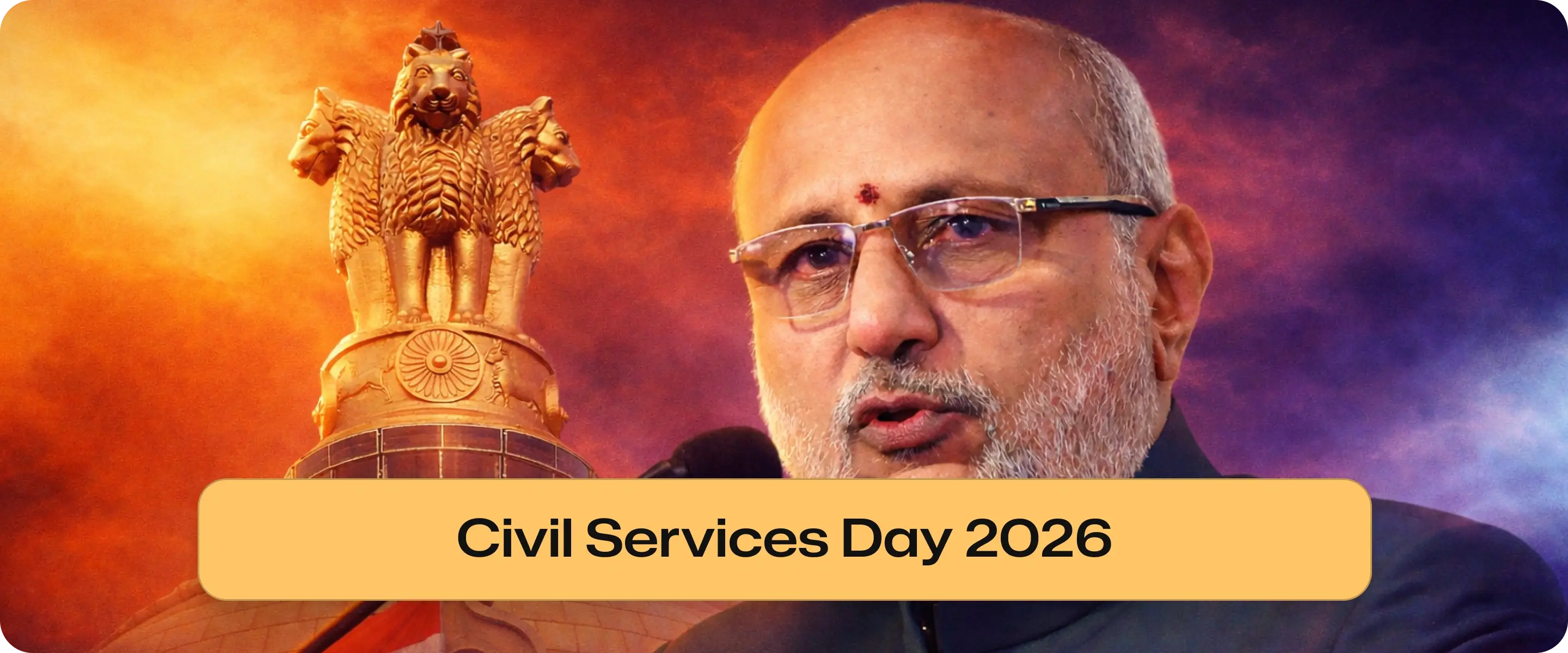
The 18th edition takes place on April 21, 2026.
Vice President C. P. Radhakrishnan leads the event at Vigyan Bhawan.
The 2026 theme focuses on citizen-centric governance for a developed India.
National Civil Service Day is a formal observance that recognizes the contributions of government administrators in India. The 2026 event takes place on April 21 at Vigyan Bhawan in New Delhi.
National Civil Service Day is an annual Indian observance that honors the contributions of public administrators. The government celebrates this event every April 21 to motivate civil servants and review policy implementation strategies.
Sardar Vallabhbhai Patel delivered a speech to the first batch of probationers at Metcalfe House on April 21, 1947. He called these officers the "Steel Frame of India".
He urged officials to remain above political pressures and perform their duties with impartiality. The Indian government organized the first formal celebration at Vigyan Bhawan in 2006.
Join our WhatsApp Community
The Department of Administrative Reforms and Public Grievances manages the 18th Civil Services Day. Vice President C. P. Radhakrishnan delivers the 2026 keynote address.
The theme for 2026 is "Viksit Bharat Citizen Centric Governance and Development at the Last Mile". This theme supports the national goal of a developed India by 2047. The inaugural session features an address by Minister of State Dr. Jitendra Singh and a welcome speech by Cabinet Secretary Dr. T. V. Somanathan.
The program includes specific breakout sessions. The four major national priority sessions are listed below:
Sustainable livelihoods featuring the PM Vishwakarma scheme to promote traditional artisans.
Healthcare challenges focusing on strategies to combat non-communicable diseases.
Farmer welfare and financial risk mitigation using the Kisan Credit Card.
Clean energy transitions to accelerate India's net zero goals.
Ancient texts describe early administrative structures. Kautilya's Arthashastra outlines rules for governance, officer appointments, and tax collection.
The Mauryan Empire employed officers called Rajukas, Mahamatras, and Yuktas. Emperor Ashoka assigned these officers to manage justice, public welfare, and state supervision.
The Gupta era showed a clear trend of decentralization. Officials like Uparika and Vishayapati managed different administrative levels. Later, during the Chola period, an advanced local self-government system was used in village assemblies.
Chhatrapati Shivaji Maharaj created a structured system called the Ashtapradhan Mandal. This group included eight ministers responsible for distinct departments. The Mughal Empire used the Mansabdari system to manage provinces and districts.
Is the 21 April Civil Service Day Important for UPSC?
Yes. UPSC aspirants must understand the evolution of the administrative system. You should study these historical facts to score well on the examination.
The PadhAI app provides practice questions covering this timeline. You can test your knowledge on ancient officers and medieval revenue reforms directly in the app.
Add as a preferred Source on Google
Lord Cornwallis is the Father of the Indian Civil Service. He created merit-based recruitment rules and fixed salaries to stop corruption.
Lord Wellesley founded Fort William College in 1800 for training purposes. The Charter Act of 1853 started open competitive examinations. Satyendranath Tagore passed the test in 1863 as the first Indian candidate.
The Aitchison Committee created a three-tier structure in 1886. This committee divided the services into Imperial, Provincial, and Subordinate branches.
The 1919 Montford Reforms proposed conducting exams in India. The 1924 Lee Commission recommended a 50:50 recruitment ratio between Indians and Europeans.
The Government of India Act of 1935 established the Federal Public Service Commission.
What Challenges Do Modern Civil Servants Face?
Yes. Modern administrators handle disaster management, law enforcement, and development schemes. Officers encounter political interference and corruption threats.
Continuous training helps them manage these complex duties.
Aspirants studying for the UPSC examination need structured guidance. The PadhAI app centralizes your study materials.
You can review past year questions about the Lee Commission or the Montford Reforms. The PadhAI AI tutor answers specific historical queries instantly. You can engage in daily duels to test your retention of the Charter Acts.
Frequently asked question (FAQs)
When is National Civil Service Day celebrated?
What is the theme for Civil Service Day 2026?
Who is known as the Father of the Indian Civil Service?
Who was the first Indian to clear the civil services exam?
What were the Aitchison Committee recommendations?
Civil Service Day in India serves as a reminder of administrative duties. The 2026 celebration, led by Vice President Radhakrishnan, highlights citizen-focused governance.
Sardar Patel established the guiding principles for impartial service in 1947. Today, officers manage diverse challenges from healthcare to renewable energy. You must master this history to succeed in the UPSC examination.



Research methodology
PadhAI's research methodology ensures every article is accurate, UPSC-ready, and beginner-friendly. We curate current affairs analysis based on UPSC exam relevance by cross-referencing The Hindu, Indian Express, and PIB. General Studies (GS) topics are drafted from NCERTs and standard books such as M. Laxmikanth, Spectrum, and GC Leong, then reviewed by subject matter experts to eliminate factual errors. Additionally, we update aspirants with verified government exam notifications alongside expert blogs suggesting the best resources, syllabus, and comprehensive Prelims and Mains strategies.

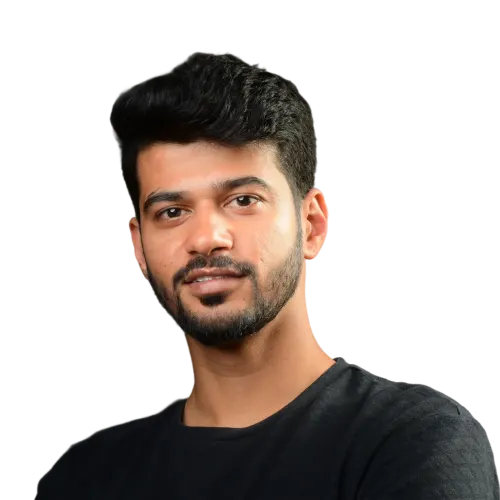
Gajendra Singh Godara is an IIT Bombay graduate and a UPSC aspirant with 4 attempts, including multiple Prelims and Mains appearances. He specializes in Polity, Modern History, International Relations, and Economy. At PadhAI, Gajendra leverages his firsthand exam experience to simplify complex concepts, creating high-efficiency study materials that help aspirants save time and stay focused.
No comments yet. Be the first to join the discussion!