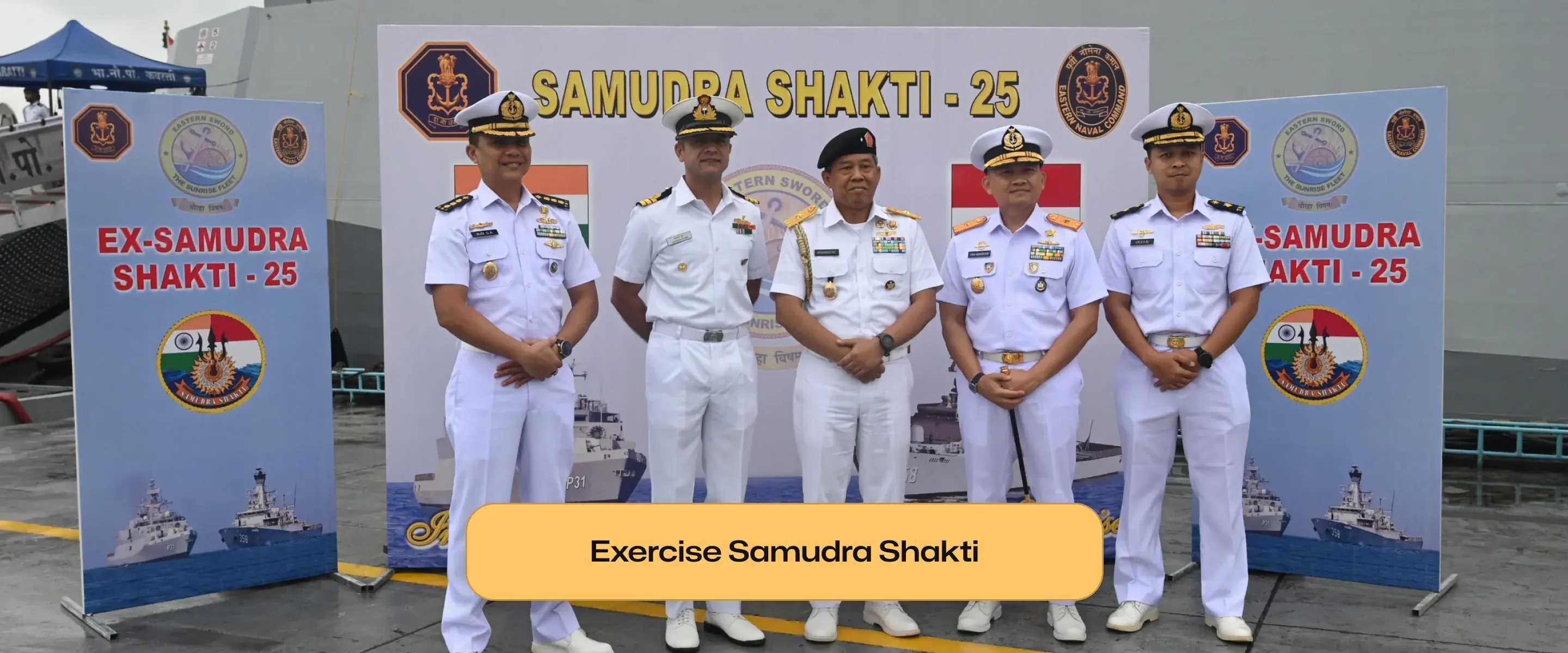
Exercise Samudra Shakti 2025

UPSC Prelims
Current affairs
Latest Update

Gajendra Singh Godara
Oct 18, 2025
8
mins read


Exercise Samudra Shakti
Samudra Shakti is a bilateral exercise initiated by India and Indonesia in 2018. It is conducted every two years and is aimed towards enhancing collaboration and maritime security. The exercise aligns with India's Act East Policy. It primarily focuses to improve bilateral relationship, cooperative understanding and the capacity to work together in the core functional areas of the navies of the two nations.
Table of content
Table of content
Why in the News?
Why in the News?
Why in the News?
Why in the News?
The Indian Navy is hosting the fifth edition of Exercise Samudra Shakti 2025 with Indonesia at Visakhapatnam from October 14-17, 2025, strengthening bilateral maritime cooperation and Indo-Pacific security partnerships between the two nations.
Join our WhatsApp Community
Evolution, Past Editions, and Milestones
2018 – Surabaya, Indonesia: Inaugural edition (12–18 Nov). INS Rana and other Indian ships participated, holding the first Harbour and Sea phases.
2019 – Bay of Bengal: Second edition (6–7 Nov) focused on coordinated patrolling in Indian Ocean waters.
2021 – Sunda Strait (Indonesia): These drills took place from September 20 to 22. They involved the Indian ships INS Shivalik and Kadmatt, along with Indonesian navy corvettes.
2023 – Batam, Indonesia: Fourth edition (14–19 May). INS Kavaratti led the Indian side, alongside Dornier maritime aircraft and helicopters. Indonesia fielded KRI Sultan Iskandar Muda and others.
2025 – Visakhapatnam, India: Fifth edition (14–17 Oct). Hosted by the Eastern Naval Command at Vizag, featuring INS Kavaratti and KRI John Lie. Drills reiterated joint focus on fleet air defence, VBSS and maritime security.
UPSC Current Affairs Magazines
Read Latest UPSC Current Affairs
Objectives and Strategic Imperatives of Exercise Samudra Shakti 2025
Operational and Military Objectives
Improve Interoperability: The exercise focuses on joint drills. These include Military Interdiction Operations (MIO), anti-submarine warfare, air defense, and replenishment maneuvers.
Skill and Tactics Exchange: Crews practice helicopter operations. They also do Visit–Board–Search–Seizure (VBSS) drills. The schedule includes live weapon firings and cross-deck helicopter landings. These activities build common tactics and build confidence under simulated high-tempo conditions.
Best-Practices Sharing: The exercise provides a platform to share maritime security procedures (e.g. anti-piracy tactics, search-and-rescue protocols), as explicitly noted in official releases.
Strategic and Geopolitical Aims
Deepen Defence Cooperation: By sustaining high-level exercises, India and Indonesia strengthen their bilateral strategic partnership. The drills reaffirm commitments to stability in regional seas, reflecting the nations’ “shared commitment towards peace and stability” in the region.
Regional Order: Samudra Shakti shows support for a rules-based Indo-Pacific. It signals to other nations, including India’s partners, that both navies will work together. They aim to secure sea lines of communication. It supports India’s larger goals of maritime security and freedom of navigation in the Indian Ocean.
Security Challenges: The exercises help both navies deal with non-traditional threats like terrorism, piracy, and trafficking. They practice boarding operations and coordinated patrols in important areas like the Malacca Strait.
Add as a preferred Source on Google
Indian Perspective - Benefits and Strategic Gains
Being exposed to different scenarios and having more exercises improves the operational readiness of the Indian Navy’s Samudra Shakti. It assesses the value of tactics and operational doctrine for joint missions in remote areas of the global commons.
Defence Diplomacy: Conducting the exercise further strengthens the India-Indonesia partnership, broadening regional balance. It enhances India’s “security and growth” narrative in the Indo-Pacific by displaying its relevant geo-strategic capabilities.
Regional Security Role: India’s participation in Samudra Shakti exercises abroad signals India’s commitment to the protection of international maritime trade and SAGAR for the region: Security and Growth for All in the Region.
Trust and Interoperability: The joint planning and execution of drills fosters bonds between the officers and the sailors of the different forces. It streamlines real operations by aligning standard operating procedures.
Comparison with Other India–Indonesia Military Exercises
Garuda Shakti: A bilateral army exercise focusing on counter-terrorism and jungle-warfare training. Unlike Samudra Shakti’s naval scope, Garuda Shakti hones infantry tactics in forested terrain.
IND-INDO CORPAT: Joint naval patrols are taking place in the Andaman Sea and Malacca Strait. These patrols involve corvettes and aircraft. Their goal is to stop illegal activities. CORPAT complements Samudra Shakti by ensuring continuous maritime surveillance.
These drills focus on both land and sea areas. Samudra Shakti improves blue-water naval teamwork. Garuda Shakti prepares for ground combat. CORPAT takes care of routine patrols.
Frequently asked question (FAQs)
What is the purpose of Exercise Samudra Shakti 2025?
When and where was the first Samudra Shakti exercise conducted?
What are the major activities during the Sea Phase of Samudra Shakti?
What is India's Act East Policy?
What ships took part in the 2025 Samudra Shakti?
Conclusion
Conclusion
Samudra Shakti is an important part of India’s maritime diplomacy with Indonesia. With every iteration, we enhance our naval capabilities and reinforce a vital partnership. This partnership is crucial for a trustworthy Indo-Pacific. In the future, we can anticipate more sophisticated exercises (which will include multi-domain warfare) and, possibly, increased multi-national participation. Trust and preparedness will stem from exercises like Samudra Shakti as India and Indonesia continue to face maritime challenges.

Suggested posts
Why the U.S. Attacked Venezuela and Monroe Doctrine
Successful Capture: "Operation Absolute Resolve" captured President Nicolás Maduro during a pre-dawn military raid in Caracas on January 3, 2026.
Legal Charges: Maduro was flown to New York to face indictments for narco-terrorism, drug trafficking, and weapons-related offenses.
Monroe Doctrine Revival: The U.S. justified intervention by reviving the 1823 Monroe Doctrine to eliminate Russian and Chinese regional influence.
Strategic Interests: Key motivations include securing the world's largest oil reserves, drug-trafficking and addressing the U.S. southern border migration crisis.
India's Response: India expressed "deep concern," calling for peaceful dialogue while navigating its strategic partnership with the United States.

Successful Capture: "Operation Absolute Resolve" captured President Nicolás Maduro during a pre-dawn military raid in Caracas on January 3, 2026.
Legal Charges: Maduro was flown to New York to face indictments for narco-terrorism, drug trafficking, and weapons-related offenses.
Monroe Doctrine Revival: The U.S. justified intervention by reviving the 1823 Monroe Doctrine to eliminate Russian and Chinese regional influence.
Strategic Interests: Key motivations include securing the world's largest oil reserves, drug-trafficking and addressing the U.S. southern border migration crisis.
India's Response: India expressed "deep concern," calling for peaceful dialogue while navigating its strategic partnership with the United States.
Why the U.S. Attacked Venezuela and Monroe Doctrine
Successful Capture: "Operation Absolute Resolve" captured President Nicolás Maduro during a pre-dawn military raid in Caracas on January 3, 2026.
Legal Charges: Maduro was flown to New York to face indictments for narco-terrorism, drug trafficking, and weapons-related offenses.
Monroe Doctrine Revival: The U.S. justified intervention by reviving the 1823 Monroe Doctrine to eliminate Russian and Chinese regional influence.
Strategic Interests: Key motivations include securing the world's largest oil reserves, drug-trafficking and addressing the U.S. southern border migration crisis.
India's Response: India expressed "deep concern," calling for peaceful dialogue while navigating its strategic partnership with the United States.

Successful Capture: "Operation Absolute Resolve" captured President Nicolás Maduro during a pre-dawn military raid in Caracas on January 3, 2026.
Legal Charges: Maduro was flown to New York to face indictments for narco-terrorism, drug trafficking, and weapons-related offenses.
Monroe Doctrine Revival: The U.S. justified intervention by reviving the 1823 Monroe Doctrine to eliminate Russian and Chinese regional influence.
Strategic Interests: Key motivations include securing the world's largest oil reserves, drug-trafficking and addressing the U.S. southern border migration crisis.
India's Response: India expressed "deep concern," calling for peaceful dialogue while navigating its strategic partnership with the United States.
National Intelligence Grid (NATGRID): Linking NATGRID with NPR
NPR Integration: National Intelligence Grid (NATGRID) is now linked with the National Population Register, granting agencies access to data for 119 crore residents.
Anti-Terror Origins: Conceived after the 26/11 attacks, it acts as a secure platform to eliminate intelligence silos between agencies.
Comprehensive Data: NATGRID integrates data from 21 government and private organizations, capturing over 24 categories of information including banking, travel, telecom, immigration, and more.
Advanced Analytics: It utilizes the 'Gandiva' tool for facial recognition and entity resolution to identify suspects across multiple databases.
Expanded Access: Data is now accessible to 11 central agencies and state police officers of SP rank and above.
Why in the news?
NPR Integration: The Union Home Ministry has officially linked NATGRID with the National Population Register (NPR), granting security agencies real-time access to the demographic details of 119 crore residents.
Digital Expansion: Delhi Police has authorized district DCPs to utilize NATGRID tools for tracking suspects, marking a significant expansion of the platform's use to local law enforcement.

NPR Integration: National Intelligence Grid (NATGRID) is now linked with the National Population Register, granting agencies access to data for 119 crore residents.
Anti-Terror Origins: Conceived after the 26/11 attacks, it acts as a secure platform to eliminate intelligence silos between agencies.
Comprehensive Data: NATGRID integrates data from 21 government and private organizations, capturing over 24 categories of information including banking, travel, telecom, immigration, and more.
Advanced Analytics: It utilizes the 'Gandiva' tool for facial recognition and entity resolution to identify suspects across multiple databases.
Expanded Access: Data is now accessible to 11 central agencies and state police officers of SP rank and above.
Why in the news?
NPR Integration: The Union Home Ministry has officially linked NATGRID with the National Population Register (NPR), granting security agencies real-time access to the demographic details of 119 crore residents.
Digital Expansion: Delhi Police has authorized district DCPs to utilize NATGRID tools for tracking suspects, marking a significant expansion of the platform's use to local law enforcement.
National Intelligence Grid (NATGRID): Linking NATGRID with NPR
NPR Integration: National Intelligence Grid (NATGRID) is now linked with the National Population Register, granting agencies access to data for 119 crore residents.
Anti-Terror Origins: Conceived after the 26/11 attacks, it acts as a secure platform to eliminate intelligence silos between agencies.
Comprehensive Data: NATGRID integrates data from 21 government and private organizations, capturing over 24 categories of information including banking, travel, telecom, immigration, and more.
Advanced Analytics: It utilizes the 'Gandiva' tool for facial recognition and entity resolution to identify suspects across multiple databases.
Expanded Access: Data is now accessible to 11 central agencies and state police officers of SP rank and above.
Why in the news?
NPR Integration: The Union Home Ministry has officially linked NATGRID with the National Population Register (NPR), granting security agencies real-time access to the demographic details of 119 crore residents.
Digital Expansion: Delhi Police has authorized district DCPs to utilize NATGRID tools for tracking suspects, marking a significant expansion of the platform's use to local law enforcement.

NPR Integration: National Intelligence Grid (NATGRID) is now linked with the National Population Register, granting agencies access to data for 119 crore residents.
Anti-Terror Origins: Conceived after the 26/11 attacks, it acts as a secure platform to eliminate intelligence silos between agencies.
Comprehensive Data: NATGRID integrates data from 21 government and private organizations, capturing over 24 categories of information including banking, travel, telecom, immigration, and more.
Advanced Analytics: It utilizes the 'Gandiva' tool for facial recognition and entity resolution to identify suspects across multiple databases.
Expanded Access: Data is now accessible to 11 central agencies and state police officers of SP rank and above.
Why in the news?
NPR Integration: The Union Home Ministry has officially linked NATGRID with the National Population Register (NPR), granting security agencies real-time access to the demographic details of 119 crore residents.
Digital Expansion: Delhi Police has authorized district DCPs to utilize NATGRID tools for tracking suspects, marking a significant expansion of the platform's use to local law enforcement.
LVM3-M6 Mission: ISRO Launched Heaviest Satellite BlueBird Block-2
Record-Breaking Payload: ISRO launched its heaviest-ever satellite, BlueBird Block-2, weighing approximately 6,100 kg, surpassing all previous Indian launch records.
Direct-to-Cellular Tech: The mission deployed a revolutionary satellite designed by AST SpaceMobile to provide 4G/5G connectivity directly to standard smartphones globally.
Commercial Milestone: This marks the third commercial success for the LVM3, positioning India as a low-cost, reliable alternative to SpaceX and the ESA.
Rapid Operational Turnaround: Achieving the shortest gap between two LVM3 launches (following CMS-03), ISRO demonstrated its capability for high-frequency, heavy-lift missions.
Path to Space Station: Future LVM3 upgrades, like semi-cryogenic engines, will boost capacity to 10,000 kg to support the upcoming Bharatiya Antariksh Station.
Why in the news?
The Indian Space Research Organisation (ISRO) has once again pushed the boundaries of space exploration with the successful LVM3-M6 Mission.
On December 24, 2025, at 8:24 am, India's heaviest-ever satellite, the BlueBird Block-2, was launched into space from the Satish Dhawan Space Centre in Sriharikota.
It is a significant milestone in India’s commercial space journey and its future ambitions, including the Bharatiya Antariksh Station.

Record-Breaking Payload: ISRO launched its heaviest-ever satellite, BlueBird Block-2, weighing approximately 6,100 kg, surpassing all previous Indian launch records.
Direct-to-Cellular Tech: The mission deployed a revolutionary satellite designed by AST SpaceMobile to provide 4G/5G connectivity directly to standard smartphones globally.
Commercial Milestone: This marks the third commercial success for the LVM3, positioning India as a low-cost, reliable alternative to SpaceX and the ESA.
Rapid Operational Turnaround: Achieving the shortest gap between two LVM3 launches (following CMS-03), ISRO demonstrated its capability for high-frequency, heavy-lift missions.
Path to Space Station: Future LVM3 upgrades, like semi-cryogenic engines, will boost capacity to 10,000 kg to support the upcoming Bharatiya Antariksh Station.
Why in the news?
The Indian Space Research Organisation (ISRO) has once again pushed the boundaries of space exploration with the successful LVM3-M6 Mission.
On December 24, 2025, at 8:24 am, India's heaviest-ever satellite, the BlueBird Block-2, was launched into space from the Satish Dhawan Space Centre in Sriharikota.
It is a significant milestone in India’s commercial space journey and its future ambitions, including the Bharatiya Antariksh Station.
LVM3-M6 Mission: ISRO Launched Heaviest Satellite BlueBird Block-2
Record-Breaking Payload: ISRO launched its heaviest-ever satellite, BlueBird Block-2, weighing approximately 6,100 kg, surpassing all previous Indian launch records.
Direct-to-Cellular Tech: The mission deployed a revolutionary satellite designed by AST SpaceMobile to provide 4G/5G connectivity directly to standard smartphones globally.
Commercial Milestone: This marks the third commercial success for the LVM3, positioning India as a low-cost, reliable alternative to SpaceX and the ESA.
Rapid Operational Turnaround: Achieving the shortest gap between two LVM3 launches (following CMS-03), ISRO demonstrated its capability for high-frequency, heavy-lift missions.
Path to Space Station: Future LVM3 upgrades, like semi-cryogenic engines, will boost capacity to 10,000 kg to support the upcoming Bharatiya Antariksh Station.
Why in the news?
The Indian Space Research Organisation (ISRO) has once again pushed the boundaries of space exploration with the successful LVM3-M6 Mission.
On December 24, 2025, at 8:24 am, India's heaviest-ever satellite, the BlueBird Block-2, was launched into space from the Satish Dhawan Space Centre in Sriharikota.
It is a significant milestone in India’s commercial space journey and its future ambitions, including the Bharatiya Antariksh Station.

Record-Breaking Payload: ISRO launched its heaviest-ever satellite, BlueBird Block-2, weighing approximately 6,100 kg, surpassing all previous Indian launch records.
Direct-to-Cellular Tech: The mission deployed a revolutionary satellite designed by AST SpaceMobile to provide 4G/5G connectivity directly to standard smartphones globally.
Commercial Milestone: This marks the third commercial success for the LVM3, positioning India as a low-cost, reliable alternative to SpaceX and the ESA.
Rapid Operational Turnaround: Achieving the shortest gap between two LVM3 launches (following CMS-03), ISRO demonstrated its capability for high-frequency, heavy-lift missions.
Path to Space Station: Future LVM3 upgrades, like semi-cryogenic engines, will boost capacity to 10,000 kg to support the upcoming Bharatiya Antariksh Station.
Why in the news?
The Indian Space Research Organisation (ISRO) has once again pushed the boundaries of space exploration with the successful LVM3-M6 Mission.
On December 24, 2025, at 8:24 am, India's heaviest-ever satellite, the BlueBird Block-2, was launched into space from the Satish Dhawan Space Centre in Sriharikota.
It is a significant milestone in India’s commercial space journey and its future ambitions, including the Bharatiya Antariksh Station.


PadhAI UPSC App
We're PadhAI - a free UPSC prep app built by IITians, AI PhDs & top UPSC experts.
Why choose PadhAI?
Read daily top news (TH & IE) & Solve Current Affairs MCQs
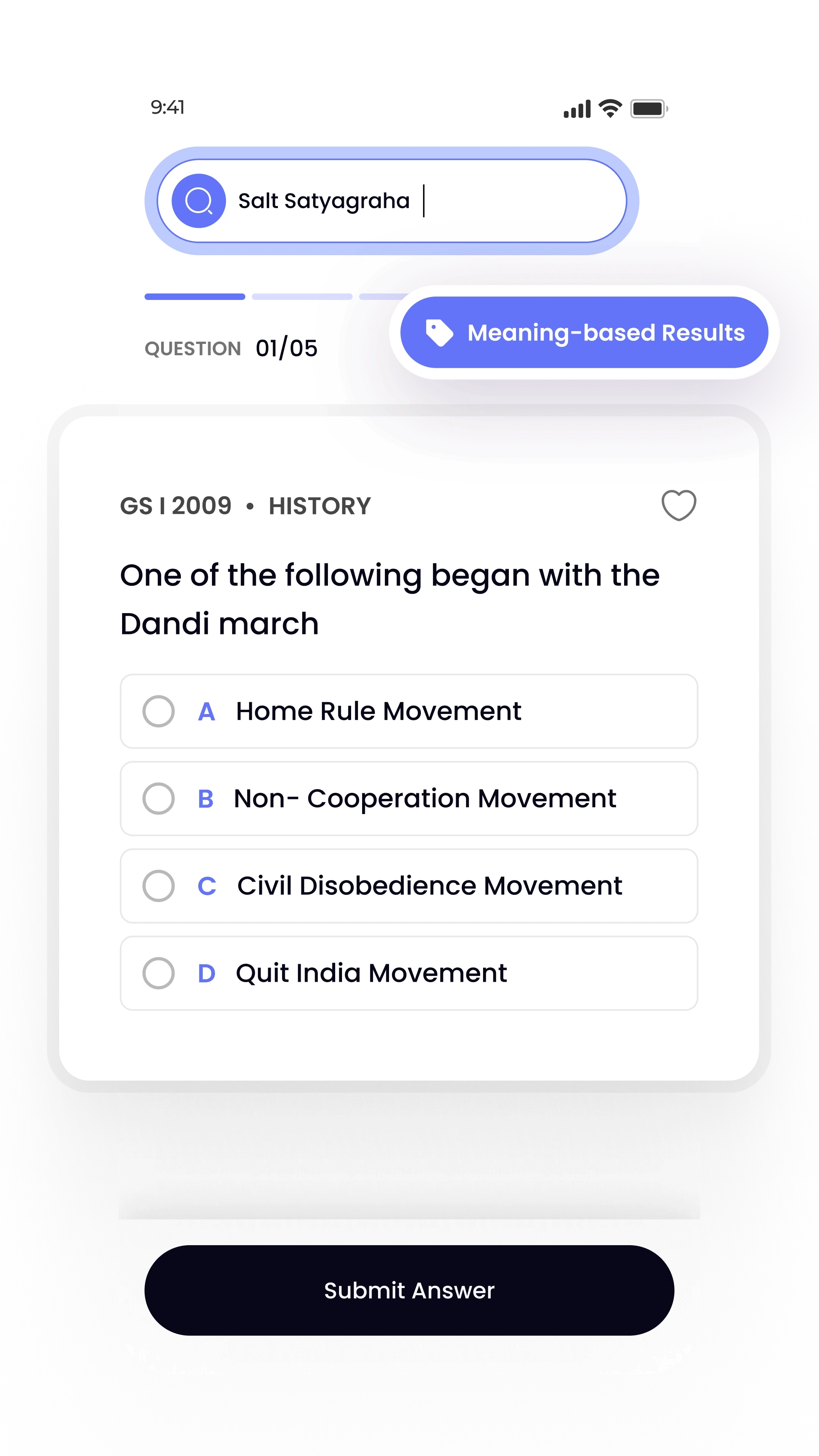
Topic-wise search of 30+ yrs PYQs
24×7 AI tutor for doubt resolution
Practice 30k+ MCQs & full GS + CSAT mocks
Play Duel UPSC quizzes with fellow aspirants
Gajendra Singh Godara brings authentic UPSC preparation insights from his four-attempt journey, having successfully cleared Prelims and written Mains multiple times. His deep expertise spans Polity, Modern History, International Relations, and Economy. At PadhAI, Gajendra transforms his extensive exam experience into accessible content that simplifies complex concepts for aspirants at every preparation stage. His firsthand understanding of UPSC's demands enables him to create targeted materials that save time while maximizing learning efficiency for current affairs, general studies, and optional subjects.
Latest UPSC Exam 2026 Updates
UPSC Calendar 2026 is released on 15th May, 2025.
UPSC Mains Result 2025 is now released.
Check out the updated and latest UPSC Syllabus 2026 here.
UPSC Notification 2025 was released on 22nd January 2025.
UPSC Prelims Question Paper 2025 and Unofficial Prelims Answer Key 2025 are available now.
UPSC Prelims 2026 will be conducted on 24th May, 2026 & UPSC Mains 2026 will be conducted on 21st August 2026.
The UPSC Prelims 2026 is scheduled for May 24, 2026, while the UPSC Mains 2026 will be conducted from August 21, 2026.
The UPSC Selection Process is of 3 stages-Prelims, Mains and Interview.
UPSC Result 2024 is released with latest UPSC Marksheet 2024. Check Now!
Latest UPSC Exam 2026 Updates
UPSC Calendar 2026 is released on 15th May, 2025.
UPSC Mains Result 2025 is now released.
Check out the updated and latest UPSC Syllabus 2026 here.
UPSC Notification 2025 was released on 22nd January 2025.
UPSC Prelims Question Paper 2025 and Unofficial Prelims Answer Key 2025 are available now.
UPSC Prelims 2026 will be conducted on 24th May, 2026 & UPSC Mains 2026 will be conducted on 21st August 2026.
The UPSC Prelims 2026 is scheduled for May 24, 2026, while the UPSC Mains 2026 will be conducted from August 21, 2026.
The UPSC Selection Process is of 3 stages-Prelims, Mains and Interview.
UPSC Result 2024 is released with latest UPSC Marksheet 2024. Check Now!
Latest UPSC Exam 2026 Updates
UPSC Calendar 2026 is released on 15th May, 2025.
UPSC Mains Result 2025 is now released.
Check out the updated and latest UPSC Syllabus 2026 here.
UPSC Notification 2025 was released on 22nd January 2025.
UPSC Prelims Question Paper 2025 and Unofficial Prelims Answer Key 2025 are available now.
UPSC Prelims 2026 will be conducted on 24th May, 2026 & UPSC Mains 2026 will be conducted on 21st August 2026.
The UPSC Prelims 2026 is scheduled for May 24, 2026, while the UPSC Mains 2026 will be conducted from August 21, 2026.
The UPSC Selection Process is of 3 stages-Prelims, Mains and Interview.
UPSC Result 2024 is released with latest UPSC Marksheet 2024. Check Now!
Latest UPSC Exam 2026 Updates
UPSC Calendar 2026 is released on 15th May, 2025.
UPSC Mains Result 2025 is now released.
Check out the updated and latest UPSC Syllabus 2026 here.
UPSC Notification 2025 was released on 22nd January 2025.
UPSC Prelims Question Paper 2025 and Unofficial Prelims Answer Key 2025 are available now.
UPSC Prelims 2026 will be conducted on 24th May, 2026 & UPSC Mains 2026 will be conducted on 21st August 2026.
The UPSC Prelims 2026 is scheduled for May 24, 2026, while the UPSC Mains 2026 will be conducted from August 21, 2026.
The UPSC Selection Process is of 3 stages-Prelims, Mains and Interview.
UPSC Result 2024 is released with latest UPSC Marksheet 2024. Check Now!
Why choose PadhAI?
Read daily top news (TH & IE) & Solve Current Affairs MCQs
Topic-wise search of 30+ yrs PYQs
24×7 AI tutor for doubt resolution
Practice 30k+ MCQs & full GS + CSAT mocks
Play Duel UPSC quizzes with fellow aspirants

PadhAI UPSC App
We're PadhAI - a free UPSC prep app built by IITians, AI PhDs & top UPSC experts.
Why choose PadhAI?
Read daily top news (TH & IE) & Solve Current Affairs MCQs
Topic-wise search of 30+ yrs PYQs
24×7 AI tutor for doubt resolution
Practice 30k+ MCQs & full GS + CSAT mocks
Play Duel UPSC quizzes with fellow aspirants

PadhAI UPSC App
We're PadhAI - a free UPSC prep app built by IITians, AI PhDs & top UPSC experts.
Suggested posts


Why the U.S. Attacked Venezuela and Monroe Doctrine
Successful Capture: "Operation Absolute Resolve" captured President Nicolás Maduro during a pre-dawn military raid in Caracas on January 3, 2026.
Legal Charges: Maduro was flown to New York to face indictments for narco-terrorism, drug trafficking, and weapons-related offenses.
Monroe Doctrine Revival: The U.S. justified intervention by reviving the 1823 Monroe Doctrine to eliminate Russian and Chinese regional influence.
Strategic Interests: Key motivations include securing the world's largest oil reserves, drug-trafficking and addressing the U.S. southern border migration crisis.
India's Response: India expressed "deep concern," calling for peaceful dialogue while navigating its strategic partnership with the United States.


National Intelligence Grid (NATGRID): Linking NATGRID with NPR
NPR Integration: National Intelligence Grid (NATGRID) is now linked with the National Population Register, granting agencies access to data for 119 crore residents.
Anti-Terror Origins: Conceived after the 26/11 attacks, it acts as a secure platform to eliminate intelligence silos between agencies.
Comprehensive Data: NATGRID integrates data from 21 government and private organizations, capturing over 24 categories of information including banking, travel, telecom, immigration, and more.
Advanced Analytics: It utilizes the 'Gandiva' tool for facial recognition and entity resolution to identify suspects across multiple databases.
Expanded Access: Data is now accessible to 11 central agencies and state police officers of SP rank and above.
Why in the news?
NPR Integration: The Union Home Ministry has officially linked NATGRID with the National Population Register (NPR), granting security agencies real-time access to the demographic details of 119 crore residents.
Digital Expansion: Delhi Police has authorized district DCPs to utilize NATGRID tools for tracking suspects, marking a significant expansion of the platform's use to local law enforcement.


LVM3-M6 Mission: ISRO Launched Heaviest Satellite BlueBird Block-2
Record-Breaking Payload: ISRO launched its heaviest-ever satellite, BlueBird Block-2, weighing approximately 6,100 kg, surpassing all previous Indian launch records.
Direct-to-Cellular Tech: The mission deployed a revolutionary satellite designed by AST SpaceMobile to provide 4G/5G connectivity directly to standard smartphones globally.
Commercial Milestone: This marks the third commercial success for the LVM3, positioning India as a low-cost, reliable alternative to SpaceX and the ESA.
Rapid Operational Turnaround: Achieving the shortest gap between two LVM3 launches (following CMS-03), ISRO demonstrated its capability for high-frequency, heavy-lift missions.
Path to Space Station: Future LVM3 upgrades, like semi-cryogenic engines, will boost capacity to 10,000 kg to support the upcoming Bharatiya Antariksh Station.
Why in the news?
The Indian Space Research Organisation (ISRO) has once again pushed the boundaries of space exploration with the successful LVM3-M6 Mission.
On December 24, 2025, at 8:24 am, India's heaviest-ever satellite, the BlueBird Block-2, was launched into space from the Satish Dhawan Space Centre in Sriharikota.
It is a significant milestone in India’s commercial space journey and its future ambitions, including the Bharatiya Antariksh Station.

Why the U.S. Attacked Venezuela and Monroe Doctrine
Successful Capture: "Operation Absolute Resolve" captured President Nicolás Maduro during a pre-dawn military raid in Caracas on January 3, 2026.
Legal Charges: Maduro was flown to New York to face indictments for narco-terrorism, drug trafficking, and weapons-related offenses.
Monroe Doctrine Revival: The U.S. justified intervention by reviving the 1823 Monroe Doctrine to eliminate Russian and Chinese regional influence.
Strategic Interests: Key motivations include securing the world's largest oil reserves, drug-trafficking and addressing the U.S. southern border migration crisis.
India's Response: India expressed "deep concern," calling for peaceful dialogue while navigating its strategic partnership with the United States.

National Intelligence Grid (NATGRID): Linking NATGRID with NPR
NPR Integration: National Intelligence Grid (NATGRID) is now linked with the National Population Register, granting agencies access to data for 119 crore residents.
Anti-Terror Origins: Conceived after the 26/11 attacks, it acts as a secure platform to eliminate intelligence silos between agencies.
Comprehensive Data: NATGRID integrates data from 21 government and private organizations, capturing over 24 categories of information including banking, travel, telecom, immigration, and more.
Advanced Analytics: It utilizes the 'Gandiva' tool for facial recognition and entity resolution to identify suspects across multiple databases.
Expanded Access: Data is now accessible to 11 central agencies and state police officers of SP rank and above.
Why in the news?
NPR Integration: The Union Home Ministry has officially linked NATGRID with the National Population Register (NPR), granting security agencies real-time access to the demographic details of 119 crore residents.
Digital Expansion: Delhi Police has authorized district DCPs to utilize NATGRID tools for tracking suspects, marking a significant expansion of the platform's use to local law enforcement.

LVM3-M6 Mission: ISRO Launched Heaviest Satellite BlueBird Block-2
Record-Breaking Payload: ISRO launched its heaviest-ever satellite, BlueBird Block-2, weighing approximately 6,100 kg, surpassing all previous Indian launch records.
Direct-to-Cellular Tech: The mission deployed a revolutionary satellite designed by AST SpaceMobile to provide 4G/5G connectivity directly to standard smartphones globally.
Commercial Milestone: This marks the third commercial success for the LVM3, positioning India as a low-cost, reliable alternative to SpaceX and the ESA.
Rapid Operational Turnaround: Achieving the shortest gap between two LVM3 launches (following CMS-03), ISRO demonstrated its capability for high-frequency, heavy-lift missions.
Path to Space Station: Future LVM3 upgrades, like semi-cryogenic engines, will boost capacity to 10,000 kg to support the upcoming Bharatiya Antariksh Station.
Why in the news?
The Indian Space Research Organisation (ISRO) has once again pushed the boundaries of space exploration with the successful LVM3-M6 Mission.
On December 24, 2025, at 8:24 am, India's heaviest-ever satellite, the BlueBird Block-2, was launched into space from the Satish Dhawan Space Centre in Sriharikota.
It is a significant milestone in India’s commercial space journey and its future ambitions, including the Bharatiya Antariksh Station.

VB-G RAM G Bill 2025: From MGNREGA to Viksit Bharat 2047
Parliament recently passed the VB–G RAM G Bill 2025. This important law replaces the old MGNREGA, which lasted for two decades. It aims to connect rural jobs with the Viksit Bharat 2047 vision.
The Bill has sparked national debate by increasing the employment guarantee to 125 days while shifting to a 60:40 fund-sharing model and introducing a 60-day mandatory "agricultural pause."


Download PadhAI App
Don't get left behind in your preparation


Download PadhAI App
Don't get left behind in your preparation

Download PadhAI App
Don't get left behind in your preparation


Download PadhAI App
Don't get left behind in your preparation
Geography
Science & Tech
Ethics
International Relations
© 2025-2026, All Rights Reserved
Geography
Science & Tech
Ethics
International Relations
© 2025-2026, All Rights Reserved
Geography
Science & Tech
Ethics
International Relations
© 2025-2026, All Rights Reserved
Geography
Science & Tech
Ethics
International Relations
© 2025-2026, All Rights Reserved